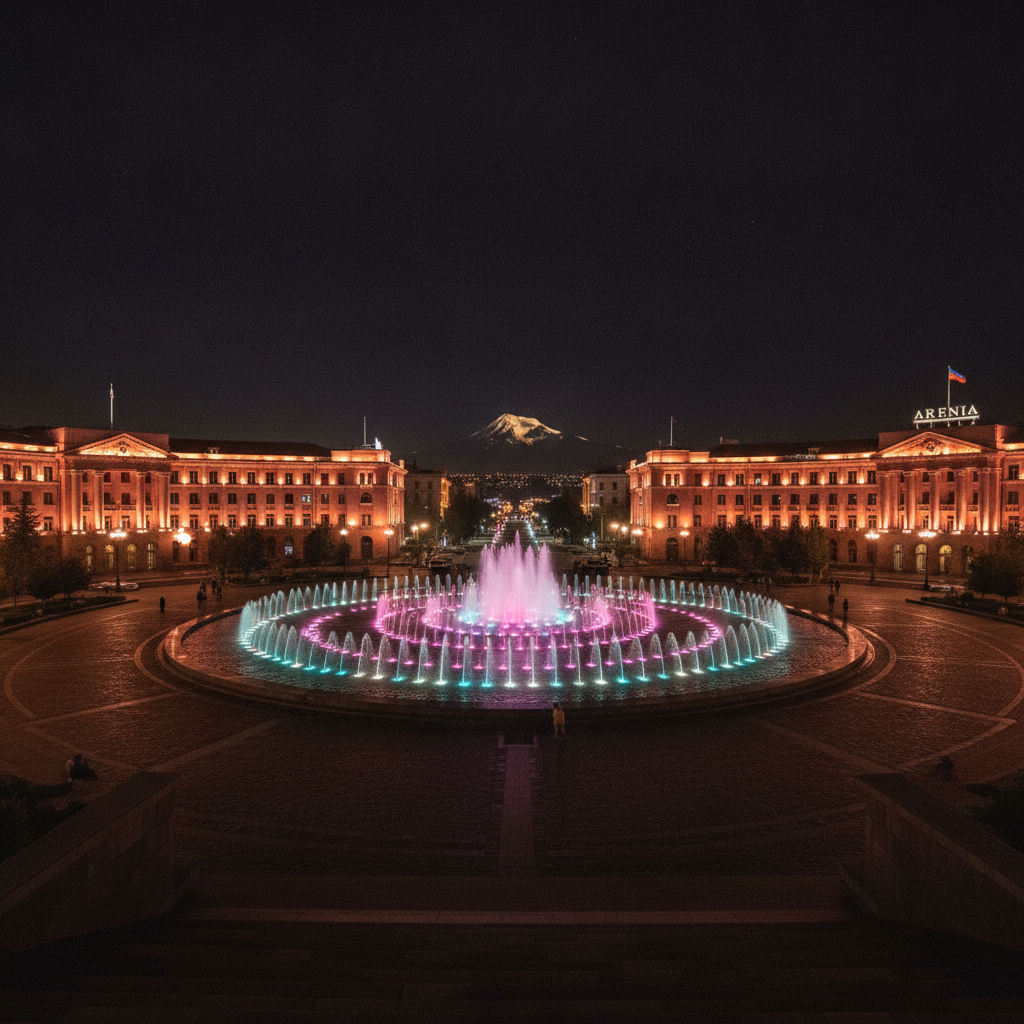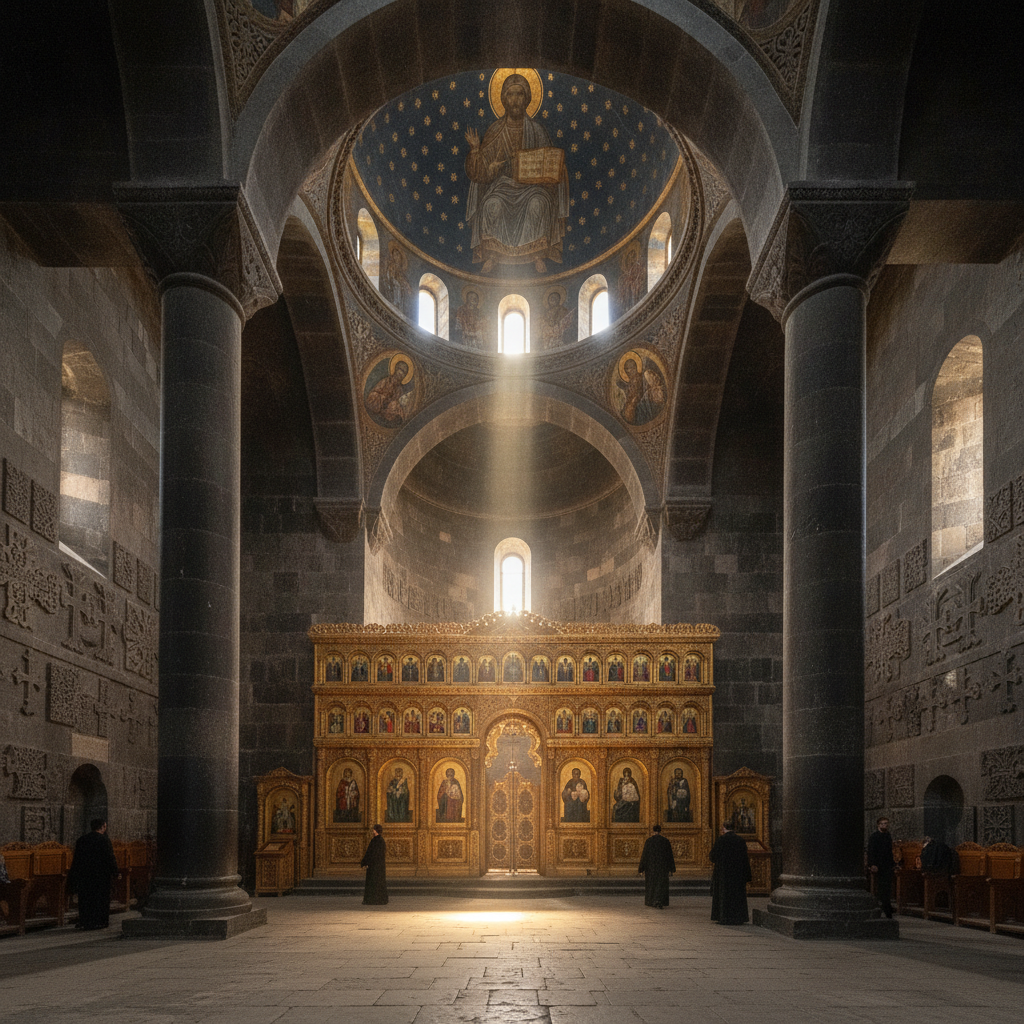
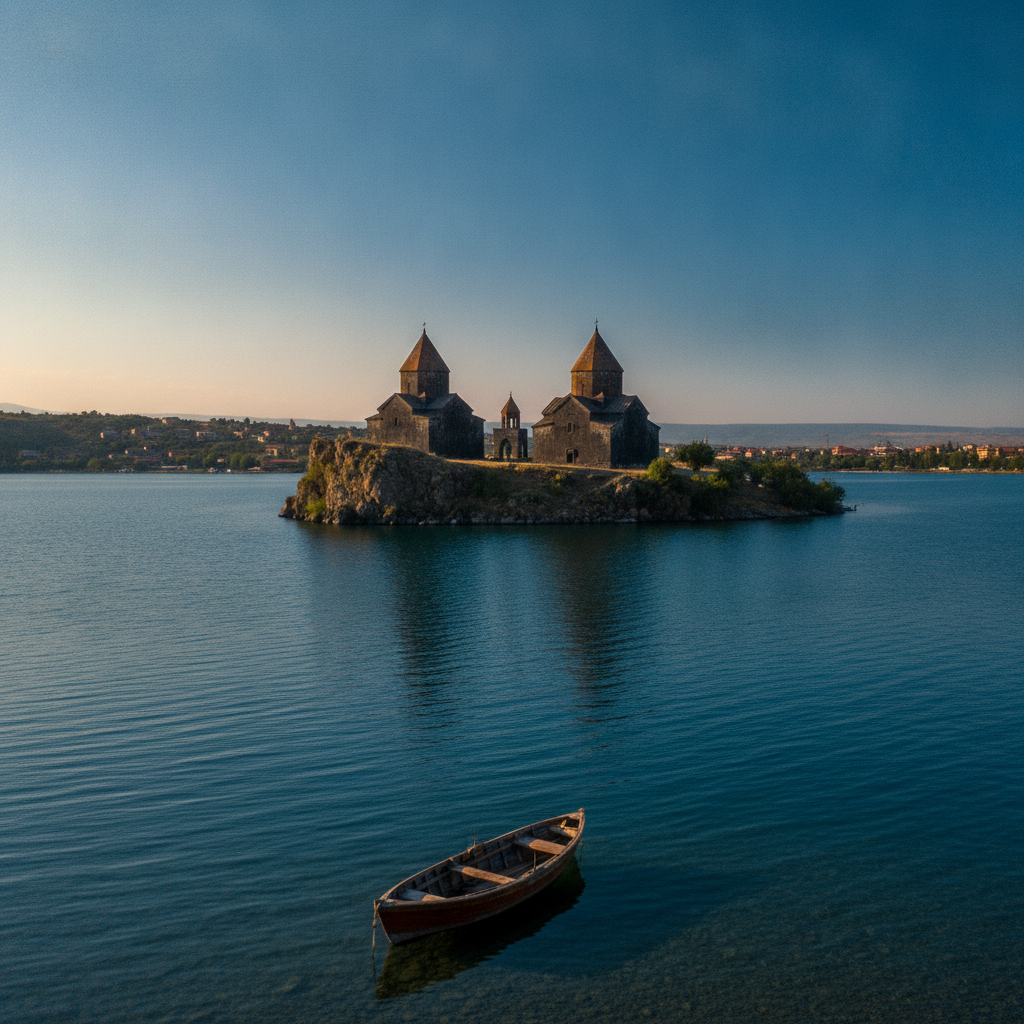
The English Word Carpet Deriving From Armenian Kapert Through Medieval Latin Carpita, the Akhtamar Church on Lake Van Built 915-921 CE Accessible Only From Turkey Not Armenia & the Etchmiadzin Cathedral Holding a Fragment of Noah's Ark Brought From Mount Ararat in the 4th Century
The English word carpet deriving from Armenian kapert (woven fabric) through Medieval Latin carpita, making Armenian the etymological origin of the English carpet; the Akhtamar Church on Lake Van (915-921 CE) visible from Yerevan's side of the border but accessible only from Turkey; the Etchmiadzin Cathedral treasury holding the Holy Lance and a claimed fragment of Noah's Ark wood; the Dragon carpet (Vishapakar) group as the most celebrated Armenian historical carpets using the vishap water dragon motif; the pomegranate producing 365-840 seeds per fruit symbolizing abundance and appearing in virtually every Armenian decorative art medium; and the complete 3-day Yerevan circuit including Garni temple, Geghard cave churches, Khor Virap monastery, and Etchmiadzin cathedral.
- 1
Armenian Carpet – The Woven Identity
The Armenian carpet tradition (one of the oldest continuous textile art traditions in the world—the knotted wool carpet that encodes Armenian ornamental vocabulary and regional identity): the carpet heritage guide. The history (the Armenian carpet tradition (karpet—Armenian: կարպet, the word that gave English its word carpet via the Italian carpita—the English word carpet derives from the Medieval Latin carpita (thick cloth) which itself came via Old Armenian kapert (woven fabric)): the oldest surviving Armenian carpets (the Dragon carpet (Vishapakar—dragon/serpent carpet)—the group of large-scale knotted carpets produced in the Karabakh region in the 16th–18th century using the dragon motif (the vishap—the Armenian mythological water dragon) as the primary decorative element—the Dragon carpets are the most celebrated group of Armenian historical carpets and are displayed in major museum collections worldwide): the Armenian carpet vocabulary (the primary decorative elements of Armenian carpets: the vishap (dragon); the khachkar (cross-stone motif); the pomegranate (noor—the primary fertility symbol); the peacock (tsil—the symbol of immortality); and the star of Eternity (the 8-pointed star)): the Megerian Carpet Museum (the primary carpet museum in Yerevan—the Megerian Carpet (the Armenian-American carpet company founded by a diaspora family)—the museum at 10 Vardanants Street contains 400+ Armenian carpets spanning 400 years, including Dragon carpet examples): the contemporary carpet (the best place to purchase contemporary hand-knotted Armenian carpets in Yerevan: the Vernissage market (the most affordable source); the Megerian Carpet showroom (the most comprehensive collection); the Sunday antique market (the occasional antique carpet at below-market prices)).
- 2
The Armenia-Turkey Frontier – Closed Border, Open Memory
The Armenia-Turkey border closure (the 1993 closure of the Armenia-Turkey border that has isolated the two neighboring countries for over 30 years—and the heritage context that the border conceals): the border and heritage guide. The closure (the Armenia-Turkey border was closed by Turkey in 1993 in solidarity with Azerbaijan during the First Karabakh War—the border has remained closed since, making Armenia one of the few countries with a land border that is entirely inaccessible from both sides): the closed heritage (the territories of historic Armenia now in Turkey include: the Lake Van region (the heartland of the Urartu kingdom and the pre-genocide Armenian homeland); Ani (the medieval Armenian capital on the Turkish side of the border—the ruined city with the largest concentration of medieval Armenian architecture, visible from across the Araxes River from the Armenian village of Khor Virap): Agri Province (the location of Mount Ararat); Kars and Ardahan provinces (Armenian-majority before 1915): the Ani ruins (the ruined city of Ani (medieval capital of the Bagratid Armenian kingdom 961–1064 CE)—the city at its peak contained 100,000 inhabitants and 48 churches, across the Araxes River from modern Armenia—the city is visible with binoculars from the Armenian bank of the river and the Turkish Kars Province border crossing (inaccessible from Armenia): the Akhtamar Church (the 10th-century Church of the Holy Cross on an island in Lake Van—one of the most celebrated buildings of Armenian medieval architecture, built 915–921 CE: the church is in Turkey and is accessible only from the Turkish side—a round trip from Yerevan requires flying to Istanbul and then to Van).
- 3
Yerevan's Soviet Legacy – The City Tamanyan Built
The Soviet transformation of Yerevan (the history of how a small provincial town of 30,000 in 1920 became a city of 1.1 million by 1991 through Soviet industrialization and urban development): the Soviet heritage guide. The pre-Soviet Yerevan (Yerevan before 1920: a small, largely residential city of approximately 30,000 inhabitants (1920 census), with a medieval layout of narrow mud-brick alleyways around the Hasan Khan Mosque (1765—the only surviving mosque from the Persian period of Yerevan, now called the Blue Mosque) and a small Russian military town superimposed in the 19th century): the Tamanyan transformation (Alexander Tamanyan's 1924 master plan transformed Yerevan from a small town into a Soviet industrial city: the population grew from 30,000 (1920) to 120,000 (1940) to 750,000 (1970) to 1.1 million (1991)—one of the fastest population growth rates of any Soviet city): the industrial development (the Soviet industrialization of Armenia created: the Nairit Chemical Plant (the largest rubber production plant in the USSR, established 1936); the Yerevan Machine Tool Plant; the Yerevan Electrical Equipment Plant; and the Yerevan Computer Research Institute—which employed 10,000 engineers at its peak in the 1980s): the housing legacy (the Soviet microrayon residential districts (the Nor Nork, Avan, Davtashen, and Arabkir districts)—the prefabricated concrete apartment blocks that house 60% of Yerevan's population: the quality varies from the Stalin-era concrete (solid) to the 1980s Khrushchyovka (poor seismic resistance—a concern in earthquake-prone Armenia, which lost 25,000 people in the 1988 Spitak earthquake): the 1988 Spitak earthquake (the magnitude 6.8 earthquake of December 7, 1988 killed approximately 25,000 people in the Lori and Shirak regions of Armenia—the earthquake's impact on Soviet Armenia revealed the poor construction quality of the Soviet housing stock).
- 4
The Pomegranate – Armenia's National Fruit
The pomegranate (the fruit that has become the primary symbol of Armenian identity and the most recognized Armenian cultural motif in the global diaspora): the pomegranate heritage guide. The pomegranate in Armenia (the pomegranate (Punica granatum—Armenian: noor (նուռ))—the fruit cultivated in Armenia since at least 3,000 BCE (seeds found in Chalcolithic Armenian site excavations): the pomegranate grows naturally in the warm, dry valleys of the Ararat plain and the Araxes River valley at 700–1,200m altitude—the Ararat plain pomegranate harvest (September–October) produces approximately 15,000 tons annually): the symbolism (the pomegranate in Armenian symbolic tradition: the pomegranate's multiple seeds (typically 365–840 seeds per fruit) symbolize abundance, fertility, and the union of family; the pomegranate features prominently in: the medieval Armenian manuscript illumination (the pomegranate tree border decoration in 12th–14th century Gospels); the Armenian carpet (the noor motif is the second most common decorative element after the cross); the Armenian embroidery and woodcarving (the pomegranate appears in almost every Armenian decorative art medium)): the Pomegranate Wine (the Armenian pomegranate wine: the Areni (the wine town) and the Yerevan winery Hin Areni produce pomegranate wine (50% pomegranate juice + 50% grape wine) as a distinctively Armenian wine style—the pomegranate wine is the most internationally recognizable Armenian wine product after the regular grape wine): the Yerevan Pomegranate Festival (the annual Areni Wine Festival (Areni village, October) combines grape wine tasting with pomegranate wine—the most important wine event in Armenia).
- 5
Etchmiadzin – The Oldest Cathedral in the World
The Etchmiadzin Cathedral and complex (the seat of the Armenian Apostolic Church and the most sacred site in Armenia—20 km west of Yerevan): the pilgrimage heritage guide. The cathedral (the Etchmiadzin Cathedral (Surb Etchmiadzin—'Descent of the Only-Begotten'): the original cathedral was built in 301 CE on the site where Gregory the Illuminator reported a vision of Christ descending from heaven and striking the earth with a golden hammer, indicating where the cathedral should be built—the current structure (5th century CE core with major 7th-century reconstruction) is the oldest extant cathedral built as a state commission in the world: the dimensions (the cathedral is a cross-in-square plan church: 30m × 30m internal dimensions; the central dome on four piers; the 7th-century apse mosaic (restored) in the altar): the Gevorkian Theological Seminary (the primary seminary of the Armenian Apostolic Church, adjacent to the cathedral—the Catholicos of All Armenians has his residence in the Etchmiadzin complex): the relics (the most important relics of the Armenian Apostolic Church are housed at Etchmiadzin: the Holy Lance (one of the spears claimed to have pierced Christ at the Crucifixion—brought to Armenia by the apostle Thaddeus); a fragment of Noah's Ark (Armenian tradition holds that a piece of ark wood was discovered on Mount Ararat and brought to Etchmiadzin by the monk Jacob in the 4th century)): the UNESCO status (the Cathedral and Churches of Etchmiadzin and the Archaeological Site of Zvartnots are inscribed on the UNESCO World Heritage List (2000)).
- 6
Yerevan Itinerary – Three Days in the Rose-Tuff Capital
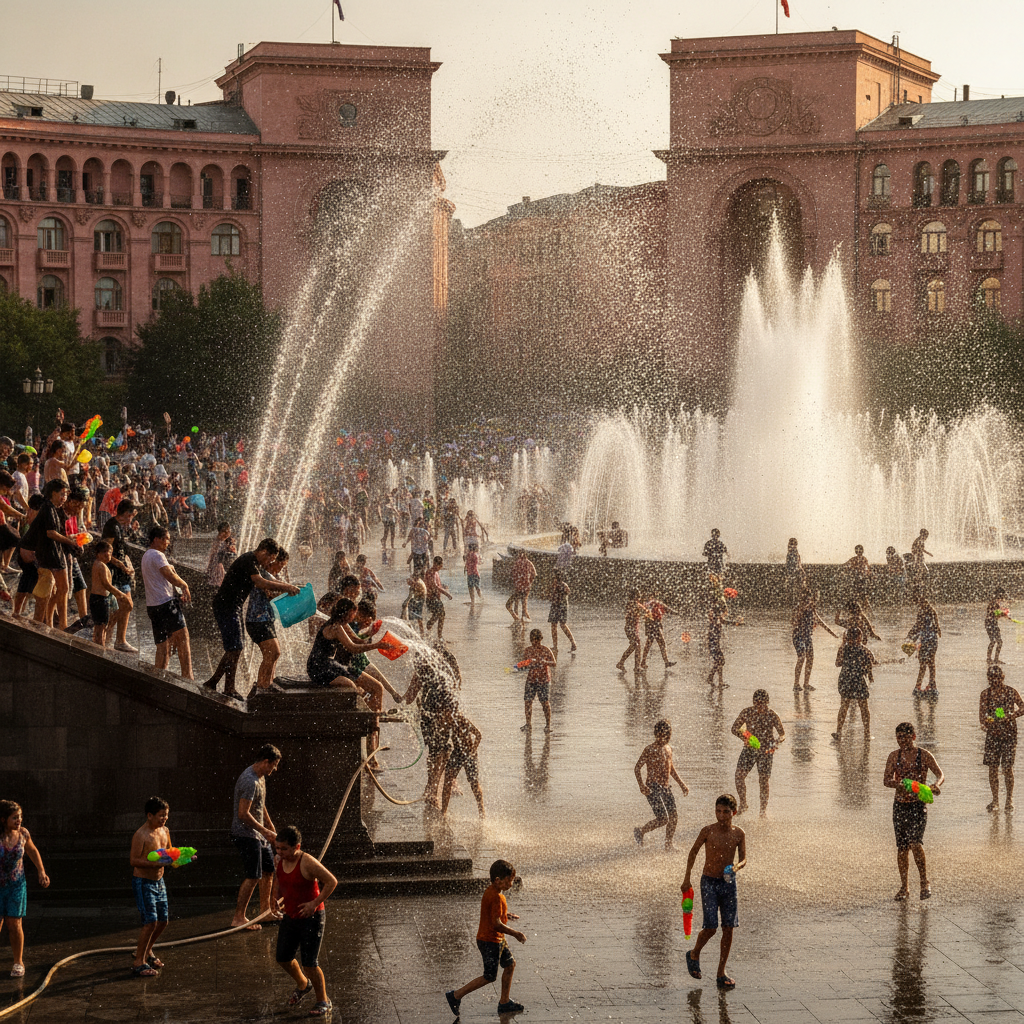
The Yerevan 3-day itinerary (the optimal day-by-day plan for first-time visitors combining the city highlights with the essential day trips): the itinerary guide. Day 1 (Yerevan city): 09:00 — Republic Square (the architecture; the 360-degree walk around the five tuff buildings): 10:00 — History Museum of Armenia (the Erebuni artifacts and the Armenian archaeological collection; the Golden Hall of Armenian jewelry): 12:30 — lunch at Sherep restaurant (the lavash baked in the on-site tonir; the khorovats): 14:30 — Matenadaran (the 23,000 manuscripts; the 862 CE oldest Armenian manuscript): 17:00 — the Cascade (the Cafesjian Center galleries inside the escalator; the Botero sculptures at the base; the Cascade summit view of Ararat): 21:00 — Republic Square dancing fountains performance. Day 2 (Garni and Geghard): 08:30 — shared taxi from Gai Bus Station to Garni (AMD 300, 40 min); 10:00 — Garni Hellenistic temple (the 1st century CE reconstruction): 11:30 — drive to Geghard Monastery (15 km): 12:00 — Geghard cave churches (the 13th-century underground cave chapels): 14:00 — lunch in the Azat River gorge (the roadside restaurants serving freshly caught Araxes fish over charcoal): 17:00 — return to Yerevan: 19:00 — Vernissage evening (the Friday market): 21:00 — duduk performance at the Avan Villa restaurant. Day 3 (Khor Virap and Etchmiadzin): 07:00 — taxi to Khor Virap (40 km south, AMD 2,000 = USD 5): 08:00 — Khor Virap monastery (the Ararat morning view; Gregory's pit): 10:30 — drive to Etchmiadzin (20 km northwest of Yerevan): 11:00 — Etchmiadzin Cathedral (the 301 CE founding cathedral; the treasury relics): 13:30 — lunch in Vagharshapat (the town of Etchmiadzin—local dolma and lavash): 15:30 — return to Yerevan: 17:00 — Cognac factory tour at YBC (the Ararat brandy tasting): 19:00 — farewell dinner at the Caucasus Tavern.
Walk this route with audio
Stories play automatically as you reach each stop — no tapping needed.
More in Yerevan
The Areni-1 Cave 6,000 BCE Wine Press Predating Even the Georgian Gadachrili Find by 200 Years Making Armenia the Oldest Winemaking Site, Lake Sevan Lowered 19m by Soviet Hydroelectric Projects & 10 Days in Three Caucasus Capitals for USD 400-600 Total
The First Sentence Written in Armenian Being the Book of Proverbs Verse 1:2, the Armenian Cognac Winning the 1900 Paris Exhibition Gold Medal Before the Judges Realized It Was Not French & the 2,000 Khachkars Destroyed in Azerbaijan in 2005 Documented by Satellite Imagery

Armenian Heritage: Garni Temple, Geghard Monastery, the Genocide History, the Ancient Christian Church, and the Most Historically Layered Single Armenian Day Trip
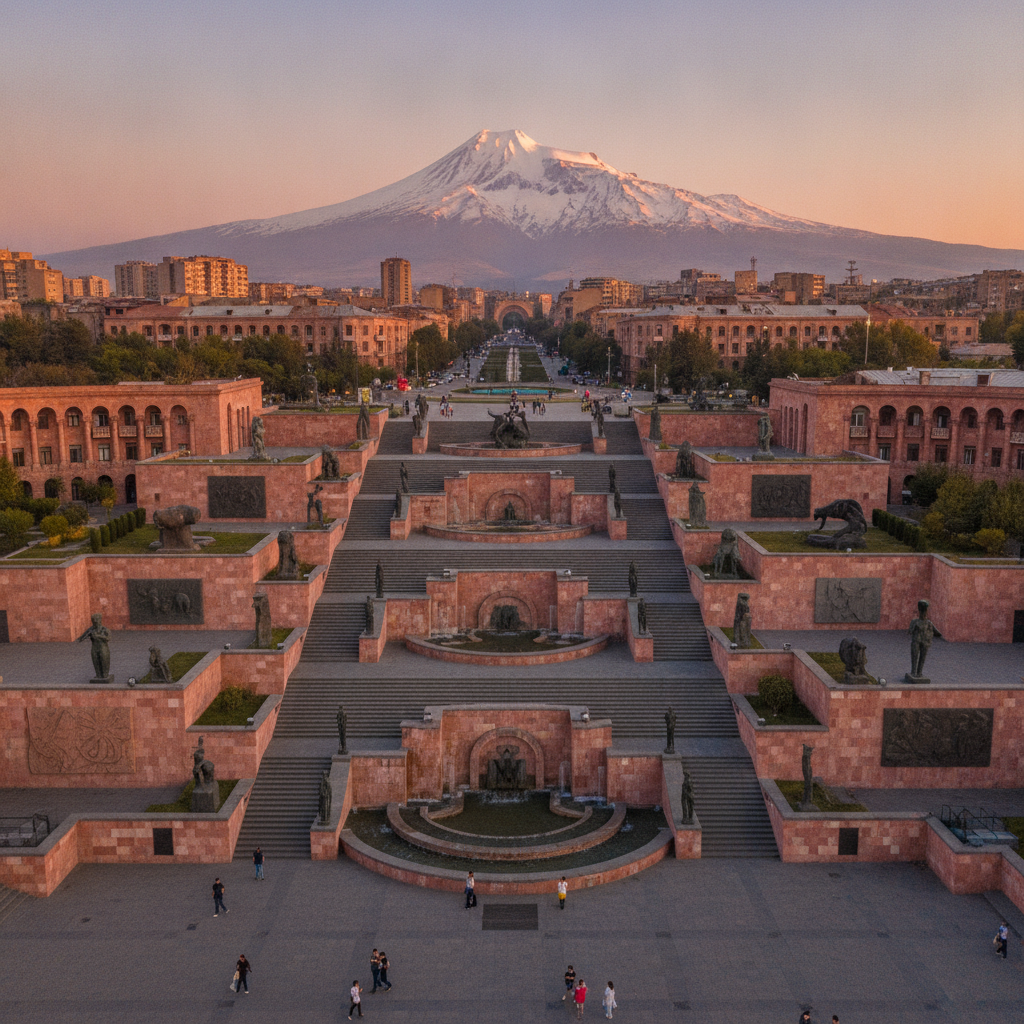
Yerevan Essential: The Cascade, Republic Square, Mount Ararat, the Genocide Memorial, the Vernissage, and the Most Emotionally Resonant Single Caucasus Capital
Prunus Armeniaca the Latin Name Embedding Armenia Into the Scientific Name of the Apricot Since Pliny the Elder's 1st Century CE Natural History, Picsart the First Armenian Tech Unicorn With 150 Million Monthly Users & 120,000 Karabakh Armenians Fleeing to Armenia in Days After September 2023