Prunus Armeniaca the Latin Name Embedding Armenia Into the Scientific Name of the Apricot Since Pliny the Elder's 1st Century CE Natural History, Picsart the First Armenian Tech Unicorn With 150 Million Monthly Users & 120,000 Karabakh Armenians Fleeing to Armenia in Days After September 2023
Pliny the Elder naming the apricot Prunus armeniaca in the 1st century CE Natural History making Armenia the only country with its name in the scientific name of a major food species; Picsart becoming Armenia's first tech unicorn at USD 1.5 billion valuation in 2021 with 150 million monthly users; 120,000 of 150,000 Karabakh Armenians fleeing to Armenia within days of the September 19-20, 2023 Azerbaijani operation; Vardavar's pre-Christian origin as the festival of Astghik the Armenian goddess of love and water with water-throwing obligatory for strangers, elders, and priests; the TUMO Center replicating Armenia's free tech education model in Paris, Berlin, Moscow, and Beirut; and Armenia receiving 1.86 million tourists in 2023 with 9% of GDP from tourism.
- 1
The Silk Road Through Armenia – Ani and the Bagratid Kingdom
The Armenian Silk Road heritage (the role of the Armenian kingdom in the medieval Silk Road—the trading connection that linked the Byzantine Empire to Persia and Central Asia through the Armenian plateau): the Silk Road history guide. The Bagratid Kingdom (the Bagratid Armenian Kingdom (885–1064 CE)—the last independent medieval Armenian state: the Bagratunis were an Armenian noble family who established a kingdom centered on Kars and Ani after the Arab withdrawal from the Armenian plateau: the capital Ani (founded 961 CE as the Bagratid capital): at the height of the Bagratid Kingdom (1000–1064 CE), Ani was the largest city in the world east of Constantinople—100,000 inhabitants, 48 churches, massive fortification walls with 1,000+ defensive towers: the Silk Road position (the Ani plateau commanded the primary land route from Constantinople to Persia—the Armenian Silk Road route passed through Artashat, Dvin, and Ani before crossing the Araxes River into Persia): the 1064 Seljuk conquest (the Seljuk Sultan Alp Arslan besieged Ani in August 1064 and captured the city after 25 days—the massacre of Ani's population was described by the Arab chronicler Ibn al-Athir as 'so many were slain that the streets ran with blood'—the event ended the Bagratid Kingdom and began a 500-year period of foreign rule over Armenia): the Ani today (the ruins of Ani are on the Turkish side of the Armenian border—the site is accessible from Kars, Turkey and is a UNESCO World Heritage site (2016): the ruins include the Cathedral of Ani (989–1010 CE), the most complete surviving medieval Armenian cathedral, and the Church of the Redeemer (1034 CE), half of which collapsed in a 1955 lightning strike).
- 2
Armenian Apricot – The Fruit of the People
The Armenian apricot heritage (the fruit that gives Armenia its most internationally recognized product (the cognac maker Ararat names its top cognac after Lake Akhtamar; the duduk is carved from apricot wood): the botanical and cultural heritage of the apricot): the apricot heritage guide. The Latin name (the domestic apricot (Prunus armeniaca—Armenian plum) was named for Armenia by the Roman natural historian Pliny the Elder in the 1st century CE Natural History, who recorded the fruit as originating from the Armenian plateau: the Latin name Prunus armeniaca remains the botanical designation of the species—Armenia is the only country with its name embedded in the scientific name of a major agricultural species): the origin (modern archaeobotanical research suggests that the apricot was first domesticated in China (the wild Prunus armeniaca originates in the Tian Shan mountains of western China); the European cultivated apricot lineage was introduced to Greece and Rome via Armenia (hence the Latin name)—the Armenian domestic varieties are the primary ancestors of the European apricot tradition): the Armenian apricot culture (the apricot in Armenian cultural life: the fresh apricot (of the most celebrated variety—the Shalakh—a large, soft, intensely sweet apricot grown only in the Ararat valley and harvested June–July): the dried apricot (the Armenian dried apricot (sukhoy abrikos)—the orange-red unsulfured variety dried on the farm in the Ararat valley sun—is the sweetest and most flavorful dried apricot available in the world according to multiple comparative tastings): the duduk (the Armenian national instrument is made from apricot wood—specifically from young branches of trees 10–15 years old—the wood produces the correct density for the warm, breathy tone).
- 3
Yerevan's Tech Scene – Armenia's Silicon Valley
The Yerevan technology and startup scene (the rapid emergence of Armenia as a technology and software development hub—disproportionate for its size): the tech economy guide. The background (Armenia's technology sector was established during the Soviet period—the Yerevan Computer Research Institute (founded 1960) was one of the USSR's primary computing research centers, training engineers who formed the base of the post-Soviet tech sector): the contemporary tech ecosystem (the Armenian tech economy: 1,200+ IT companies operating in Armenia (2024); the annual IT export revenue USD 800 million (2023); the sector employs approximately 28,000 IT professionals—approximately 8% of the employed population): the primary companies (the primary Armenian technology companies: Picsart (the photo and video editing app founded 2011—over 150 million monthly active users globally; the first Armenian tech unicorn (valued at USD 1.5 billion in 2021)); Krisp (the AI-powered background noise cancellation app founded 2017—used in 90+ countries; the most successful Armenian AI startup): the ecosystem infrastructure (the TUMO Center for Creative Technologies (the free after-school program for Armenian teenagers aged 12–18 in design, game development, music, and film—the most celebrated non-profit technology education program in the former Soviet space—the model has been replicated in Paris, Berlin, Moscow, and Beirut)): the Russian 2022 emigration boost (the September 2022 Russian military mobilization brought approximately 70,000 Russian IT professionals to Armenia in 3 months—temporarily doubling the IT workforce: the Russian tech companies Kaspersky, Mail.ru, and Yandex all relocated or established Armenia offices in 2022).
- 4
The Vardavar Festival – Armenia's Water Celebration
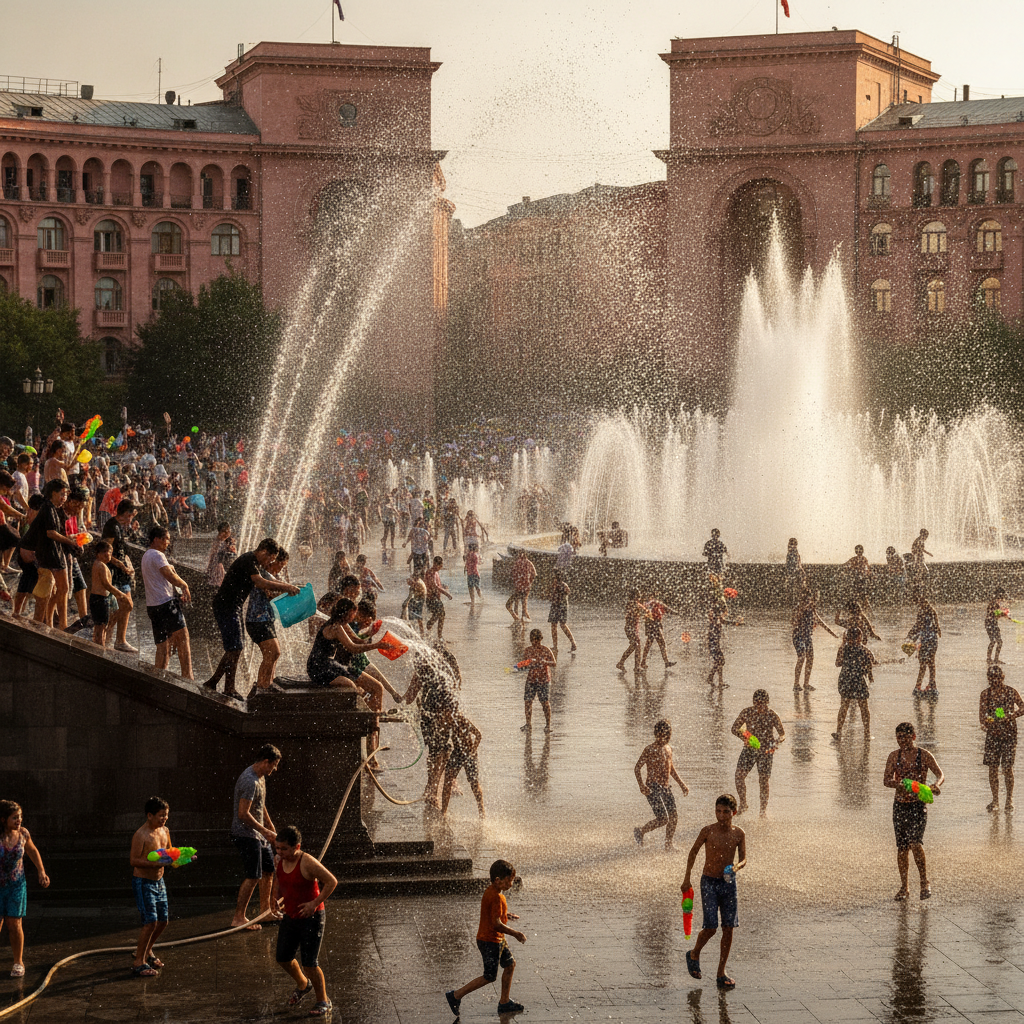
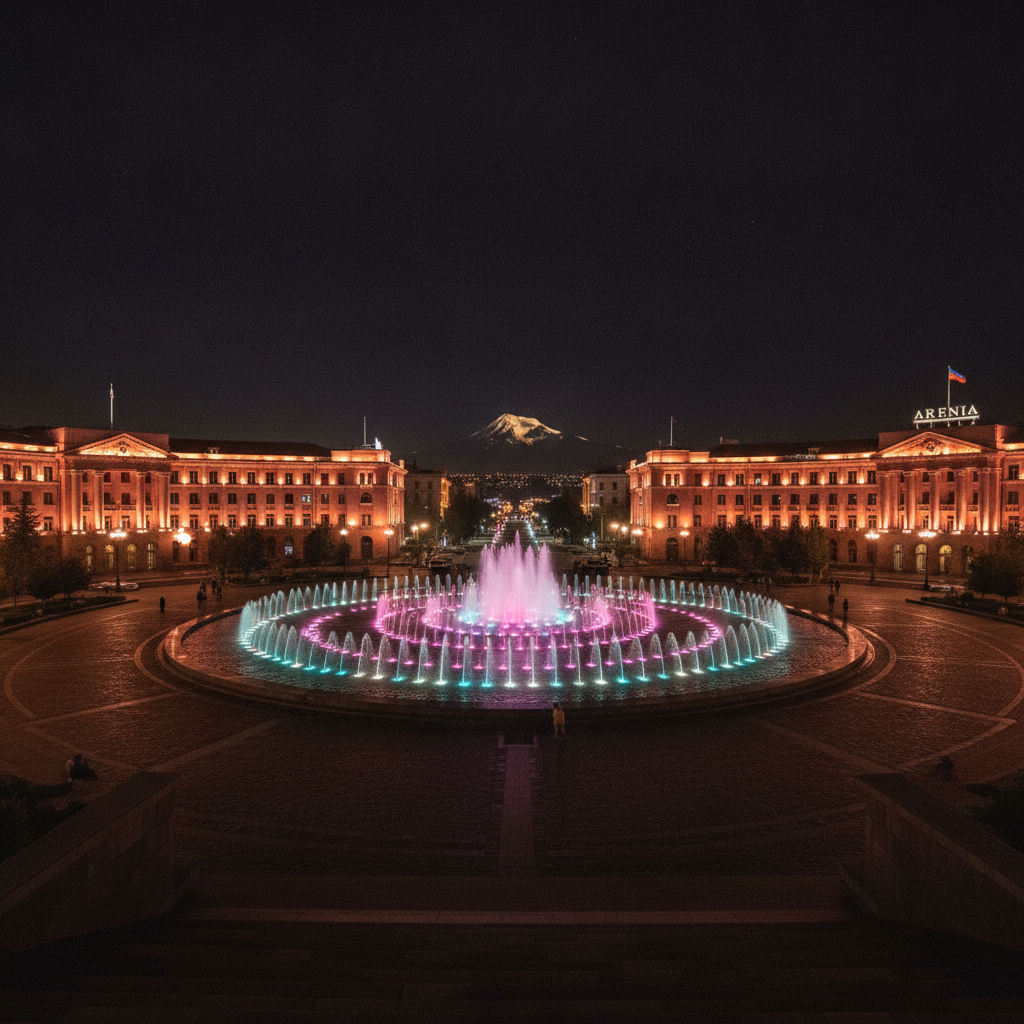
The Vardavar festival (the uniquely Armenian summer festival of water—one of the most joyful and participatory public festivals in the former Soviet space): the festival guide. The festival (Vardavar (Armenian: Վարդավառ)—the Armenian festival of water, celebrated 98 days after Easter (usually in late July): the festival involves the throwing of water on everyone and anyone in the streets—the water-throwing is universal, cross-generational, and obligatory by custom—strangers, elders, and priests are equally subject to the water): the origin (Vardavar has pre-Christian origins as a festival honoring Astghik (the Armenian goddess of love and water—the Armenian equivalent of Aphrodite); the festival involved bathing in rivers, releasing doves, and decorating with roses (vard): the Christian church incorporated Vardavar into the liturgical calendar as the Transfiguration of Christ (the Orthodox Transfiguration feast), though the water-throwing is a pagan survival): the Yerevan celebrations (the Yerevan Vardavar celebrations are the most spectacular in Armenia: Republic Square becomes a water battle zone; the Northern Avenue is lined with children with buckets and adults with water guns; any vehicle window left open is a legitimate target; the fountains at Republic Square are available for mass swimming): the provincial festivals (the Vardavar festivals outside Yerevan: the Vagharshapat (Etchmiadzin) festival is the most traditional; the Jermuk (the resort city 175 km south of Yerevan) combines Vardavar with the natural hot-spring culture of the city).
- 5
Armenia & Nagorno-Karabakh – The Context of Loss
The Nagorno-Karabakh context (the history and resolution of the conflict that has defined Armenian politics since 1988 and the September 2023 events that ended the Armenian presence in the territory): the political history guide. The history (Nagorno-Karabakh (Armenian: Արցախ, Artsakh)—the mountainous enclave in Azerbaijan with an Armenian majority population: the Soviet demarcation of 1921 assigned Karabakh to the Azerbaijani SSR while acknowledging its Armenian majority—the decision was Stalin's pragmatic concession to Azerbaijan): the 1988–1994 First Karabakh War (the war following the Armenian population's 1988 declaration of intent to join Soviet Armenia; the war continued through the Soviet collapse (1991) and the first years of independence: Armenia and the Karabakh Armenians won the First Karabakh War, controlling approximately 20% of Azerbaijani territory including the Lachin corridor by the 1994 ceasefire): the 2020 Second Karabakh War (the 44-day war (September 27–November 9, 2020) in which Azerbaijan, armed with Turkish Bayraktar TB2 drones and Israeli-supplied precision weapons, reconquered approximately 75% of the territory previously under Armenian control—including the city of Shusha (Shushi) on November 8, 2020): the September 2023 dissolution (the 24-hour Azerbaijani military operation of September 19–20, 2023 ended the Republic of Artsakh—120,000 of the 150,000 ethnic Armenians of Karabakh fled to Armenia in the following days—the largest Armenian displacement since 1915): the impact on Yerevan (the September 2023 refugee influx added approximately 100,000 people (10% of Yerevan's population) to the city within a few weeks—the housing and social service pressure on the city was significant).
- 6
Yerevan's Future – A City Redefining Itself
The contemporary and future Yerevan (the city's position at a historical inflection point—navigating between the Russian sphere, the EU aspiration, and the trauma of the 2023 Karabakh loss): the contemporary guide. The tourism boom (Armenia received 1.86 million international tourists in 2023—a 66% increase from 2022 (which was already a record): the tourism revenue was USD 1.03 billion in 2023—approximately 9% of GDP: Yerevan was ranked by Lonely Planet as one of the top 10 cities to visit in 2024): the EU aspiration (Armenia's geopolitical direction has shifted markedly toward the EU since 2022: the Comprehensive Enhanced Partnership Agreement with the EU entered into force in March 2021: the June 2024 Armenian parliament vote to begin EU membership talks was the most significant geopolitical shift in South Caucasian history since 2008—Armenia's application is complicated by its CSTO membership (the Russian-led collective security organization) which Pashinyan has placed in suspension): the Russian relationship (the Armenian-Russian relationship has deteriorated dramatically since 2020: Russia's failure to assist Armenia in the 2020 war and the 2023 Karabakh operation despite the CSTO obligations has pushed Armenia toward the West): the restaurant scene growth (the diaspora return and the tourism boom have created Yerevan's most dynamic restaurant and bar scene ever—the Northern Avenue and the Abovyan Street cluster contain 200+ restaurants and bars within 1 km): the real estate boom (Yerevan property prices have increased 70% between 2021 and 2024 driven by Russian immigration, diaspora investment, and tourism infrastructure—making affordability an increasingly complex issue for local residents).
Walk this route with audio
Stories play automatically as you reach each stop — no tapping needed.
More in Yerevan
The Areni-1 Cave 6,000 BCE Wine Press Predating Even the Georgian Gadachrili Find by 200 Years Making Armenia the Oldest Winemaking Site, Lake Sevan Lowered 19m by Soviet Hydroelectric Projects & 10 Days in Three Caucasus Capitals for USD 400-600 Total
The First Sentence Written in Armenian Being the Book of Proverbs Verse 1:2, the Armenian Cognac Winning the 1900 Paris Exhibition Gold Medal Before the Judges Realized It Was Not French & the 2,000 Khachkars Destroyed in Azerbaijan in 2005 Documented by Satellite Imagery

Armenian Heritage: Garni Temple, Geghard Monastery, the Genocide History, the Ancient Christian Church, and the Most Historically Layered Single Armenian Day Trip
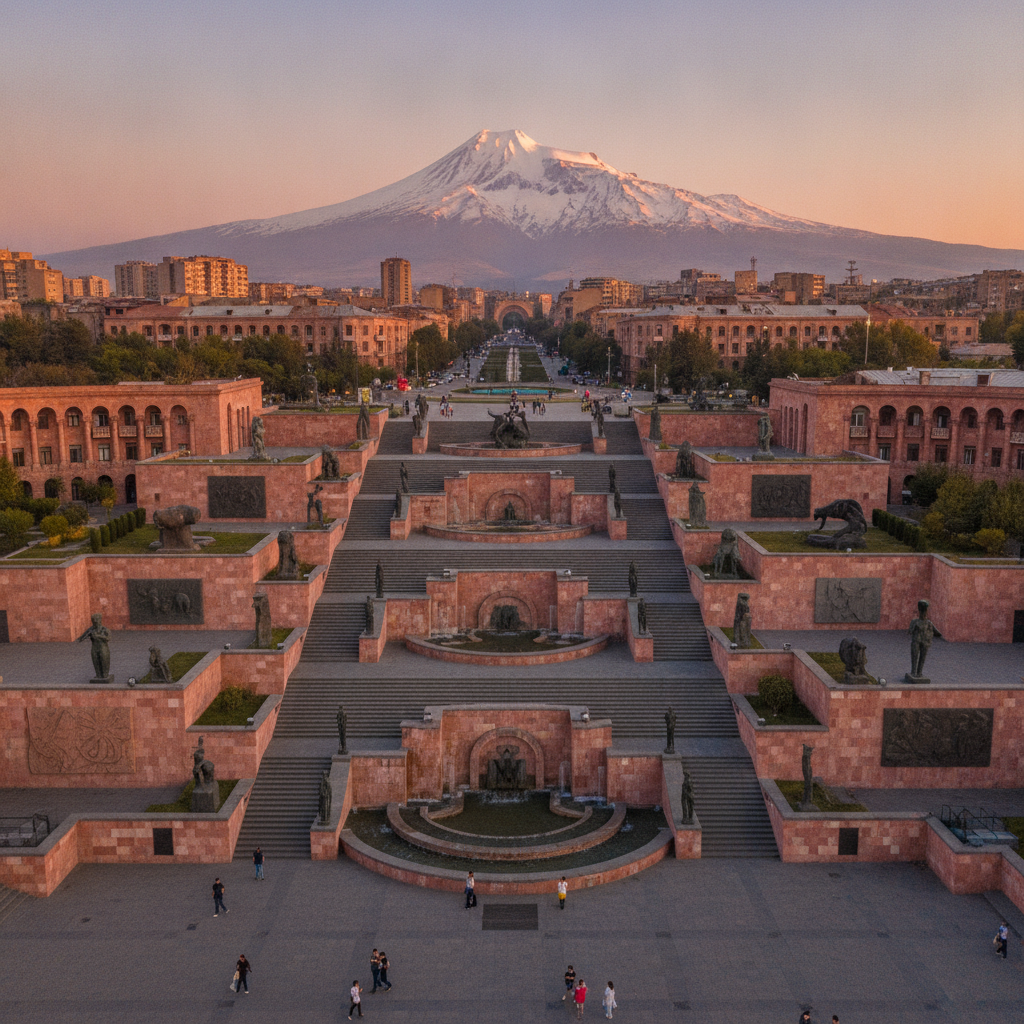
Yerevan Essential: The Cascade, Republic Square, Mount Ararat, the Genocide Memorial, the Vernissage, and the Most Emotionally Resonant Single Caucasus Capital
Stalin's Reply That Turkey's Crescent Moon Coat of Arms Does Not Mean Turkey Owns the Moon, the 1971 Cascade Still Not Fully Complete After 50 Years & the 23,000 Manuscripts Including the 862 CE Oldest Dated Armenian Manuscript