Yogyakarta's Arts: 9-Hour Wayang Kulit at Dawn, Gamelan's Influence on Debussy & Angkringan Cart Food After Dark
Javanese art in depth—the gamelan's bronze metallophone scales (slendro and pelog, neither in Western equal temperament, each set tuned to itself alone) whose sound convinced Debussy and John Cage that European music had a different future, the dalang performing all 30+ wayang characters' voices for 9 hours straight while directing the gamelan with foot signals, Heri Dono's wayang-based installation art and Taring Padi's woodblock banners that made the documenta 15 controversy, the angkringan lantern-cart appearing at dusk selling nasi kucing rice in banana leaf and strong sweet tea to students and becak drivers, Dieng Plateau's 8th-century Hindu temples in a sulphur-venting caldera above 2,000 metres and the dreadlocked children freed by ritual hair-cutting, and the Borobudur-Prambanan combo ticket logistics.
- 1
The Gamelan – Java's Bronze Orchestra
The gamelan—the bronze percussion ensemble that is the primary musical form of Javanese and Balinese culture—is the most significant musical tradition in Southeast Asia and one of the most influential world music systems (John Cage, Benjamin Britten, and Claude Debussy all cited gamelan as a transformative musical influence). The Javanese gamelan: an ensemble of 20–80 instruments including the saron (a metallophone with keys struck by a mallet), bonang (gong chimes), gender (a softer metallophone with resonators beneath each key), gong ageng (the large hanging gong whose stroke marks the structural divisions of each piece), kendhang (barrel drums played by the ensemble's de facto director), and suling (a bamboo flute). The gamelan tuning system: Javanese gamelan is tuned in two scales (slendro—a pentatonic scale, and pelog—a seven-tone scale)—neither corresponding to Western equal temperament; each gamelan ensemble is tuned to itself rather than a universal standard, so the same piece sounds slightly different on every gamelan set. Yogyakarta has two distinct gamelan traditions (kraton style—more formal and controlled; and the village and wayangan style—more dynamic). Free gamelan practice sessions are offered weekly at the Kraton and several arts institutes in Yogyakarta.
- 2
Wayang Kulit – The All-Night Shadow Play
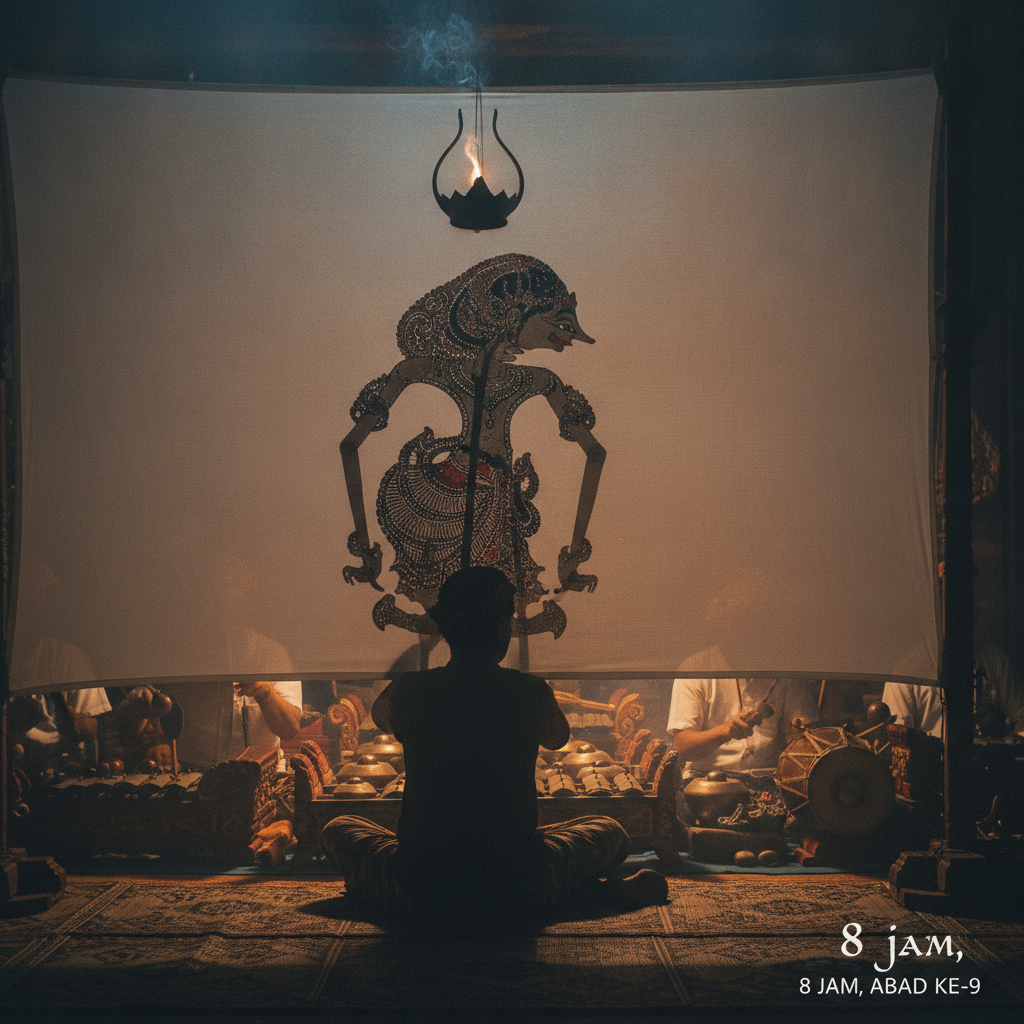
Wayang kulit (shadow puppetry)—the theatrical tradition in which a dalang (puppet master) manipulates intricately carved and painted leather puppets behind a white cloth screen backlit by an oil lamp (now usually an electric light)—is the oldest continuous theatrical tradition in the world, with roots in 9th-century Javanese Hindu-Buddhist religious practice. The performance: a full wayang kulit performance lasts 8–9 hours (typically beginning at 21:00 and ending at dawn), with the dalang performing all voices, narrating, and directing the gamelan simultaneously—considered one of the most demanding single-person performance feats in any culture. The stories: drawn from the Mahabharata and Ramayana (Hinduised versions adapted to Javanese cosmology, with additional characters—the Punakawan, a family of comic servants who provide social commentary and slapstick relief—unique to the Javanese tradition). The dalang's social role: the dalang is a respected community figure who may be called to perform at life-cycle ceremonies (weddings, circumcisions, housewarmings) where the specific story chosen is selected for its auspiciousness in relation to the occasion. UNESCO inscribed wayang kulit as a Masterpiece of Oral and Intangible Heritage in 2003.
- 3
Yogyakarta's Contemporary Art Scene
Yogyakarta's contemporary art scene—centred on the galleries and artist studios of Jl. Tirtodipuran (the 'gallery street' in South Yogyakarta), the Cemeti—Institut Kesenian Jogja (established 1988), and the Indonesian Visual Art Archive (IVAA)—is the most historically significant contemporary art scene in Indonesia and has been the primary training ground for Indonesian contemporary artists who have achieved international recognition. The context: Yogyakarta's student population, low cost of living relative to Jakarta, established traditional arts infrastructure (gamelan, batik, wayang—providing a visual vocabulary and technical discipline), and the patronage of the Sultan's court created conditions for contemporary art practice that were unusually supportive. Significant figures from the Yogyakarta art scene: Heri Dono (installation and performance artist whose work combines wayang imagery with political critique—internationally exhibited since the 1990s), FX Harsono (one of Indonesia's most important political artists, active since the 1970s), the Taring Padi collective (woodblock print and poster collective active since the Reformasi movement—their large-format linocut prints and banners became internationally recognised in connection with the 2022 documenta 15 controversy). The ARTJOG festival (held annually July–August in the Jogja National Museum) is the most significant contemporary art event in the city.
- 4
Yogyakarta's Culinary Tradition – Beyond Gudeg
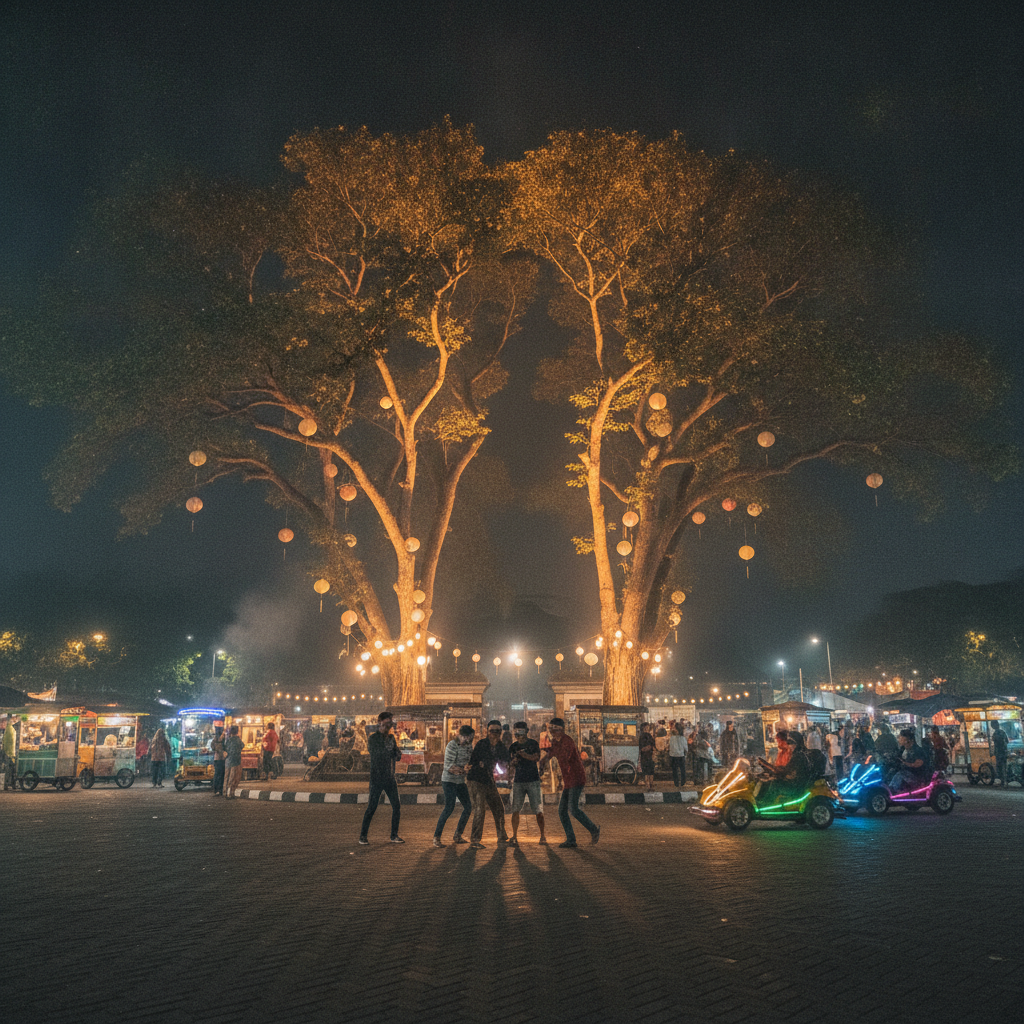
Yogyakarta's food culture—built on the Javanese culinary tradition of the royal court (the Kraton cuisine of the Sultan's household) and the street food of the city's large student and working-class population—is more diverse than the gudeg reputation suggests. The full Yogyakarta food circuit: gudeg (the jackfruit dish described in Route 1—the city's identifying food, served at specialised gudeg restaurants from before dawn through mid-morning); angkringan (the cart food of Yogyakarta—a distinctively Yogyanese institution consisting of a lantern-lit handcart that appears at dusk, selling rice in banana-leaf packets (nasi kucing—literally 'cat rice,' because of the small portion size), satay on skewers, and strong sweet tea; the angkringan is the social institution of Yogyakarta's night—students, workers, and becak drivers congregating around the warmth of the cart's charcoal). Sate Klatak: a Yogyakarta specialty—goat meat satay seasoned only with salt, grilled on bicycle spoke skewers rather than bamboo (the metal conducts heat and cooks the meat from inside as well as outside), served with Javanese soy sauce and chilli. The Pasar Beringharjo (the old market adjacent to Jl. Malioboro—the most authentic food market in Yogyakarta, the north hall devoted to traditional Javanese snacks and the batik wholesale trade).
- 5
Dieng Plateau & the Ancient Temples of the Highlands
The Dieng Plateau—a high-altitude volcanic plateau at 2,093 metres in Wonosobo regency (120 km northwest of Yogyakarta, accessible in 3 hours by car)—contains the oldest Hindu temples in Java (8th century CE, predating Prambanan by a century) in one of the most extraordinary highland landscapes in Indonesia. The temples (Candi Arjuna, Candi Semar, Candi Srikandi, Candi Puntadewa—named for Mahabharata characters): small brick-and-stone Hindu temples in remarkably good condition for their age, set in a caldera landscape of volcanic lakes (Telaga Warna—'Coloured Lake,' whose water shifts between green, yellow, and blue depending on the sulphur content and light conditions), active crater vents, and the Sikidang Crater (where sulphurous gas vents from the ground in a chaotic pattern that shifts—the crater 'jumps'). The cultural tradition: the Dieng area has a tradition of dreadlocked children (anak gimbal)—believed to be spiritually chosen by the Dieng spirits, they are left with their naturally-dreadlocked hair until a ritual cutting ceremony (Ruwatan Rambut Gembel) frees them from their spiritual status. The Dieng Cultural Festival (August—the annual event combining the ruwatan ceremony with traditional arts performances and the garlic harvest celebration).
- 6
Practical Yogyakarta – Getting Around, Getting to Borobudur & Where to Stay
Yogyakarta International Airport (YIA—Yogyakarta International Airport, opened 2020, 45 km west of the city at Kulonprogo)—receives domestic flights from Jakarta (1 hour, Garuda, Lion Air, Batik Air—multiple daily), Bali (1.5 hours), and Makassar, plus international connections from Singapore and Kuala Lumpur. The older Adisucipto Airport (JOG—inside the city, 6 km east of the centre) is closed for scheduled commercial flights. Getting around Yogyakarta: Trans Jogja bus (the city's BRT—4,500 rupiah flat fare, covering the main corridors including Jl. Malioboro, the Kraton, and Prambanan); becak (bicycle rickshaw—the most pleasant transport for short old-city distances; negotiate before boarding: Rp 20,000–30,000 for cross-city short trips); online motorcycle taxi (GoJek/Grab—Rp 10,000–25,000 for most city trips). Getting to Borobudur: tour bus from the city (Rp 50,000–75,000 return, 1.5 hours); rented bicycle (42 km, not recommended unless you enjoy cycling in the heat); private car (Rp 300,000–500,000 for the day including Prambanan). Entry fees: Borobudur Rp 350,000 (€22) for foreigners, Prambanan Rp 350,000 (€22) or combo ticket Rp 520,000 (€33); Kraton Rp 15,000 (€0.95). Best season: April–October (dry season); avoid December–February (peak wet season, though Borobudur in morning mist is genuinely beautiful).
Walk this route with audio
Stories play automatically as you reach each stop — no tapping needed.
More in Yogyakarta
Yogyakarta's Foundations: Muhammadiyah's 50 Million Members Founded Here, Solo's Batik Laweyan & the Sultan's Meditation Practice

Yogyakarta's Soul: Kotagede Silver Filigree, the Republican Government in the Kraton & Nyi Roro Kidul's Green Sea
Yogyakarta: World's Largest Buddhist Monument at Borobudur, the Active Sultan-Governor & Gudeg at Dawn on Malioboro