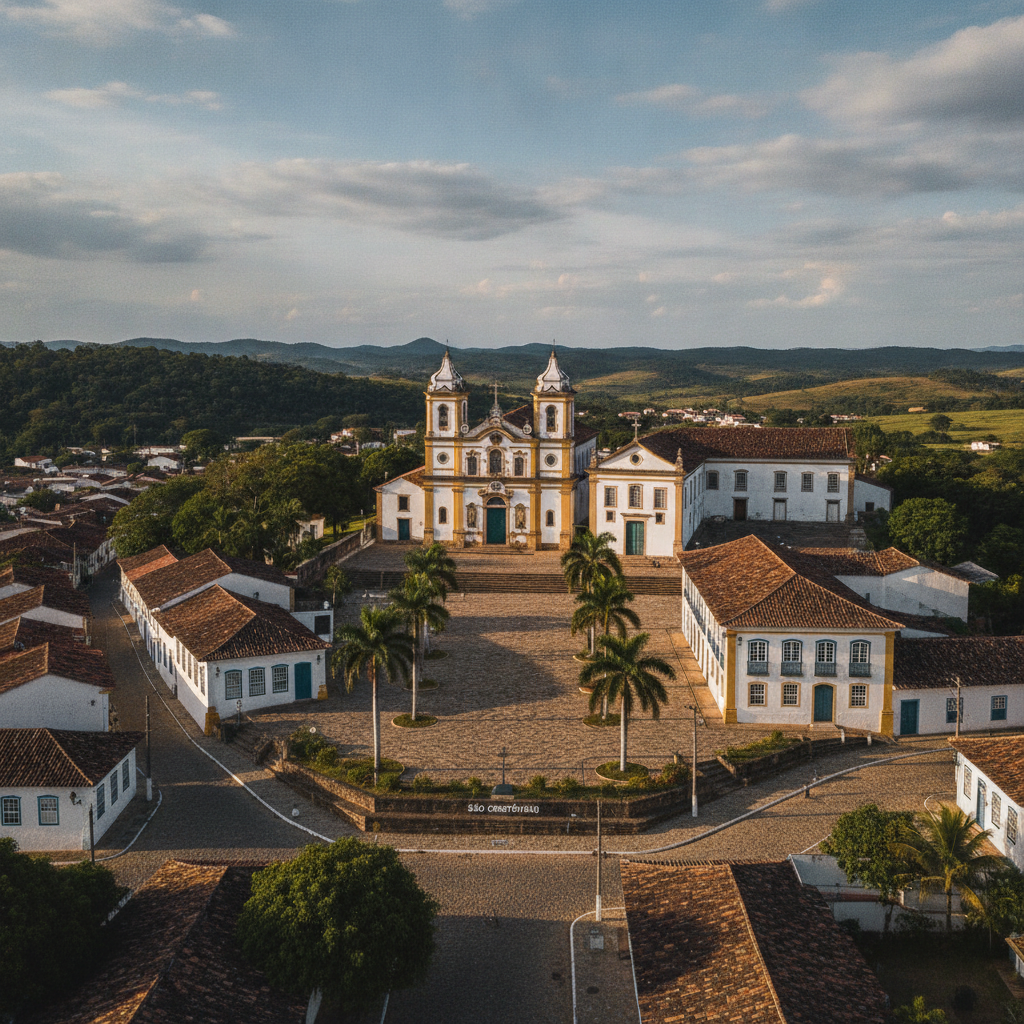


São Cristóvão: Brazil's Fourth-Oldest City & Colonial Gem
São Cristóvão — 25 km from Aracaju — is Brazil's fourth-oldest city and a UNESCO World Heritage candidate; the Praça São Francisco and its baroque church complex are among the finest in northeastern Brazil

Aracaju's Crab Culture: Sergipe's Defining Seafood
Sergipe is Brazil's largest crab producer — and Aracaju's entire food identity revolves around the crustacean; the Passarela do Caranguejo, the crab festivals, and the multiple preparations make it unique in Brazil

Sergipe on the Table: Goat, Dried Beef & Sertão Flavours
Aracaju's food is a meeting point of coast and sertão — the crab and seafood of the estuary alongside the bode (goat) and carne de sol of the interior create a cuisine that captures Sergipe's geographic duality

Laranjeiras: Sergipe's Afro-Brazilian Cultural Capital
Laranjeiras — Sergipe's former state capital — is a colonial town with an extraordinary Afro-Brazilian cultural heritage; the lambe-sujo and cacumbi festivals are among the most important Afro-Brazilian celebrations in the Northeast

Cânion do Xingó: The São Francisco River's Blue Canyon
The Xingó Canyon — where the São Francisco River cuts through the caatinga between Sergipe and Alagoas — is one of northeastern Brazil's most dramatic landscapes; boat trips through the canyon are extraordinary

São Francisco River Delta: Where the Great River Meets the Sea
The São Francisco River delta on the Sergipe-Alagoas border — where the 'Velho Chico' finally reaches the Atlantic — is a protected area of mangroves, sand banks, and sea turtle nesting beaches

Mangue Seco: The Desert Island at Sergipe's Southern Tip
Mangue Seco — on the Sergipe-Bahia border, accessible only by boat — is one of the Northeast's most remote and beautiful coastal villages; enormous white dunes, a sheltered lagoon, and no roads make it extraordinary

Orla de Atalaia: Aracaju's Celebrated Beachfront
The Orla de Atalaia — Aracaju's beach promenade — is one of the best-designed urban beach fronts in northeastern Brazil; the Passarela do Caranguejo, the restaurants, and the family beach culture define the city