

Siem Reap's Other Story: Khmer Rouge's 2 Million Deaths, Tonlé Sap's Reversing River & Apsara Dance's Revival
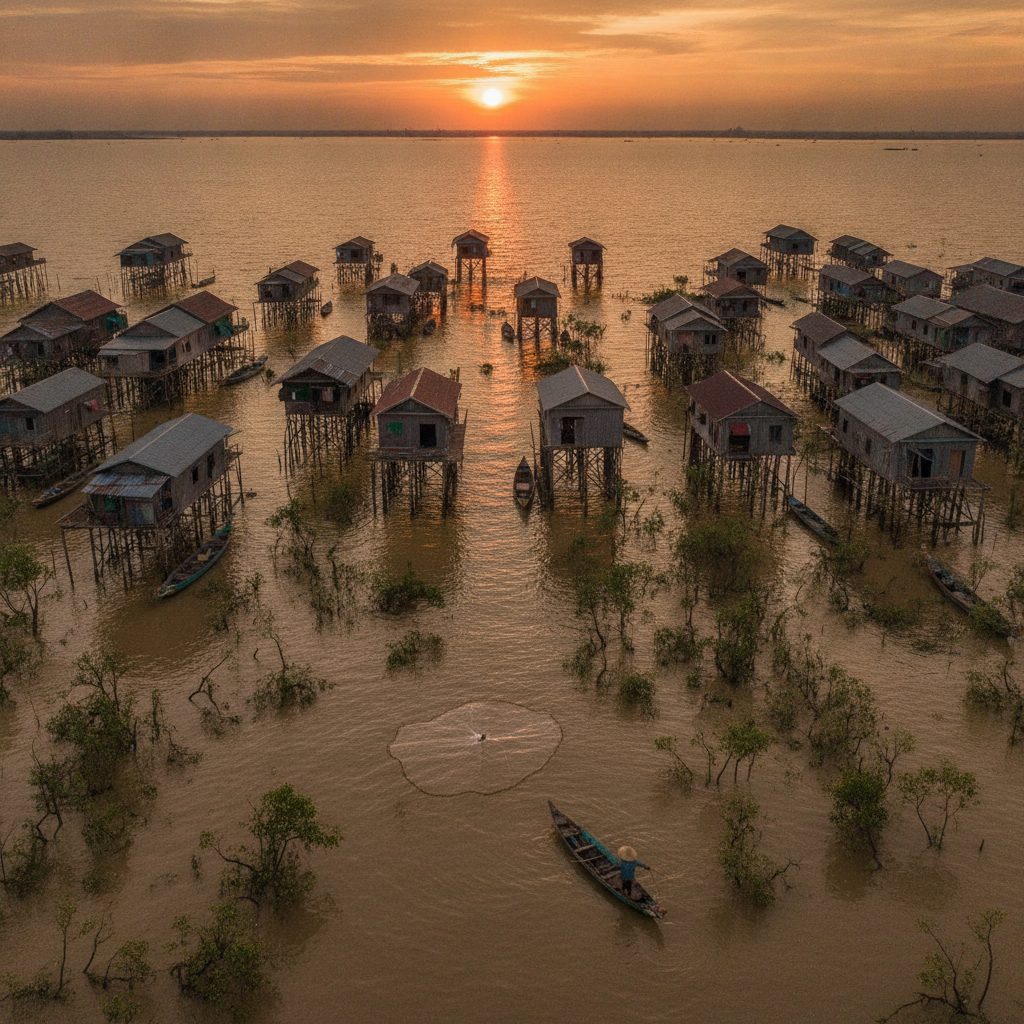
Cambodia's history and recovery alongside Angkor—the Khmer Rouge's 1975–1979 forced evacuation of every city and execution of 25–33% of the population (Pol Pot's regime abolished money, education, and religion simultaneously), Siem Reap's post-1993 tourism boom from 7,600 to 2.6 million visitors with land grabbing displacing families to build hotels, Pub Street's $0.50 Angkor draft beer economy that collapsed completely in 2020 when migrant workers lost jobs and family remittances simultaneously, Tonlé Sap Lake's reversing river that expands to 6 times its size in monsoon flooding 70% of Cambodia's protein supply, Cuisine Wat Damnak's French-trained Khmer tasting menu, and Aki Ra's Cambodia Landmine Museum from a former child soldier who now detonates the mines he once planted.

Angkor Deeper: 1,000 Lingas in Phnom Kulen's Sacred River, Preah Khan's Dancer Colonnade & the Sunrise Photo Circuit
Beyond the main circuit—the Grand Circuit's Preah Khan Buddhist university with its Hall of Dancers and Ta Som's fig tree growing completely over the stone gate tower, Phnom Kulen where Jayavarman II proclaimed the Devaraja God-King ideology in 802 CE and carved a thousand Shiva lingas into the river source so all water to Angkor was consecrated, the Angkor National Museum's Gallery of a Thousand Buddhas (entry $12 in a country earning $300/month), UNICEF investigations finding that most 'orphanage tourism' children have living parents paid to be institutionalised, the French versus Indian restoration debate (anastylosis versus adding new stone), and why Phnom Bakheng at 16:30 (300-visitor limit) versus Pre Rup (uncrowded) changes your entire sunset.

Leaving Siem Reap: Artisans Angkor's Ikat Silk Revival, Buddhist Monks at Dawn & Angkor's Civilisational Weight
The final layer of Siem Reap—Phnom Sampeu's cliff-top caves where Khmer Rouge threw 10,000 prisoners to bones visible below the temple, Angkor Wat's resident monk community that has maintained continuous Buddhist occupation since the 15th-century Hindu-to-Theravada conversion (different from any purely archaeological site), the Artisans Angkor silk farm's natural indigo and turmeric dyeing reviving the ikat hol textile that the genocide almost erased, Theravada Buddhism as the institution Cambodians trust more than any government having rebuilt 4,200 pagodas since 1979, the Old Market's prahok smell and the Night Market's bamboo stage, and the particular quality of leaving a place where civilisational peak and civilisational collapse exist 60 years and 800 years apart.

Siem Reap's Foundations: The 1,000 km² Hydraulic Empire, Apsara Dance Surviving Genocide & Henri Mouhot's Useful Myth
Angkor's infrastructure and future—the lidar survey revealing Angkor's 1,000 km² dispersed urban footprint potentially making it the largest pre-industrial settlement in history (the West Baray reservoir still full and still used as a swimming lake), Apsara dance's 90% practitioner loss under the Khmer Rouge and the Cambodian Living Arts revival training the next generation of bent-wrist mudra specialists, Kampot's peppercorn terroir cited by Michelin chefs and the crab at Kep market, Henri Mouhot's 1860 account misnamed 'discovery' (Portuguese missionaries described Angkor in 1586; Cambodian pilgrims never stopped visiting), and Siem Reap's new 10 million-passenger airport that bets on growth for a destination whose central challenge is already too many visitors.

Siem Reap Grounded: Fish Amok and Prahok Fermented Fish, Tuk-Tuk Drivers' COVID Crisis & Bamboo Train to Battambang
The human and culinary Siem Reap—prahok fermented fish paste as the Cambodian Parmesan (present in everything, identifiable by nothing), fish amok steamed in banana leaf as the national dish that requires the Tonlé Sap's freshwater fish ecosystem to exist, France's EFEO scholarship that systematically restored Angkor from 1907 while sending artefacts to Paris, the tuk-tuk driver who learned English from tourists over a decade and lost everything in 2020 when zero visitors arrived, Battambang's bamboo platform on rail wheels, the post-COVID conservation debate about whether to cap Angkor entry below the 6.6 million 2019 peak, and why hiring your driver directly (not through the hotel) is the most impactful $5 decision in Cambodia.

Angkor: Sunrise at the World's Largest Temple, 216 Stone Faces of the Bayon & Jungle-Swallowed Ta Prohm
The full Angkor experience—Angkor Wat's 800 metres of continuous bas-relief carved by Suryavarman II's 12th-century court as cosmic mountain and royal mausoleum (west-facing, toward the realm of the dead), the Bayon's 54 towers and 216 giant smiling faces that are simultaneously the bodhisattva Avalokitesvara and Jayavarman VII's claim to near-divinity, Ta Prohm's strangler figs whose roots have grown through the walls of a Buddhist monastery that housed 2,740 officials in 1186, the hydraulic barays that supported 750,000 people making Angkor potentially the world's largest pre-industrial city, and Banteay Srei's pink sandstone carvings so fine that Malraux was arrested for attempting to steal them.