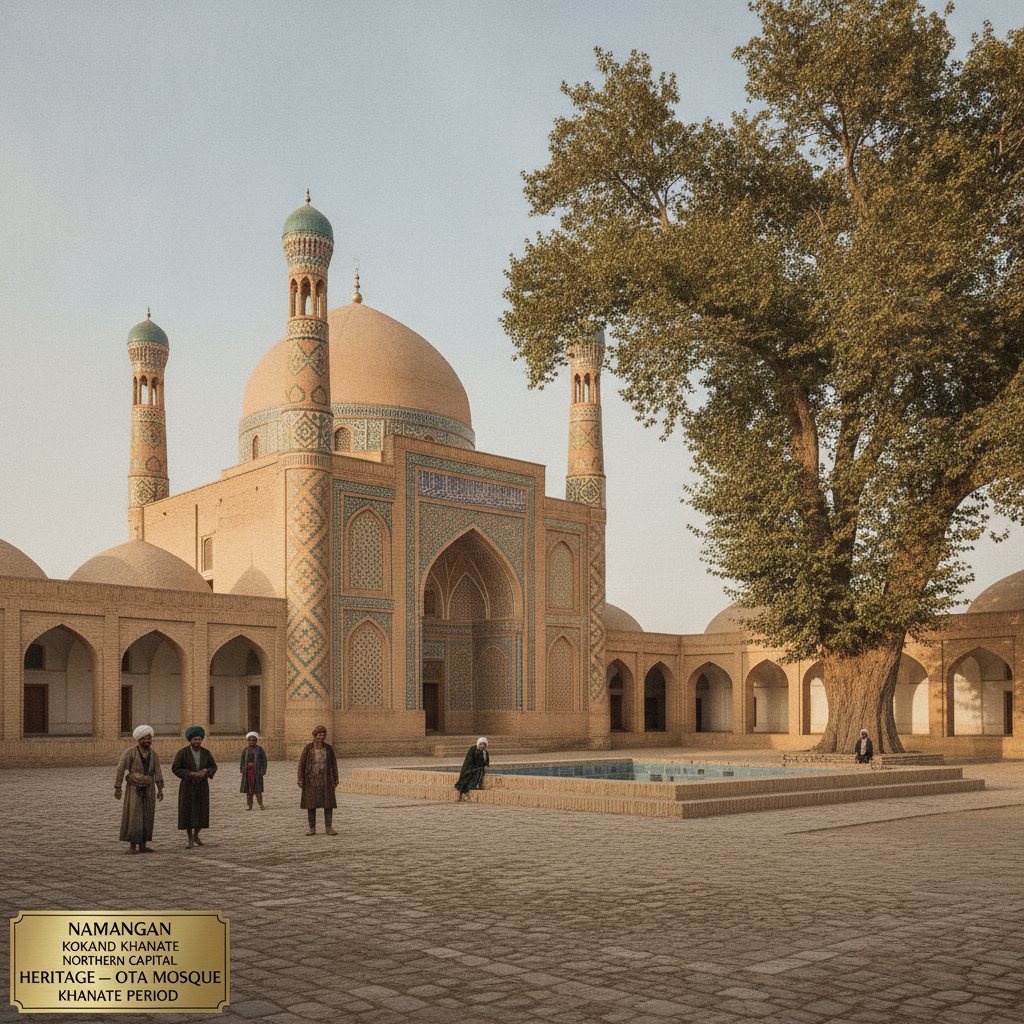

Namangan Kokand Khanate Northern Capital Heritage
Explore Namangan's role as the northern capital of the Kokand Khanate — the 19th-century Central Asian state that made Namangan its major northern city and invested in the mosques, madrasas, and caravanserais that gave it its character as a religious and commercial center, the architectural heritage of the khanate period visible in the surviving historical buildings.
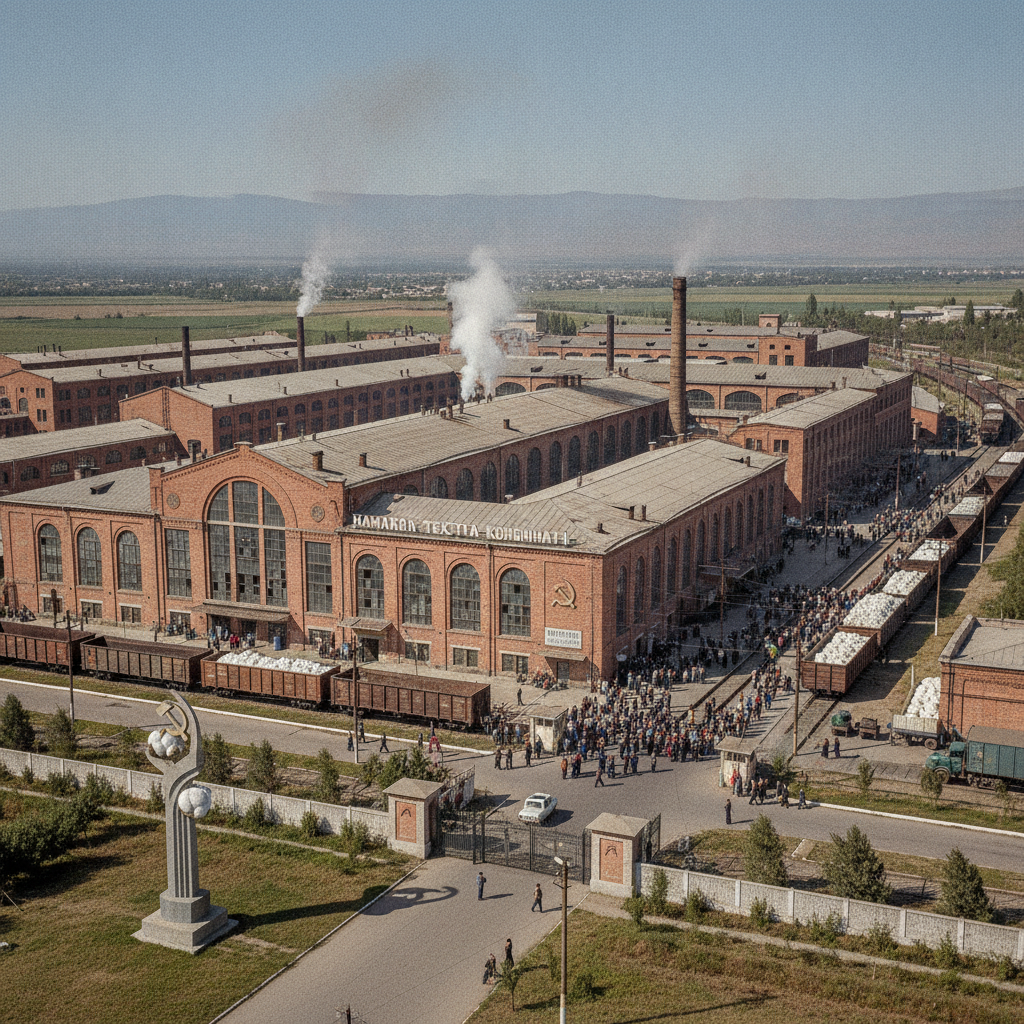
Namangan Soviet Industrial Legacy Textile City
Explore Namangan's Soviet industrial legacy — the city transformed by Soviet planners from a traditional craft and commercial center into a major textile manufacturing hub, the cotton ginning and silk processing factories that employed tens of thousands of workers, the industrial infrastructure that remains central to the city's economy alongside the revival of traditional craft production.
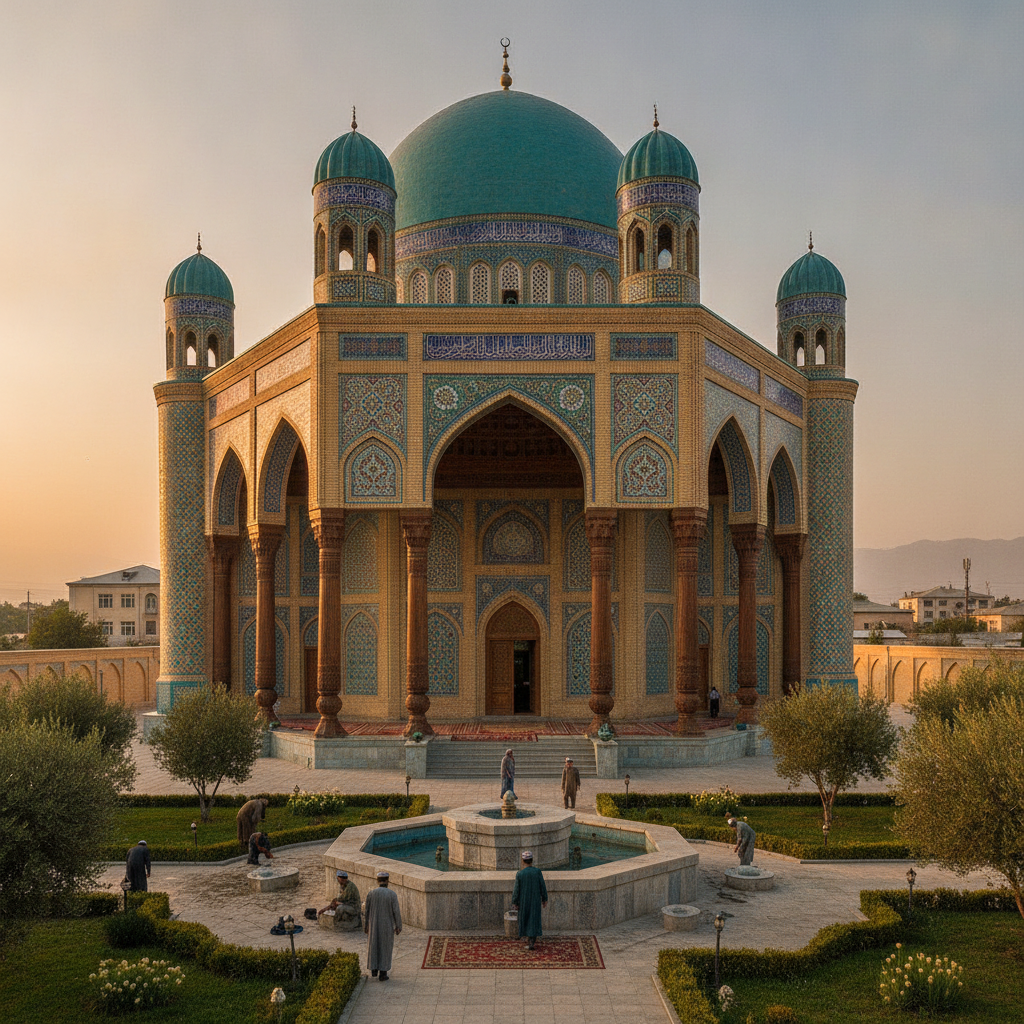
Namangan Islamic Revival Mosques Religious Life
Explore the Islamic religious life of Namangan — the city with the highest concentration of active mosques in Uzbekistan, the religious education institutions that have revived since 1991, the major mosque complexes that serve the city's devout Muslim population, and the complex relationship between Islamic practice and state authority that has shaped the city's post-independence identity.

Namangan Northern Fergana Valley Landscape
Explore the northern Fergana Valley landscape around Namangan — the portion of the valley between the Chatkal Range to the north and the flat valley floor, the river terraces and foothill slopes where orchards and vineyards produce fruit of exceptional quality, the villages where silk cocoon production combines with cotton growing and the traditional pastoral activities of the mountain margins.
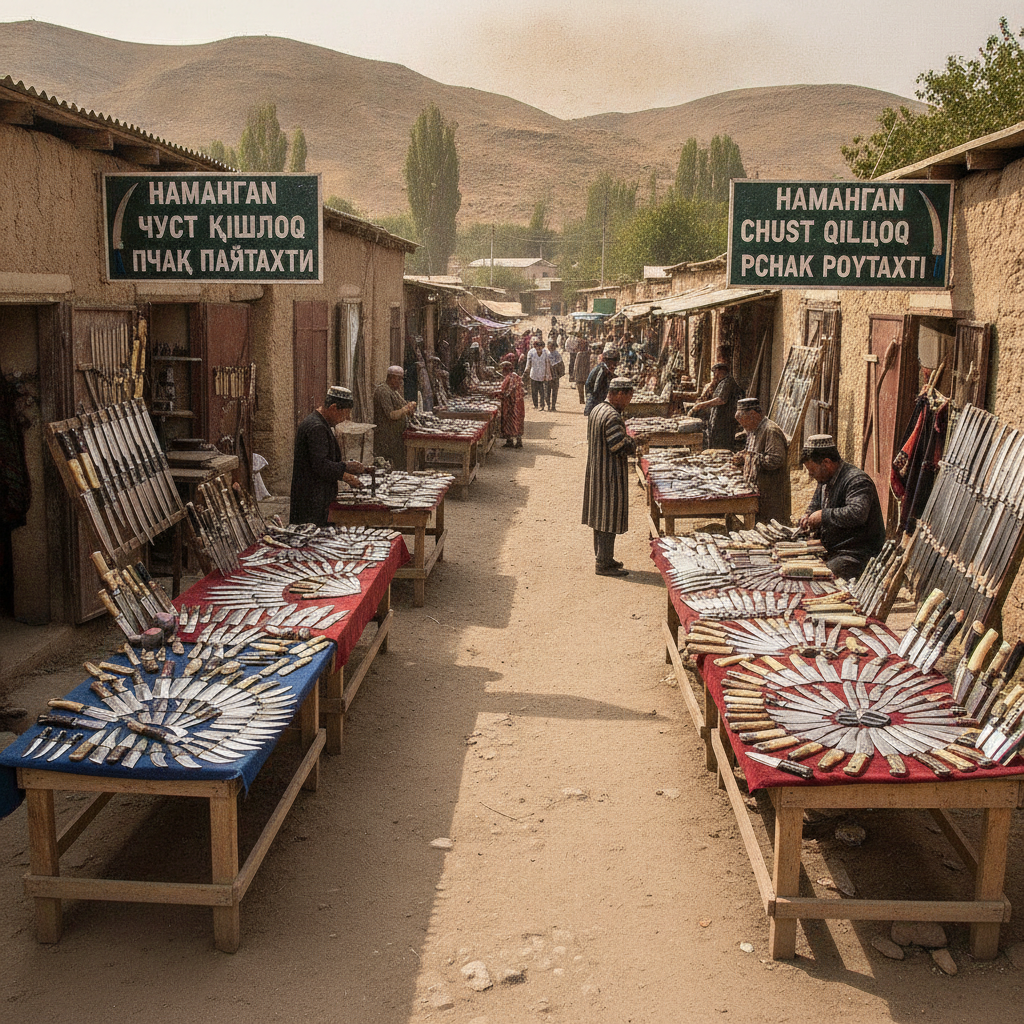
Namangan Chust Village Pchak Knife Capital
Visit Chust — the village 30 kilometers from Namangan that is the pchak knife capital of Central Asia, where virtually every family is involved in knife production and the village's knives are sold across Uzbekistan and exported to Russia, Kazakhstan, and beyond, the craft making Chust synonymous with quality knife production across the region.
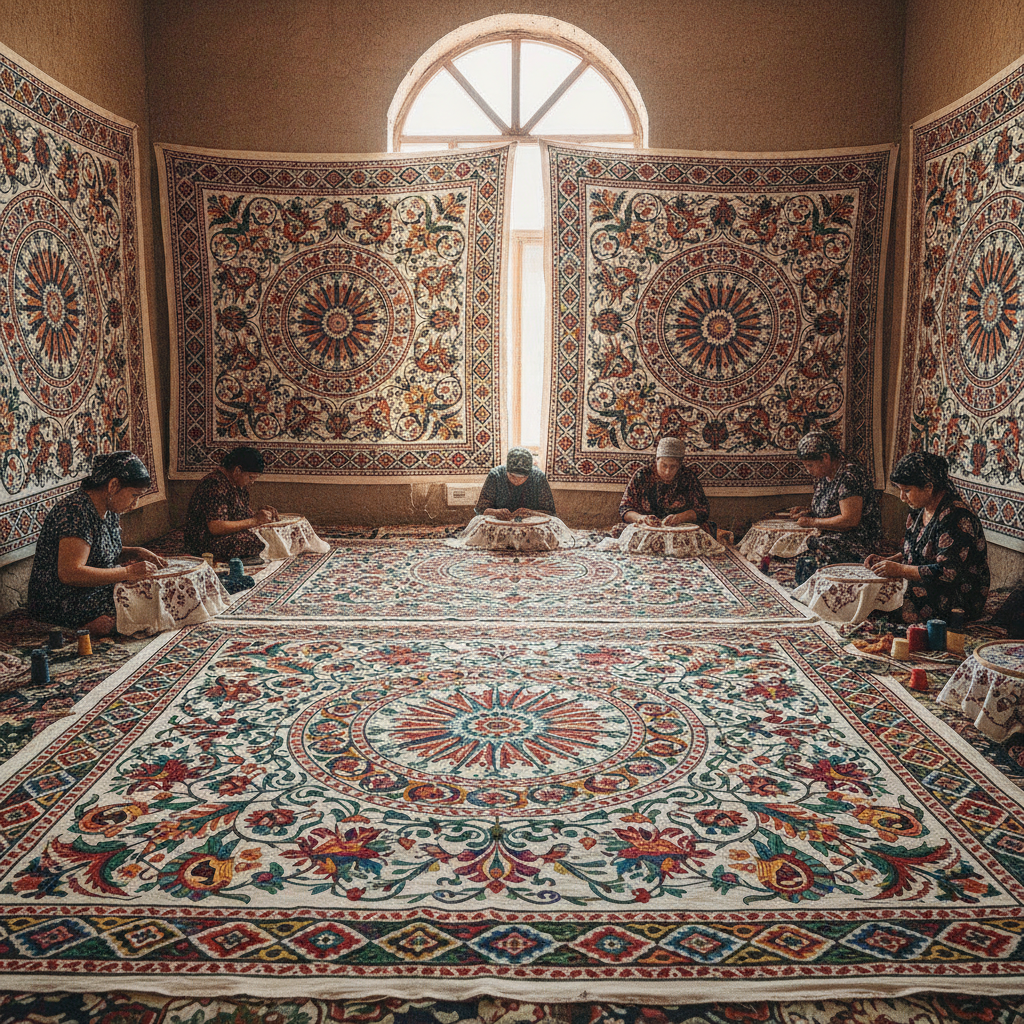
Namangan Traditional Embroidery and Craft Heritage
Explore the traditional craft heritage of Namangan — the city known for its embroidery tradition producing the distinctive Namangan style of suzani and gold thread embroidery, the craft workshops where women work on the large-scale decorative panels that are among Central Asia's most celebrated textile arts, and the male-dominated crafts of knife-making, ceramics, and woodworking.
Namangan Yusupov History Political Heritage
Explore Namangan's 20th-century political history — the birthplace of Yusupov and other prominent Soviet-era figures, the city that experienced the collectivization of its agricultural economy, the anti-Soviet Basmachi resistance movement that operated in the Fergana Valley hills, and the post-independence Islamic revival that made it one of the most politically sensitive cities in Uzbekistan.
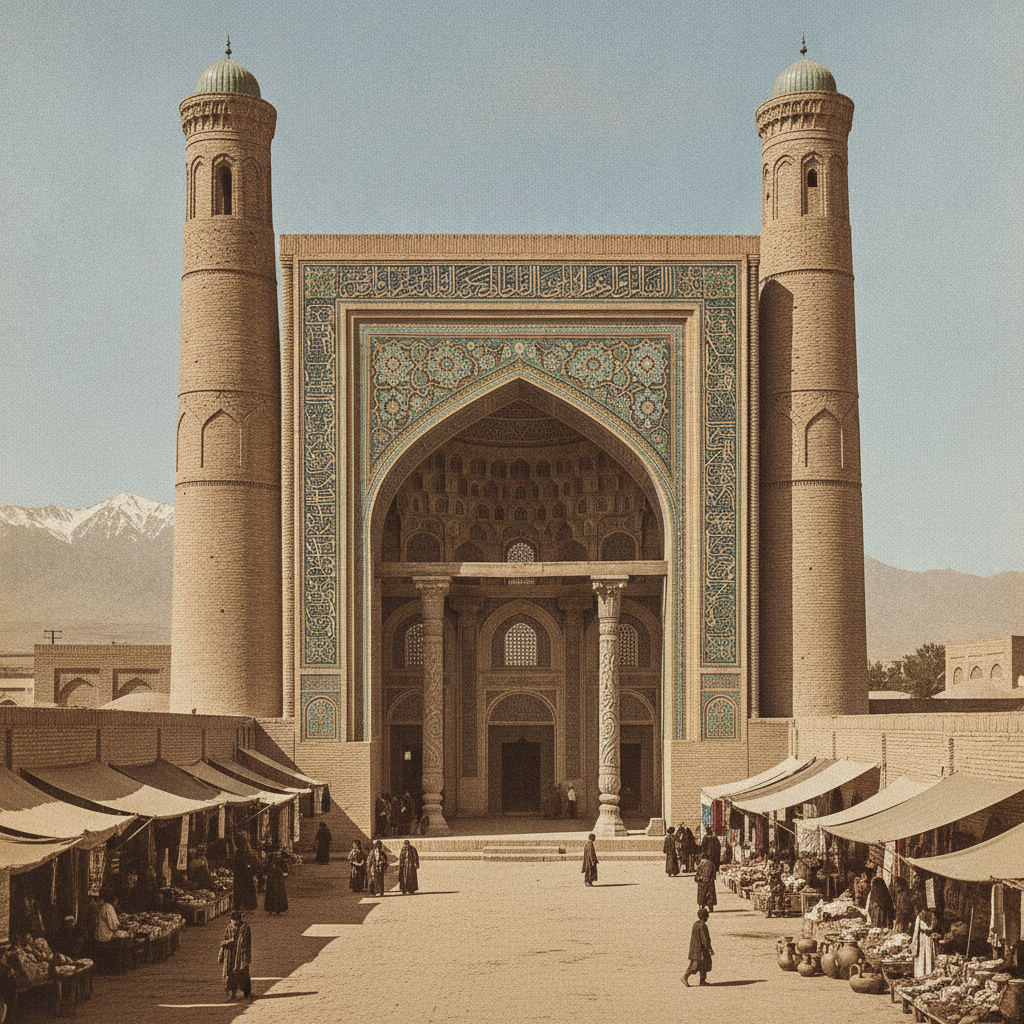
Namangan Old City and Central Bazaar
Explore Namangan — the third-largest city in Uzbekistan and the northern capital of the Fergana Valley, a city with roots going back to the 17th century whose old town mahalla neighborhoods and central bazaar preserve the character of a traditional Central Asian commercial city, the mosques and religious schools of Namangan reflecting the city's reputation as one of the most Islamic cities in post-Soviet Central Asia.