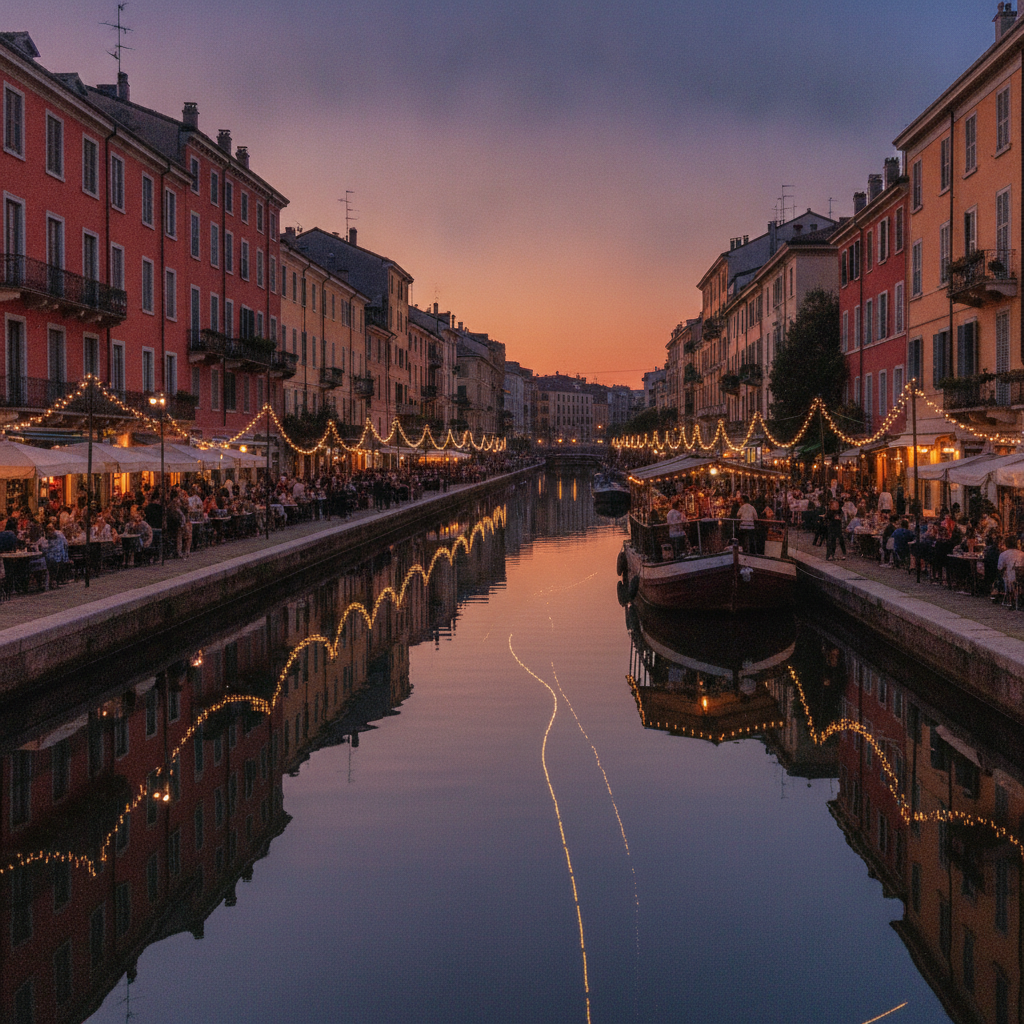
Los Canales Navigli, la Dársena y la Porta Ticinese — el Barrio de los Canales de Milán
The Navigli district — the canal quarter of southwestern Milan, centered on the Naviglio Grande and Naviglio Pavese canals — is the most atmospheric and bohemian neighbourhood in the city, the remnant of an extraordinary medieval and Renaissance hydraulic engineering system that once connected Milan with the Po valley, the Alps, and the sea, and that Leonardo da Vinci helped to improve during his time at the Sforza court.
- 1
Naviglio Grande — Milan's Working Canal Since 1177
The Naviglio Grande (1177, 50km from Milan to Abbiategrasso, then connecting to the Ticino and Po rivers) is the oldest and longest navigable canal in Italy — Milanese canals transported marble for the Duomo (1386), Leonardo da Vinci designed canal locks that are still operational, and the canal's towpaths (once walked by mules) are now lined with bars and restaurants; the Navigli district (2km of canals in Milan) is the city's most animated evening quarter.
- 2
Darsena — The Historic Port of Milan
The Darsena (the 'basin', Porta Ticinese, completed 1603) was Milan's main inland port until the 1970s — goods arriving by canal from the Po Valley were unloaded here; the surrounding warehouses (converted to restaurants and bars after 2015) and the canal views make the Darsena the centre of the Navigli's aperitivo culture; the free public dock hosts kayak rentals and the monthly antique market; the Darsena fountain and promenade were renovated for Expo 2015.
- 3
Aperitivo Culture — The Navigli's Most Important Ritual
Milan's aperitivo tradition (ordering a Campari Soda, Spritz, or Negroni between 6–9pm) was invented at the Bar Campari at the Galleria in 1867 and is most concentrated in the Navigli — many Navigli bars offer a free buffet (bruschette, olives, pasta, risotto) with the purchase of a drink ($8–12); the tradition serves as both happy hour and dinner for the Milanese; Sundays see the slowest turnover, making Sunday aperitivo the most leisurely.
- 4
Ripa di Porta Ticinese — Vintage and Antique Saturday Market
The Ripa di Porta Ticinese canal path (Naviglio Grande towpath, every last Sunday of the month, 9am–6pm) hosts the Mercato dell'Antiquariato, the largest outdoor antique market in Italy — 350+ vendors selling 20th-century furniture, fashion, records, vintage watches, and Milanese ephemera; the market has operated since 1978 and is the source for the antique dealers of the Brera Design District and the Via della Moscova antique shops.
- 5
Cucina Milanese — Risotto allo Zafferano and Cotoletta
Milanese cuisine (risotto alla Milanese, cotoletta Milanese, ossobuco, panettone) is a distinct northern Italian tradition based on butter, saffron, and braised meats — Il Luogo di Aimo e Nadia (Via Montecuccoli, 2 Michelin stars) and Trattoria Milanese (Via Santa Marta, since 1933) represent the two ends of the Milanese culinary tradition; the cotoletta Milanese (veal cutlet pounded thin, breaded with breadcrumb and egg, fried in clarified butter) is the definitive Milanese street food at its core.
- 6
Porta Ticinese — Medieval Gate to the Bohemian South
Porta Ticinese (the 1798 neoclassical gate on Corso di Porta Ticinese, replacing a medieval predecessor) marks the southern edge of the Navigli neighbourhood — the corso connecting the gate to the Duomo is lined with vintage clothing shops, independent music stores, tattoo parlours, and bars frequented by students from the Politecnico and Università degli Studi; the columns of San Lorenzo (4th century AD Roman columns, the most significant surviving Roman monument in Milan) are 200m south of the gate.