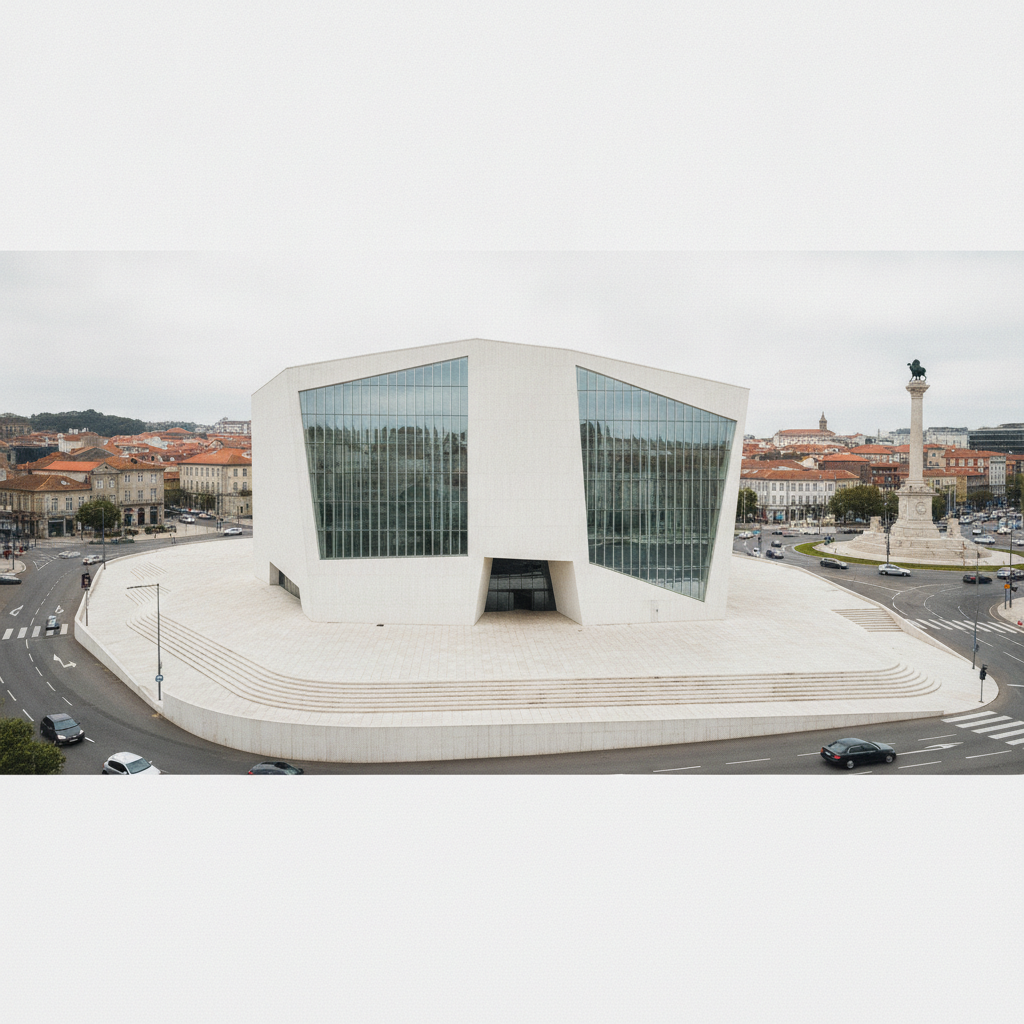
Casa da Música, Serralves y la Cultura Contemporánea de Oporto
Porto's contemporary cultural institutions — the Casa da Música (the 2005 concert hall by Rem Koolhaas on the Rotunda da Boavista — the most radical work of contemporary architecture in Porto), the Museu de Arte Contemporânea de Serralves (the 1999 museum by Álvaro Siza Vieira in the Serralves Estate park — the most important contemporary art museum in Portugal), and the cultural district of Boavista and Cedofeita — represent Porto's vibrant contemporary creative identity.
- 1
Casa da Música — Rem Koolhaas's Concert Hall
Casa da Música (Avenida da Boavista 604, Boavista roundabout, 2005, Rem Koolhaas/OMA, the most architecturally significant building in Portugal built since 1974) is Porto's principal concert hall — the building (a angular white concrete polyhedron that OMA describes as a shoe-box concert hall inside a crystal) houses the Porto Symphony Orchestra (Orquestra Nacional do Porto) and the Remix Ensemble (contemporary music); the Great Auditorium (1,238 seats, the two glass walls — one facing the city, one facing the garden — are unique in concert hall design); guided architectural tours daily (€10).
- 2
Serralves Estate — Art Deco House and Modern Museum
The Serralves estate (Rua D. João de Castro 210, western Porto) is two institutions co-existing on one property — the Casa de Serralves (1940, Charles Siclis architect, the most important Art Deco house in Portugal, used for contemporary art exhibitions) and the Museu de Arte Contemporânea (1999, Álvaro Siza Vieira) share the 18-hectare park; the park (€10 entry, daily 10am–7pm) contains a working farm (with Barrosã cattle and heritage apple orchards), a formal French garden, and a forest walk; the combined park and museum entry (€20) is the most complete cultural afternoon in Porto.
- 3
Avenida da Boavista — Porto's Parisian Boulevard
Avenida da Boavista (6km long, the longest boulevard in Porto, running from the city centre to the Atlantic at Foz do Douro) was Porto's late-19th-century prestige residential development — the Lion Monument (Monumento aos Heróis da Guerra Peninsular, at the Rotunda da Boavista, 1951, a 45m obelisk commemorating the Peninsular War 1808–1814) marks the midpoint; the Casa da Música and the Fundação de Serralves are both on or adjacent to Boavista; the Boa Nova Tea House (Leça da Palmeira, 30 minutes north, 1963, Álvaro Siza's first major work, recently restored) is the boulevard's Atlantic terminus.
- 4
Foz Beach Bars and Sunset Culture
The Foz do Douro beachfront (between Castelo do Queijo and the Douro river mouth, Passeio Alegre gardens) has Porto's most active sunset culture — the outdoor bars (Tasca do Chico, Praia da Luz bar, Bar Petiscos do Rio) serve Vinho Verde (the young, slightly sparkling Portuguese white wine from the Minho region, €3–5/glass) and petiscos (Portuguese tapas: ameijoas à bulhão pato — clams with garlic and coriander, pataniscas de bacalhau — salt cod fritters) to crowds watching the Atlantic sunset; July–September the beach promenade fills from 6pm until midnight.
- 5
Boa Nova Tea House — Álvaro Siza's Masterwork on the Rocks
Boa Nova Tea House (Rua Antero de Quental, Leça da Palmeira, 1963, Álvaro Siza Vieira, his most-celebrated early work, restored 2015, now a 2-Michelin-star restaurant by chef Ricardo Costa, €110 tasting menu) is one of the 20th century's most important works of Portuguese architecture — the building (built directly on the coastal rock outcroppings, 3 terraces descending to the sea, low-slung red-tiled roofs and white rendered walls) engages the Atlantic landscape without domesticating it; non-dining architectural visits on request outside service hours.
- 6
Parque da Cidade do Porto — 83 Hectares of Atlantic Parkland
Porto's City Park (Parque da Cidade, 83 hectares, the largest urban park in Portugal, adjacent to Foz do Douro, open daily, free) connects the Matosinhos beach to the Atlantic seafront — the park (designed by Sidónio Pardal, completed 1993 after 20 years of construction) contains 5 lakes, 8km of cycling paths, a children's farm, and 3 km of Atlantic ocean frontage; no motorized vehicles are permitted; weekend morning runners, cyclists, and families make it the most used park in the northern Portugal; the park's Douro river estuary edge offers access to the river wetlands.