Bamyan Buddhist Monastery Cave Art and Silk Road
Explore the Buddhist monastery cave art of Bamyan — the painted caves of the cliff face that represent the meeting point of Gandharan, Central Asian, Indian, and Iranian artistic traditions on the Silk Road, the frescoes using lapis lazuli from Badakhshan, the iconography connecting India to China through the Buddhist transmission of the 5th-7th centuries.
- 1
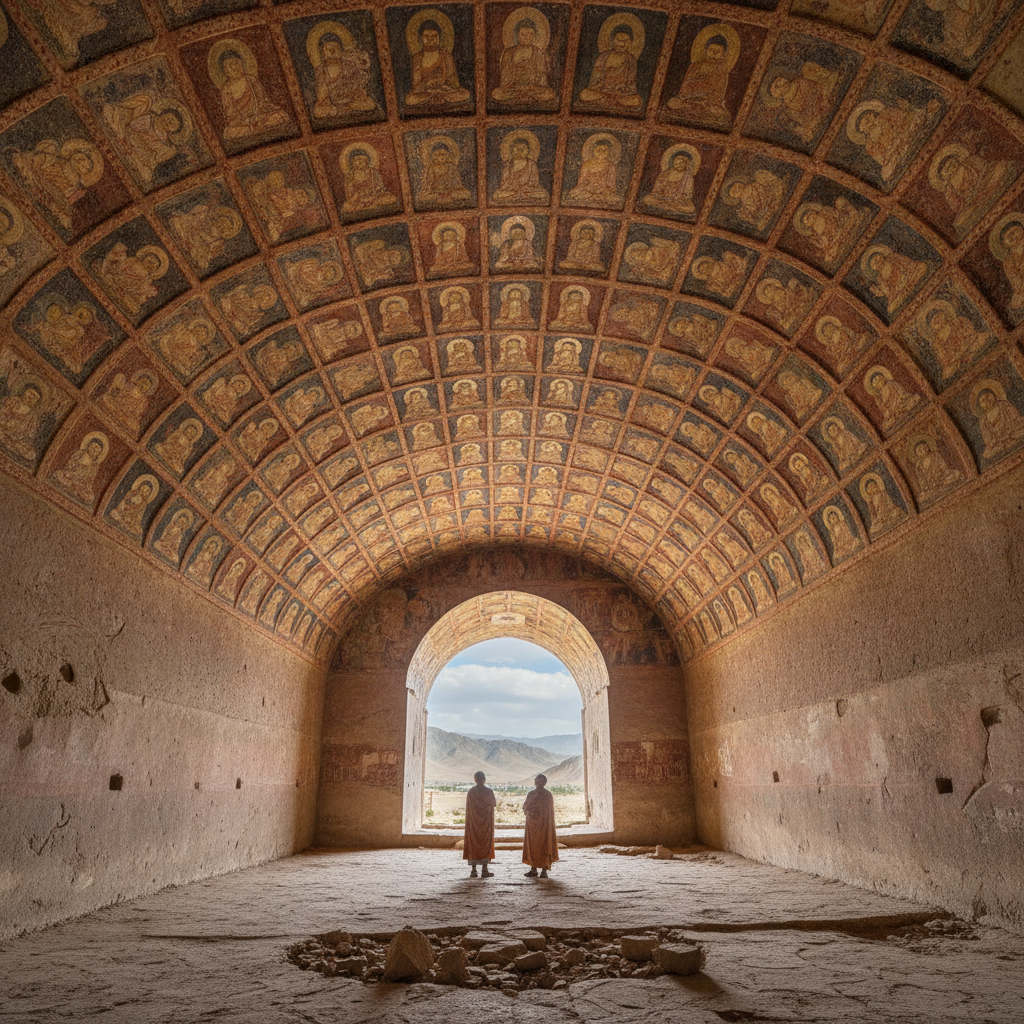
Cave J Group Painted Ceiling
Cave J in the Bamyan cliff face with its painted ceiling — one of the best-preserved of the cave paintings, the ceiling decorated with a grid of painted Buddha figures in the Central Asian style, the blue of the backgrounds made from lapis lazuli mined in Badakhshan province, the same stone sent west to Egypt and Rome as one of the Silk Road's most valuable commodities.
- 2
Silk Road Artistic Crossroads
The artistic crossroads visible in Bamyan's cave paintings — the fusion of Indian Buddhist iconography, Iranian Sasanian artistic conventions, and Central Asian steppe motifs that characterizes the Bamyan school, the paintings reflecting the position of the valley on the route where merchants and pilgrims from three civilizations met and exchanged not just goods but ideas.
- 3
Lapis Lazuli Mine Connection
The connection to the Badakhshan lapis lazuli mines — the deep blue pigment in the Bamyan paintings sourced from the Sar-e-Sang mine in Badakhshan that has been continuously mined for over 6,000 years, the same mine that supplied the blue of ancient Egyptian faience, Mesopotamian jewelry, and Renaissance paintings in Europe.
- 4
Chinese Pilgrim Accounts
The accounts of Chinese Buddhist pilgrims who visited Bamyan — Xuanzang, the 7th-century Tang Dynasty monk, describing the valley's two colossal Buddhas and the hundreds of monks living in the cliff monasteries, his account preserved in his travelogue 'Great Tang Records on the Western Regions' providing the most detailed description of pre-Islamic Bamyan.
- 5
Gandharan Sculpture Fragments
The Gandharan sculpture fragments in the Bamyan museum — the stucco and schist sculptures from the Buddhist period showing the Greek-influenced style that developed in Gandhara and spread along the Silk Road to Bamyan, the mixture of Greek sculptural vocabulary with Buddhist iconographic requirements producing a distinctive art form.
- 6
Conservation Challenges
The conservation challenges of the Bamyan cave paintings — the frescoes exposed to dust, moisture, and vandalism over the decades of conflict, the international conservation efforts led by German and Japanese teams working to stabilize the surviving paintings against further deterioration, the work representing both art conservation and post-conflict heritage recovery.
Walk this route with audio
Stories play automatically as you reach each stop — no tapping needed.