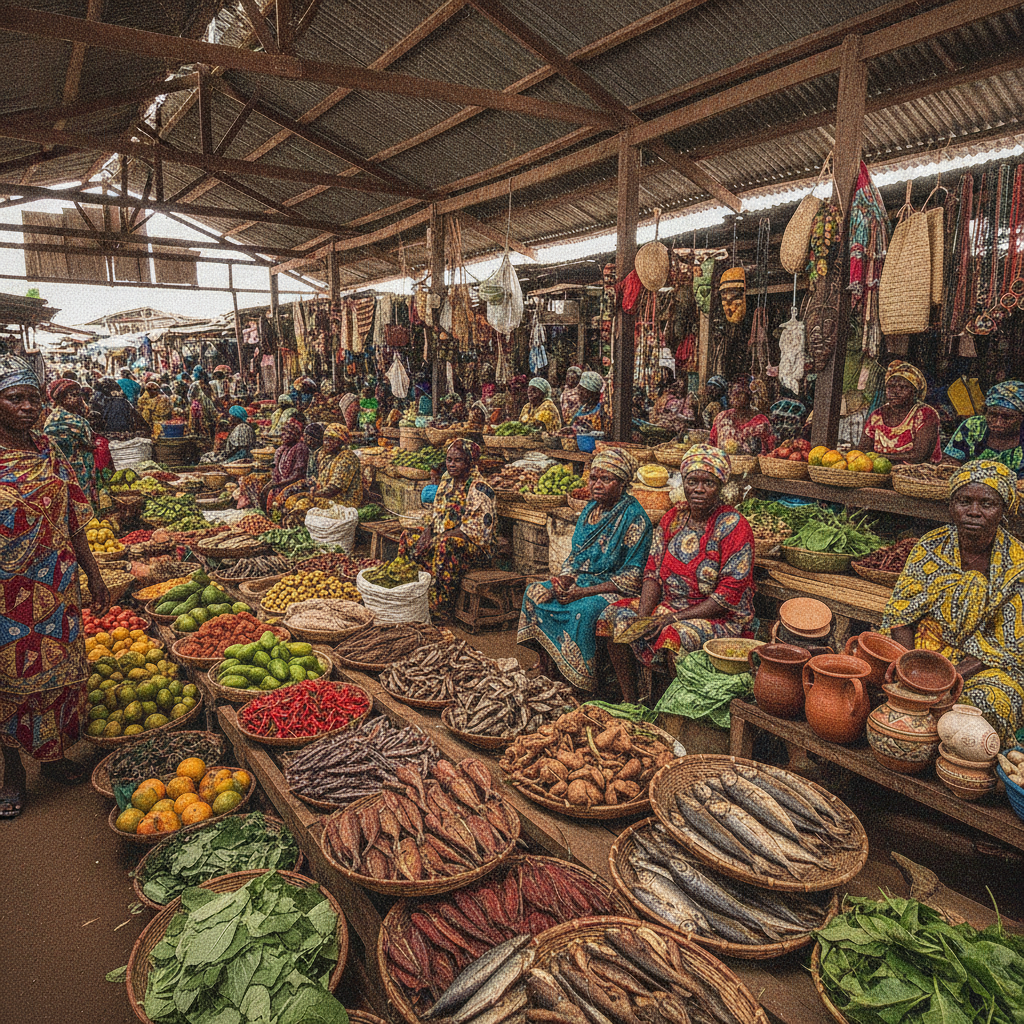
Bandim Market & Bissau's Urban Life
The Bandim market is the social and commercial heart of Bissau — a dense, colourful covered market where Papel, Mandinka, and Fula traders coexist in the smallest capital in West Africa
- 1
Bandim Market Food Hall
The market's covered food section is Guinea-Bissau at its most vibrant — women traders in pano cloth selling smoked oysters, dried shrimp, palm oil and fresh vegetables
- 2
Pano's fabric stalls
The traditional panoramic cloth – a hand-woven ribbon cloth unique to Guinea-Bissau and Cape Verde – is sold in the fabric section; Each ethnic group has distinct patterns
- 3
Traditional Medicine Quarterly
Healers sell bark, roots and dried leaves in the market's traditional medicine section – the pharmacopoeia of Guinea-Bissau's ethnic groups in one concentrated space
- 4
Seller of dried oysters and shrimps
Guinea-Bissau's extraordinary coastal wetlands produce abundant seafood — dried oysters and smoked shrimp are key flavor ingredients in the national cuisine
- 5
Hardware and Import Quarterly
Chinese imported goods arrive at the port of Bissau and immediately pour into the market — a vivid illustration of China's economic penetration of the smallest West African states
- 6
Market Tea Culture
The attaya green tea ceremony – three rounds of increasingly sweeter Mauritanian-style mint tea – is performed at market stalls throughout the day as a social bonding ritual
Walk this route with audio
Stories play automatically as you reach each stop — no tapping needed.
More in Bissau
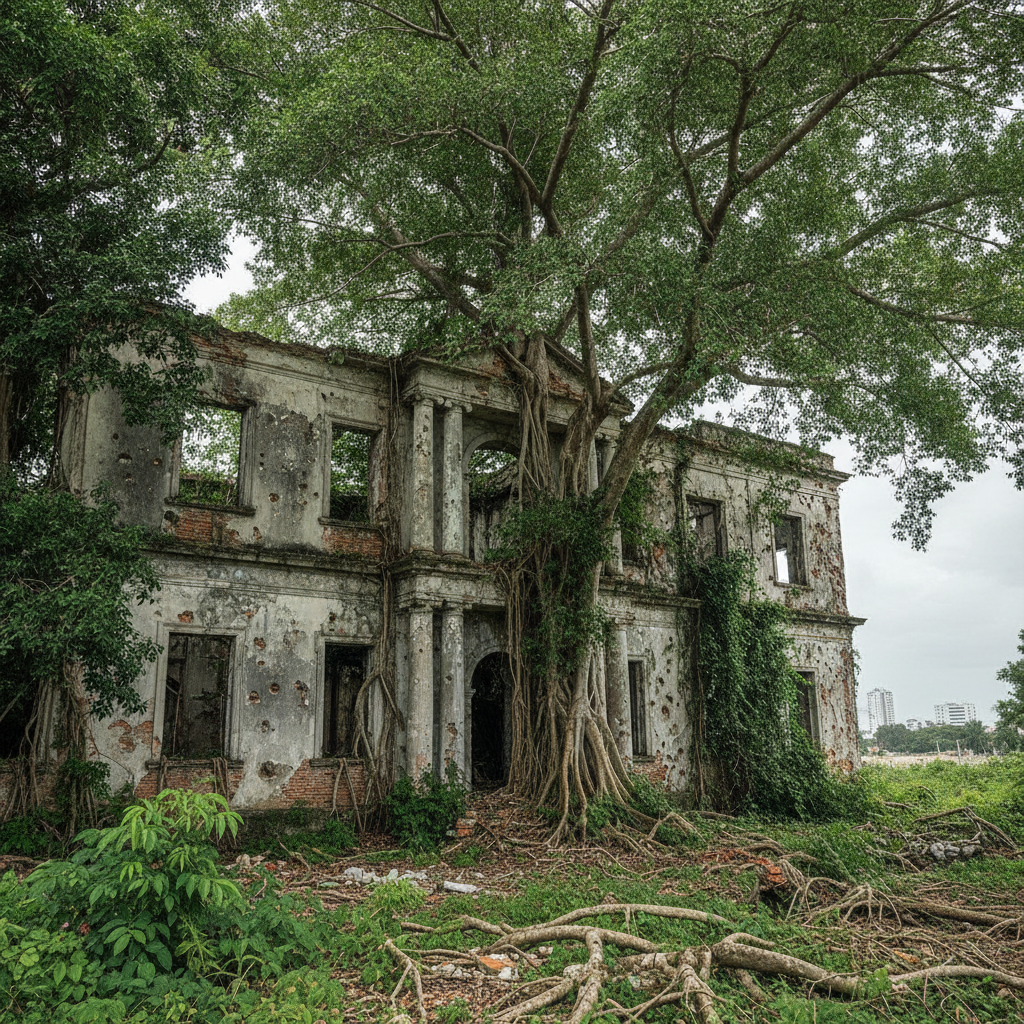
Bissau's Colonial Ruins & Post-War Architecture
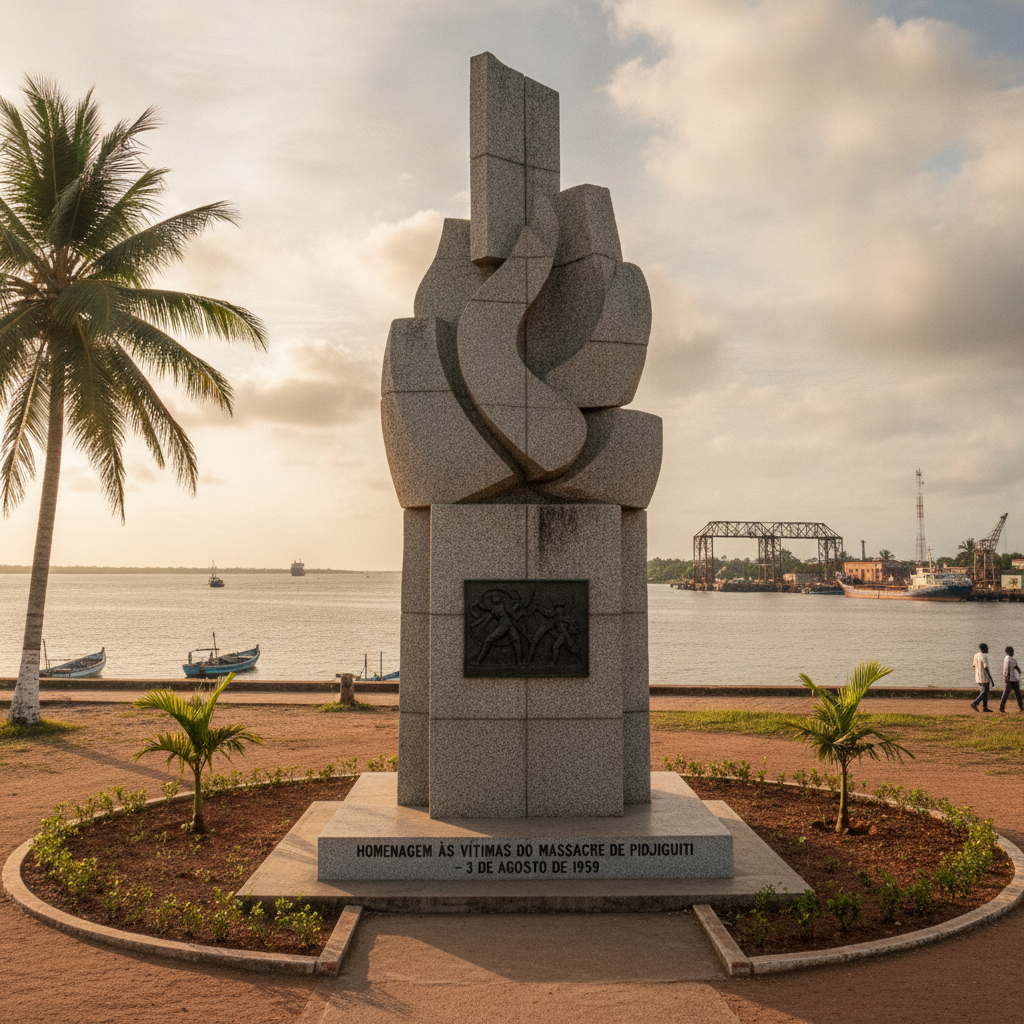
Pidjiguiti Massacre & Guinea-Bissau's Liberation History
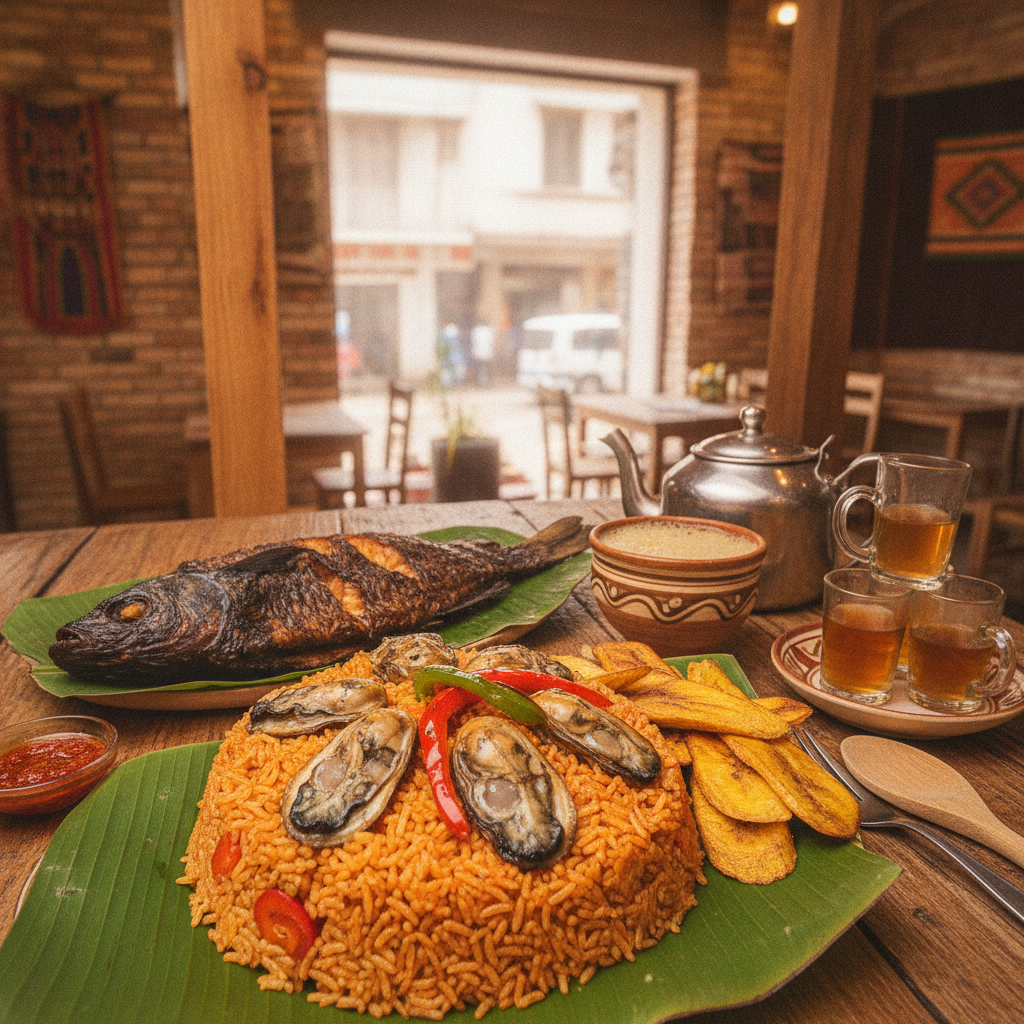
Guinea-Bissau Cuisine: Smoked Oysters, Caldo & Estuary Seafood

Orango's Marine Hippos: The World's Only Salt-Water Hippopotami
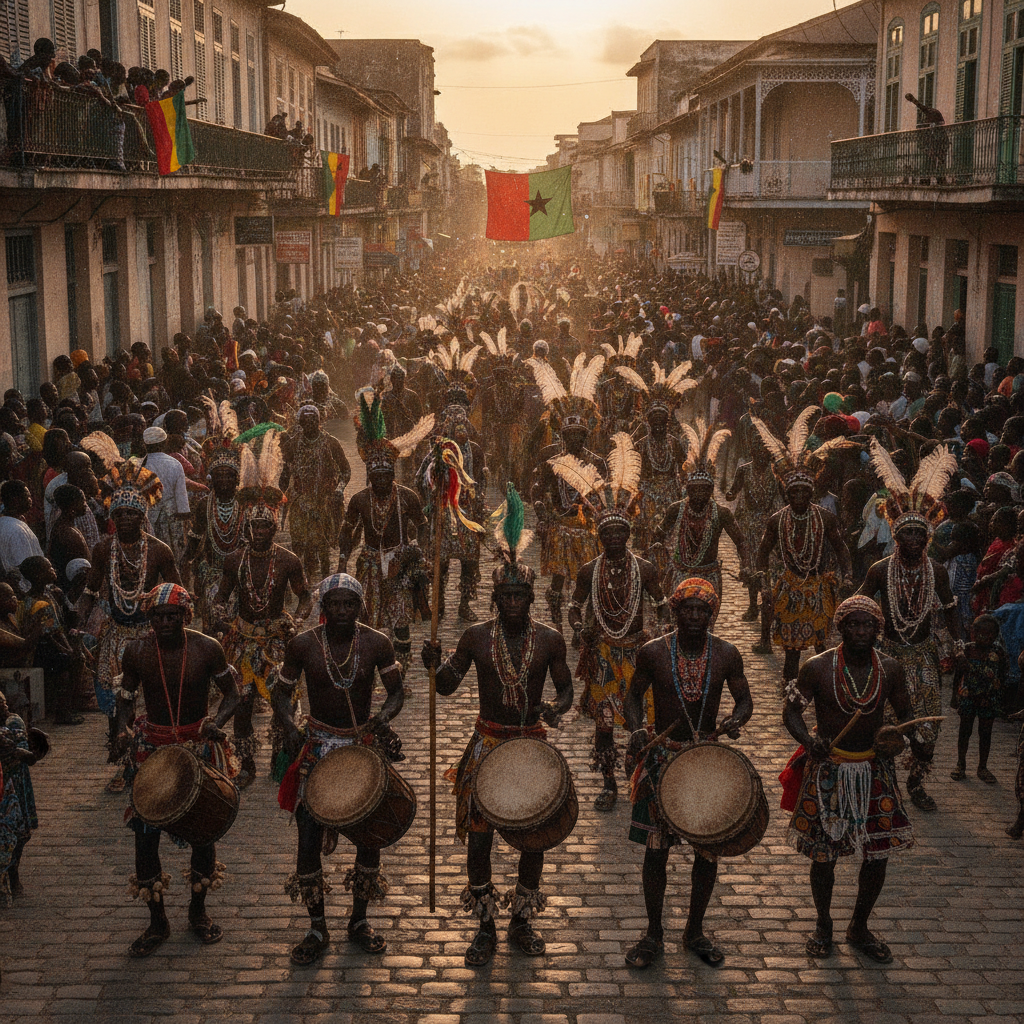
Tabanka & Carnival: Guinea-Bissau's Musical Traditions