Castillo San Felipe de Barajas & Cartagena's Military Heritage
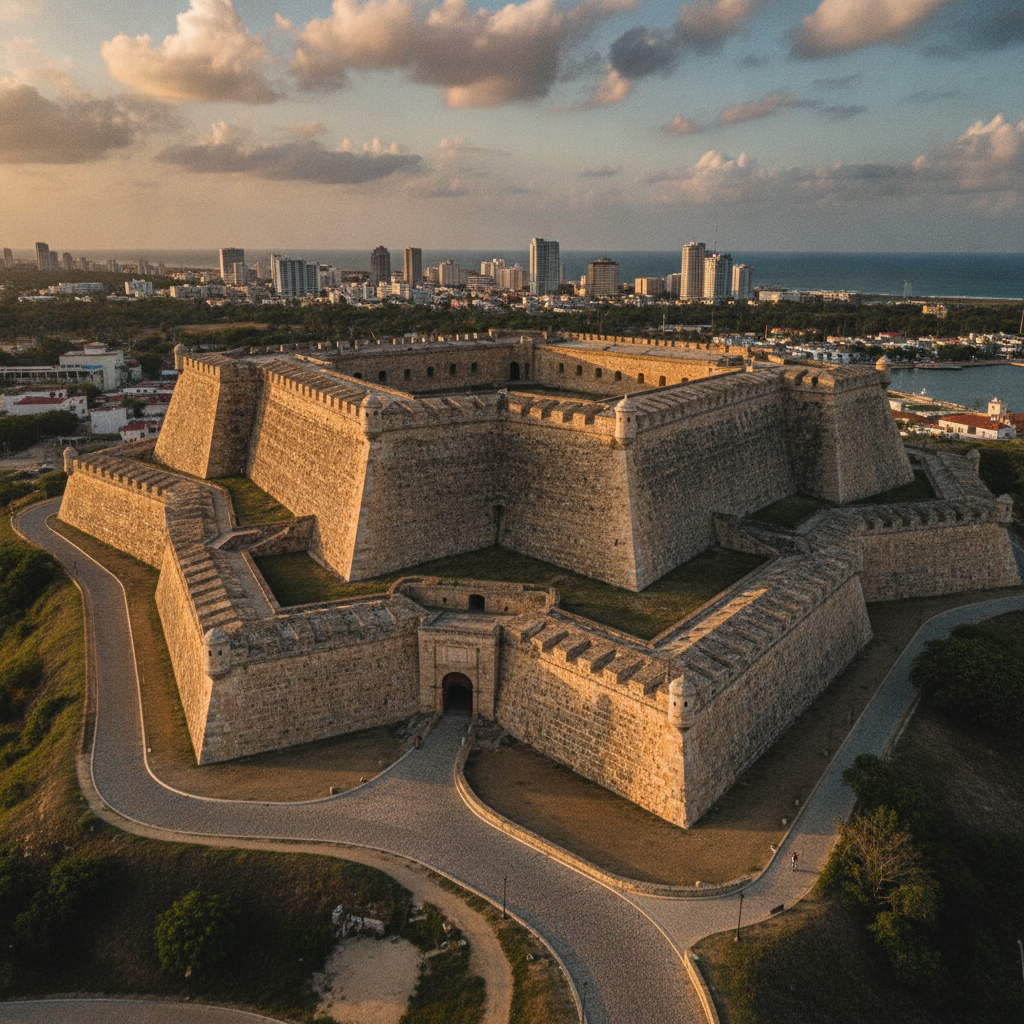
The Castillo San Felipe de Barajas (the massive Spanish colonial fortress on the San Lázaro hill overlooking Cartagena — the largest fortress built by Spain in the Americas, constructed in multiple phases from 1536 to 1796) is the supreme achievement of Spanish colonial military architecture and the fortress that successfully repelled the largest British naval expedition in history in the Battle of Cartagena de Indias (1741).
- 1
Castillo San Felipe — The Largest Spanish Fortress in the Americas
The Castillo San Felipe de Barajas (the fortress on the San Lázaro hill (40 metres / 131 feet above sea level) overlooking the city of Cartagena and the Bahía de Cartagena): the construction (the construction of the Castillo San Felipe in multiple phases — the initial small fortification on the San Lázaro hill constructed in 1536, the major expansion under the Spanish military engineer Juan de Herrera y Sotomayor in 1657-1669 (the construction of the main bastion of the present fortress), and the final expansion under the Spanish military engineer Antonio de Arévalo in 1762-1796 (the construction of the lower batteries and the outer works that brought the fortress to its present extent of approximately 75,000 m² (807,000 sq ft) of fortified area)): the tunnel system (the extensive system of underground tunnels beneath the Castillo San Felipe — the 500 metres (1,640 feet) of navigable tunnels built in the 17th and 18th centuries to allow the rapid movement of ammunition and troops between the different sections of the fortress without exposure to enemy fire): the Battle of Cartagena de Indias (the 'Siege of Cartagena de Indias' (March-May 1741) — the largest naval battle in the Age of Sail, in which the British fleet of 186 ships and 30,000 men under Admiral Edward Vernon attempted to capture Cartagena from the Spanish garrison of approximately 3,600 men and 6 ships under Vice Admiral Blas de Lezo (1689-1741): the battle (the British fleet entered the Bahía de Cartagena and besieged the Castillo San Felipe for 67 days before withdrawing in defeat on May 20, 1741, having lost approximately 18,000 men to battle, disease, and shipwreck — the greatest military defeat in British colonial history): Blas de Lezo (the Vice Admiral Blas de Lezo (1689-1741) — the Spanish naval officer who lost his left leg at Málaga (1704), his left eye at Toulon (1707), and his right arm at Barcelona (1714) in earlier battles (earning the nickname 'Mediohombre' — 'Half Man'), and who successfully commanded the defence of Cartagena in 1741).
- 2
The Islas del Rosario & Caribbean Snorkelling
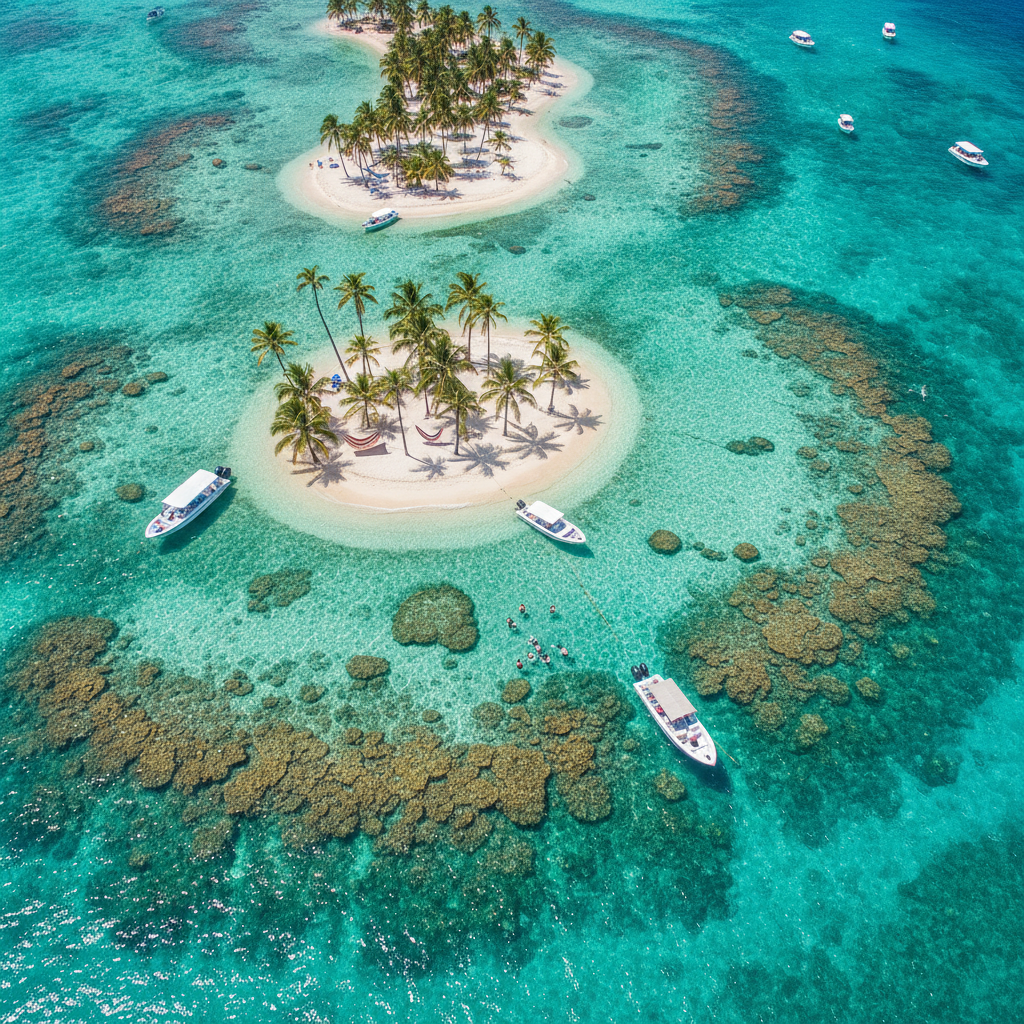
The Islas del Rosario (the 'Rosary Islands' — the archipelago of approximately 30 small coral islands in the Parque Nacional Natural Corales del Rosario y San Bernardo (the National Natural Park), 45 km (28 miles) southwest of Cartagena, accessible by daily fast boat service (the 'lanchas' departing from the Muelle de los Pegasos in the walled city and from the Muelle de la Bodeguita in Bocagrande at 8-9 AM daily, arriving at the islands in 45-90 minutes)): the islands (the Islas del Rosario — the small coral cay islands of the Caribbean, formed on the Rosario Reef (a section of the Mesoamerican Barrier Reef system), with the characteristic white sand beaches, the turquoise shallow water, and the coconut palms): the snorkelling (the coral reef snorkelling in the Parque Nacional Natural Corales del Rosario — the reef system around the Islas del Rosario, with the elkhorn coral (Acropora palmata), the brain coral (Diploria labyrinthiformis), and the diverse fish life (the queen angelfish, the parrotfish, the barracuda, and the green sea turtle)): the day trip (the standard Cartagena day trip to the Islas del Rosario — the boat departing at 8 AM, stopping at the Aquarium (the Oceanario Islas del Rosario — the small aquarium on Isla San Martín de Pajarales where visitors can see the sharks, the rays, and the other marine life of the Colombian Caribbean at close range), then proceeding to the island beach for lunch and snorkelling, returning to Cartagena by 4-5 PM): the private islands (the private 'isla' experience available in the Rosario Islands — several of the smaller cays have been developed as exclusive private island resorts, the most famous being the 'Isla Grande' (the largest island in the archipelago, with the coconut palm-shaded beaches and the boutique eco-resort hotels)).
- 3
Palenque de San Basilio — The First Free Black Town in the Americas
Palenque de San Basilio (the UNESCO Intangible Cultural Heritage site, 70 km (43 miles) southeast of Cartagena — the village that was the first free Black settlement in the Americas, established by the escaped enslaved African Benkos Biohó (c.1550-1621) in the early 17th century): the history (Benkos Biohó — the enslaved African man (born in the region of present-day Guinea-Bissau or Senegal) who escaped from slavery in Cartagena around 1599, organized a community of escaped enslaved people in the mountainous interior of the Colombian Caribbean coast, and led a successful resistance against the Spanish colonial authority for 22 years until his capture and execution in Cartagena in 1621): the Spanish recognition (the Spanish colonial government's 'Cédula Real' (the Royal Decree) of 1713 that recognized the freedom and autonomy of the Palenque de San Basilio community — the first legal recognition of a free Black community in the Americas): the Palenquero language (the 'Palenquero' — the creole language spoken in Palenque de San Basilio, the only Spanish-based creole language in the Americas (the language that combines a Spanish base with the Bantu languages (principally the Kikongo language of the Kingdom of Kongo in present-day Democratic Republic of Congo) brought by the enslaved Africans), listed by UNESCO as Intangible Cultural Heritage of Humanity (2008)): the cultural traditions (the Palenquero cultural traditions — the 'lumbalú' (the Palenquero funeral ritual, combining the Catholic funeral rites with the African musical and spiritual traditions of the Bantu people), and the 'Palenquera women' (the women of Palenque who sell the traditional Colombian sweets (the 'cocadas' (the coconut candy), the 'bollos de maíz' (the corn tamales), and the 'alegrías' (the sesame seed candy)) on their heads in the streets of Cartagena, dressed in the colourful traditional Palenquera dress (the white dress with the colourful ruffled neckline and the colourful plastic bowl on the head)).
- 4
Cartagena's Carnaval & Afro-Caribbean Culture
Cartagena's Afro-Colombian culture (the most important dimension of the cultural identity of Cartagena — the city where approximately 40% of the population identifies as Afro-Colombian, the city that was the largest slave-trading port in Spanish South America and that retains the most vibrant Afro-Colombian cultural tradition of any city in Colombia): the 'porro' (the 'porro' — the traditional Afro-Caribbean music of the Colombian Caribbean coast, the music that predates the cumbia and that shares the same African-Indigenous-Spanish roots but that is even more African in its rhythmic character): the 'mapalé' (the 'mapalé' — the traditional Afro-Colombian dance of the Caribbean coast, the most energetic and most visually spectacular of the Colombian traditional dances, the dance that imitates the jumping of the fish (the 'mapalé' fish) and that is performed at the fastest possible tempo): the Carnaval de Cartagena (the Carnaval de Cartagena — the annual carnival held in November (the 'Fiestas de Independencia de Cartagena' — the festival commemorating the independence of Cartagena from Spain on November 11, 1811)): the 'Reina del Carnaval' (the 'Queen of the Carnival' — the beauty contest held as part of the Cartagena November festivals): the Hay Festival Cartagena (the Hay Festival Cartagena — the annual literary festival held in January in Cartagena, one of the most important literary festivals in Latin America, the festival that brings the most important writers and intellectuals of the Spanish-speaking world to the coloured streets of the walled city).
- 5
Gabriel García Márquez & the Literature of Cartagena
Gabriel García Márquez (1927-2014) — the Colombian novelist who is the most important Latin American writer of the 20th century, the author of 'Cien años de soledad' ('One Hundred Years of Solitude', 1967 — the novel that won García Márquez the Nobel Prize for Literature (1982) and that has sold over 50 million copies in more than 46 languages, the novel that established 'magical realism' (the literary style that blends the realistic and the fantastical in a matter-of-fact narrative voice) as the defining literary mode of Latin American literature): García Márquez and Cartagena (the connection between García Márquez and Cartagena — the novelist who grew up in Aracataca (the small town in the Magdalena department of Colombia that was the model for the fictional 'Macondo' of 'One Hundred Years of Solitude') but who studied law in Bogotá and worked as a journalist in Barranquilla and Cartagena in the early 1950s, and who spent the last years of his life in his house in the Barrio de Manga in Cartagena): 'El amor en los tiempos del cólera' ('Love in the Time of Cholera', 1985) — the novel set in Cartagena de Indias, the novel of the love between Florentino Ariza and Fermina Daza that plays out over 51 years in the streets of the unnamed city that is unmistakably Cartagena de Indias: the 'García Márquez' tourism of Cartagena (the literary tourism of Cartagena — the tours of the city that trace the locations from 'Love in the Time of Cholera' (the novel's unnamed city is Cartagena, and the locations of the novel (the walled city, the market, the old harbour) are identifiable in the present city)): the Centro Cultural Gabriel García Márquez (the cultural centre in La Candelaria, Bogotá, named after García Márquez — not in Cartagena itself, but the most significant institutional commemoration of his literary legacy in Colombia).
- 6
Cartagena's Boutique Hotels & Architectural Charm
Cartagena's boutique hotel scene (the collection of boutique hotels in the colonial buildings of the walled city — the hotels that have transformed the historic mansions and convents of the Ciudad Amurallada into some of the most atmospheric places to stay in the Americas): the colonial mansion hotels (the former colonial mansions of the Cartagena aristocracy converted into boutique hotels — the 'Casa San Agustín' (the former 17th-century convent of San Agustín, now a 31-room boutique hotel with the internal courtyard and the original 17th-century chapel), the 'Hotel El Marqués' (a restored colonial mansion in the walled city, with the internal courtyard garden and the rooftop pool overlooking the city wall), and the 'Casa del Arzobispo' (the former Archbishop's residence, now a luxury boutique hotel in the heart of the walled city)): the rooftop bar culture (the rooftop bar culture of Cartagena — the rooftop pools and bars of the boutique hotels in the walled city, the most fashionable social experience in Cartagena: the rooftop of the 'Hotel Sofitel Legend Santa Clara' (the former Franciscan convent of Santa Clara (1621), converted into a Sofitel hotel in 1995 — the most historically significant colonial building converted into a hotel in Cartagena, with the original 17th-century chapel and the colonial gardens), the rooftop of the 'Bastión Luxury Hotel' (the hotel built into the city wall of Cartagena, with the most dramatic setting of any hotel in the city): the Cartagena high season (the high season for Cartagena tourism — the December-January period (the Colombian and international Christmas and New Year holiday) and the Semana Santa (Holy Week — the week before Easter) when Cartagena receives the largest influx of Colombian and international visitors of the year.
Walk this route with audio
Stories play automatically as you reach each stop — no tapping needed.
More in cartagena
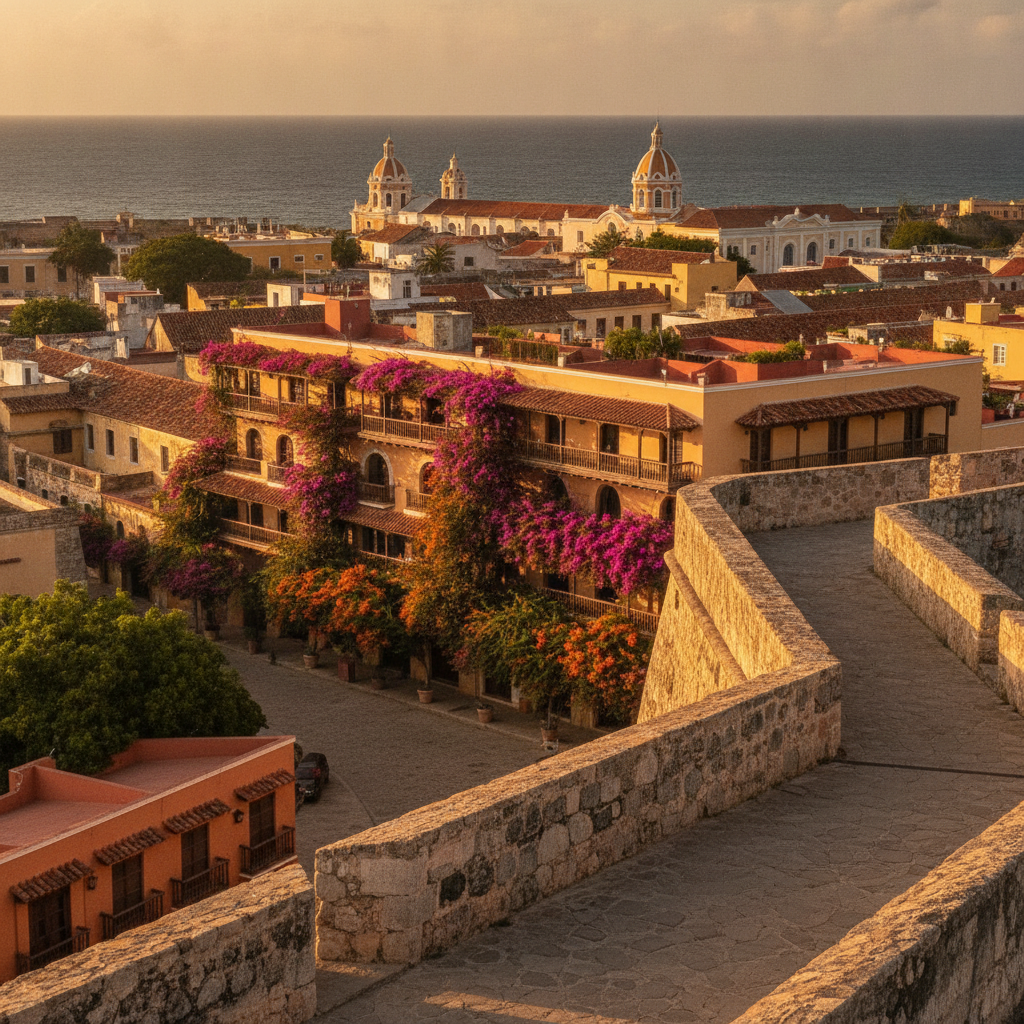
La Ciudad Amurallada — Cartagena's UNESCO Walled Colonial City
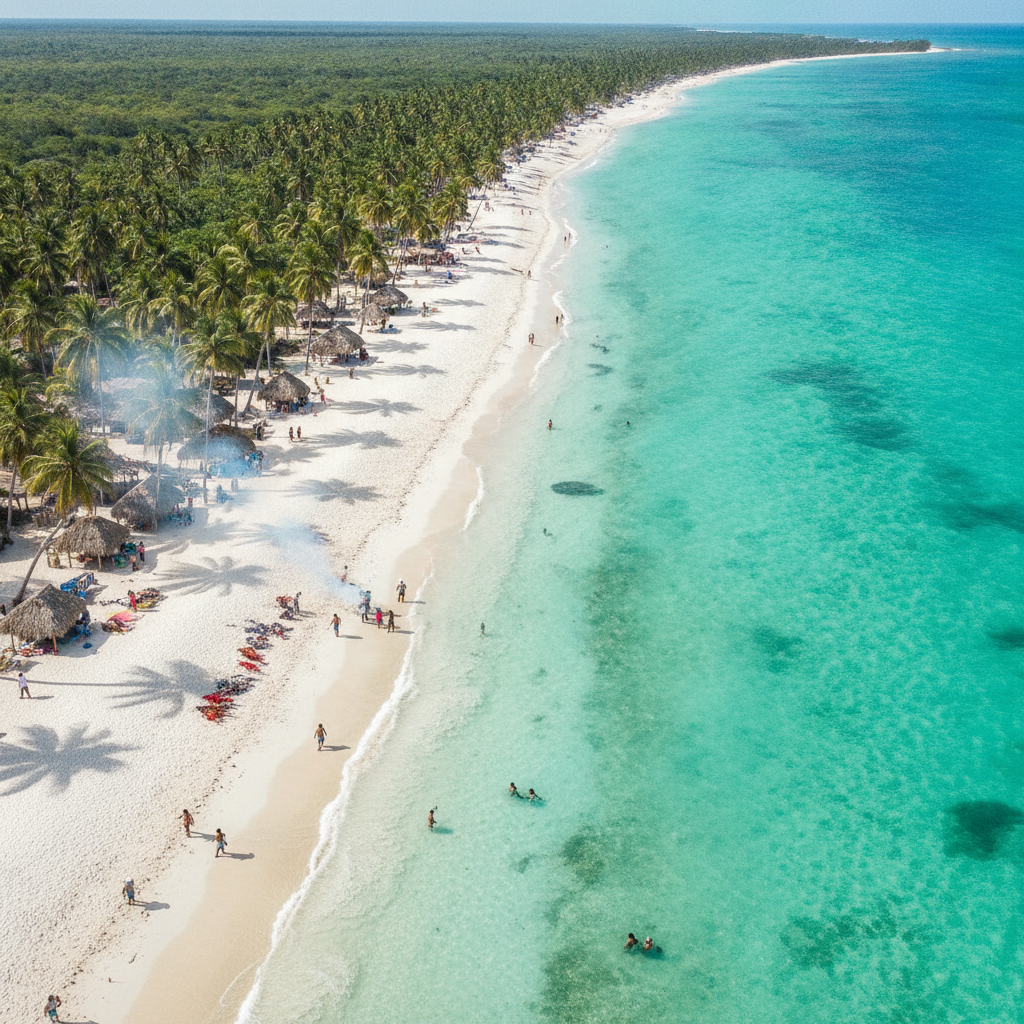
Playa Blanca, Barú & Cartagena's Caribbean Beach Experience
Cartagena's Modern Restaurant Scene & Creative Colombian Cuisine
Getsemaní, Street Art & Cartagena's Creative Underground
Barranquilla Carnaval & Colombia's Caribbean Coast Culture