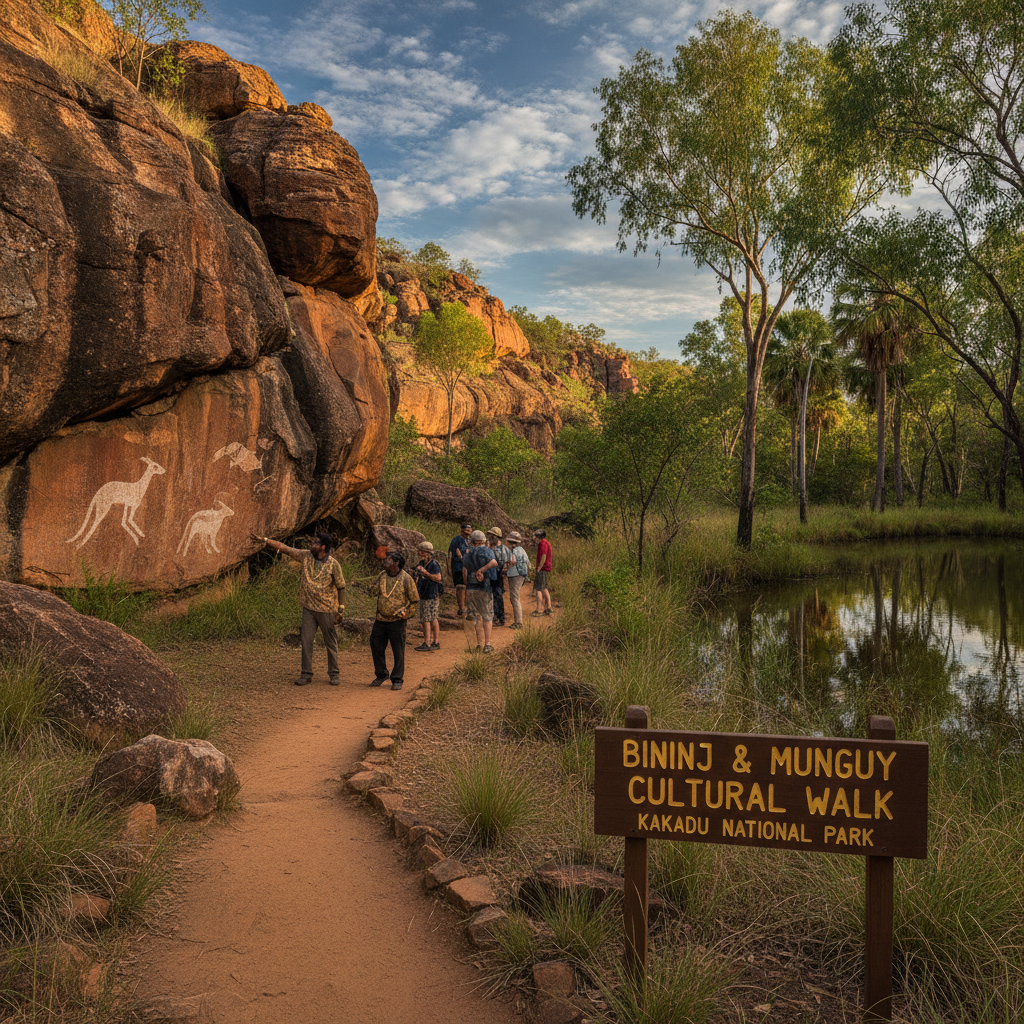
Bininj & Mungguy Cultural Walk
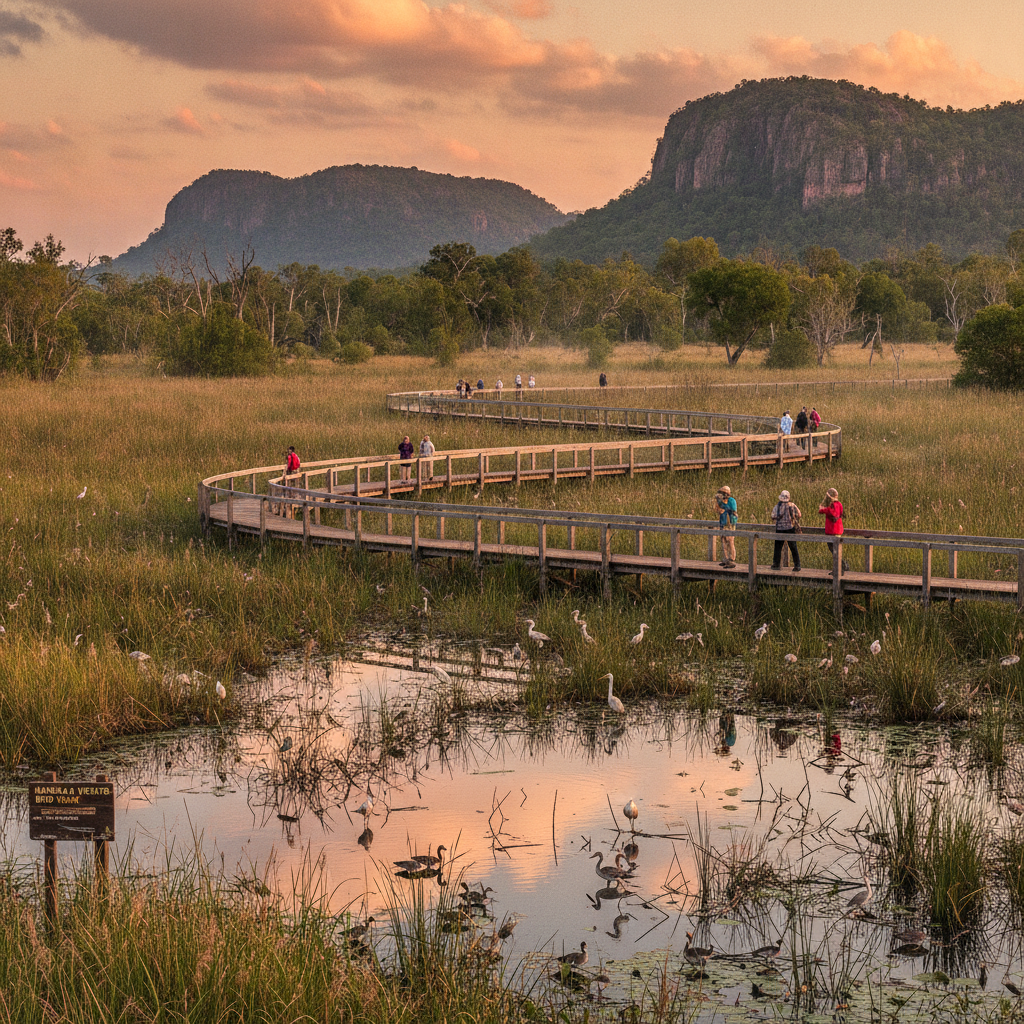
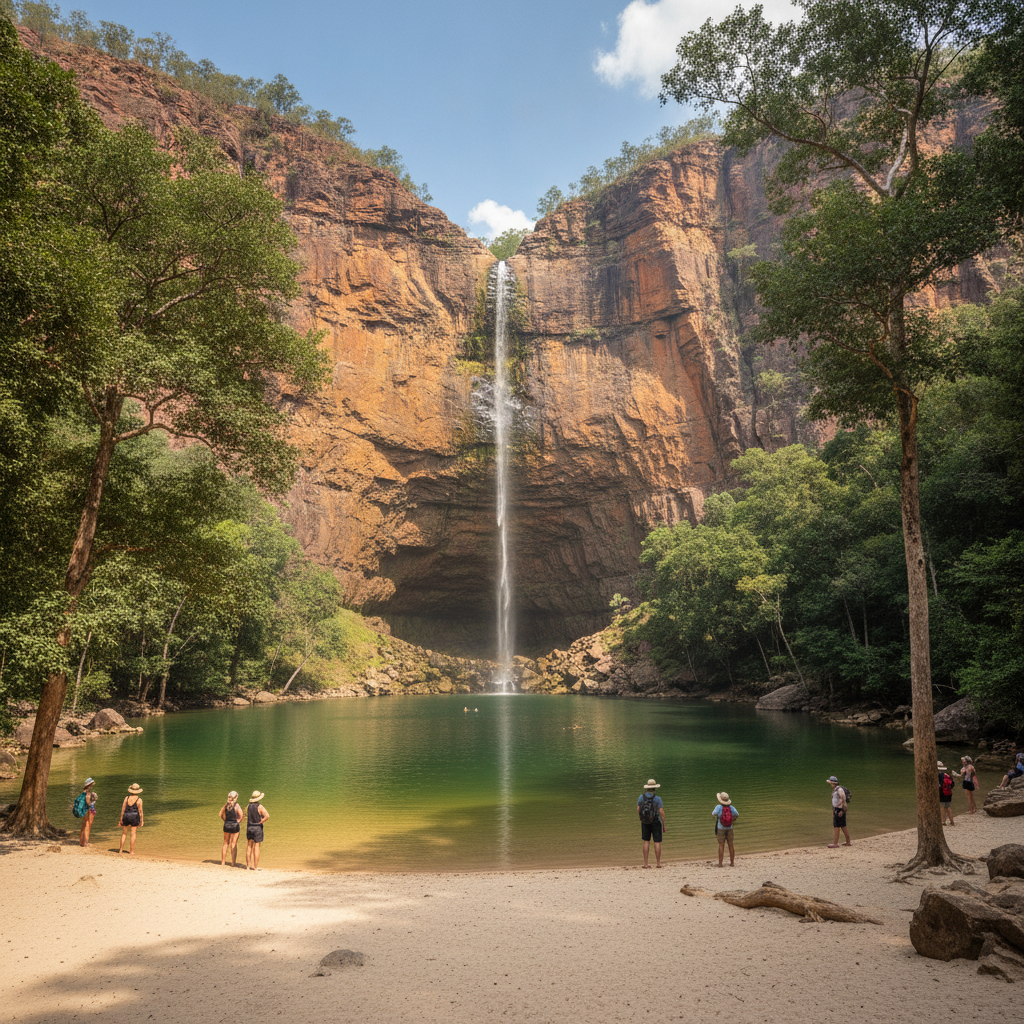
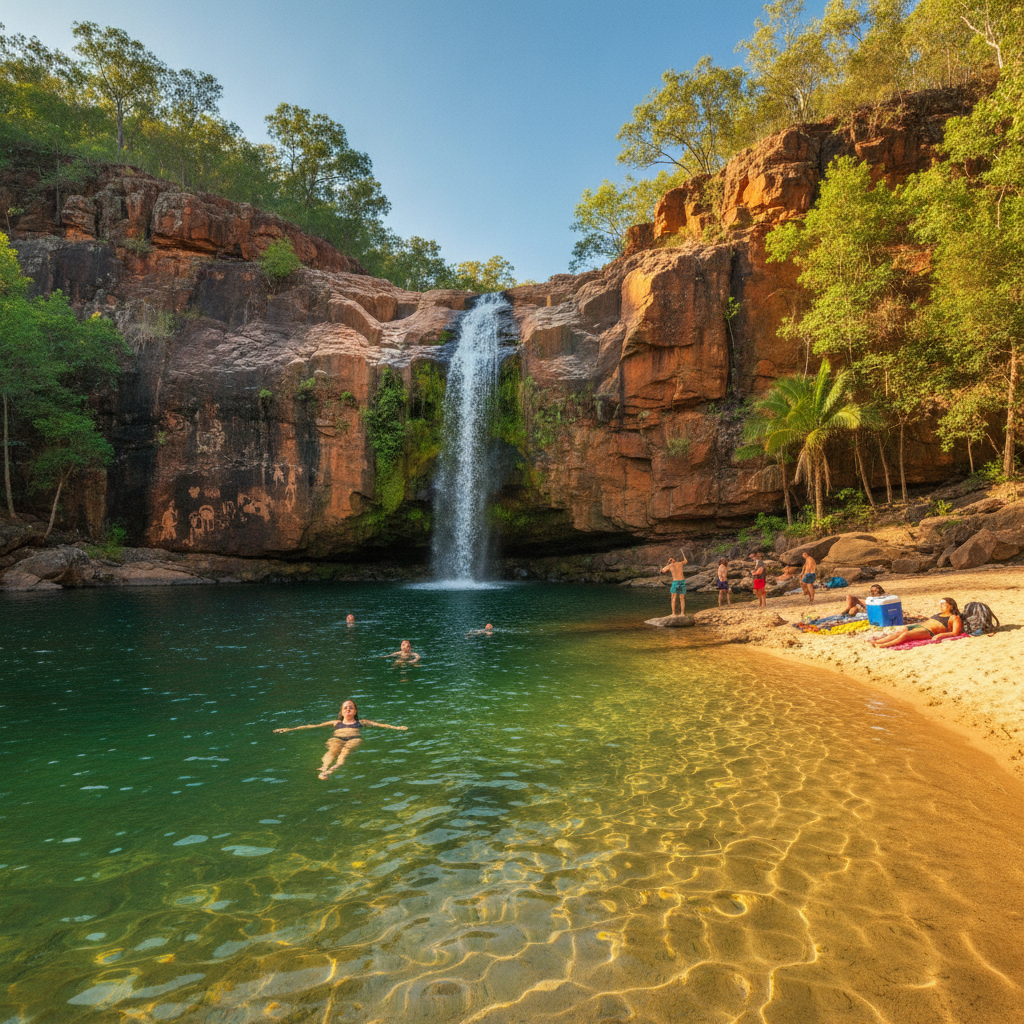
Join a Bininj or Mungguy guided cultural walk in Kakadu — learning about the two Aboriginal groups whose Country encompasses the national park, their 50,000-year connection to this landscape, and how they manage it today.
- 1
Bowali Visitor Centre
The Bowali Visitor Centre is co-managed by Parks Australia and the Aboriginal traditional owners — the award-winning building and exhibition explains the Bininj and Mungguy relationship with Country and their role in managing the park.
- 2
Warradjan Aboriginal Cultural Centre
The Warradjan Cultural Centre at Cooinda is entirely operated by Bininj people — the building's shape represents the pig-nosed turtle (warradjan) and the exhibition covers traditional culture, language, and law.
- 3
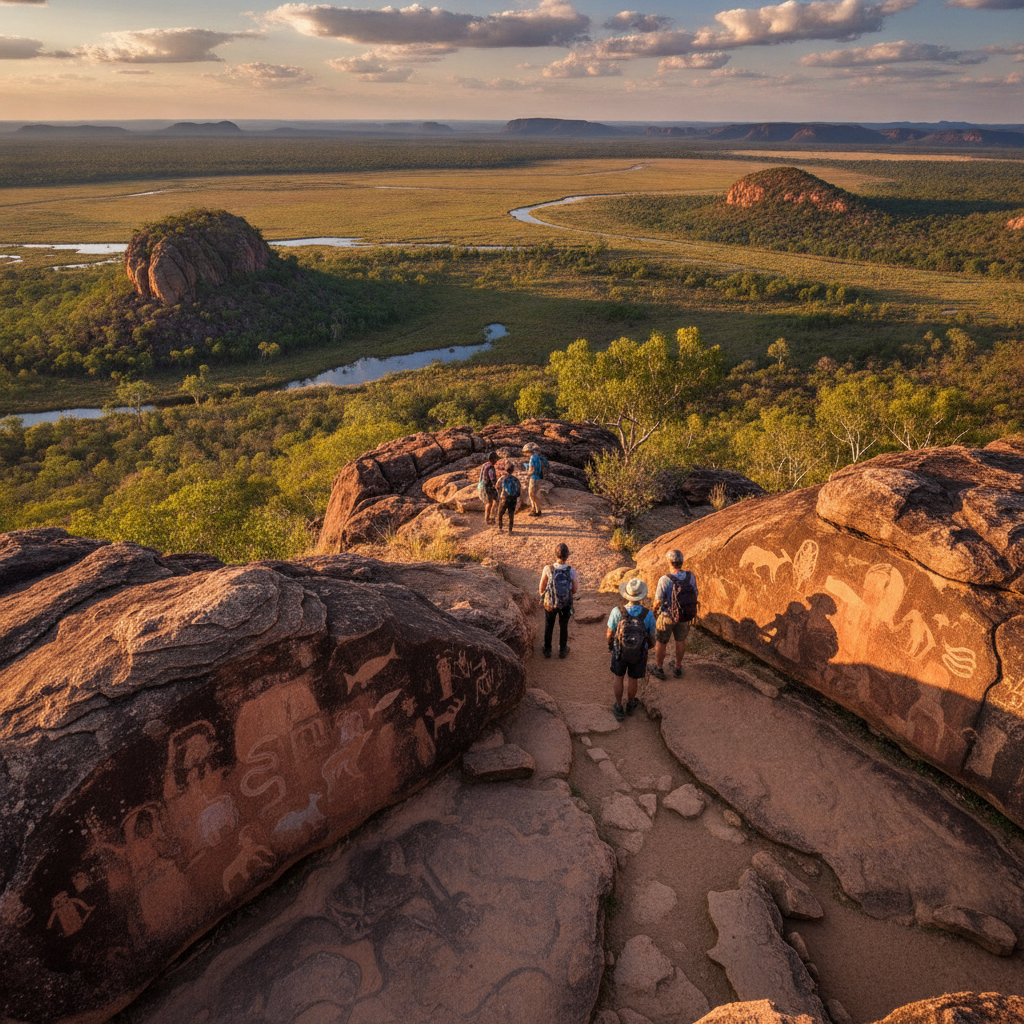
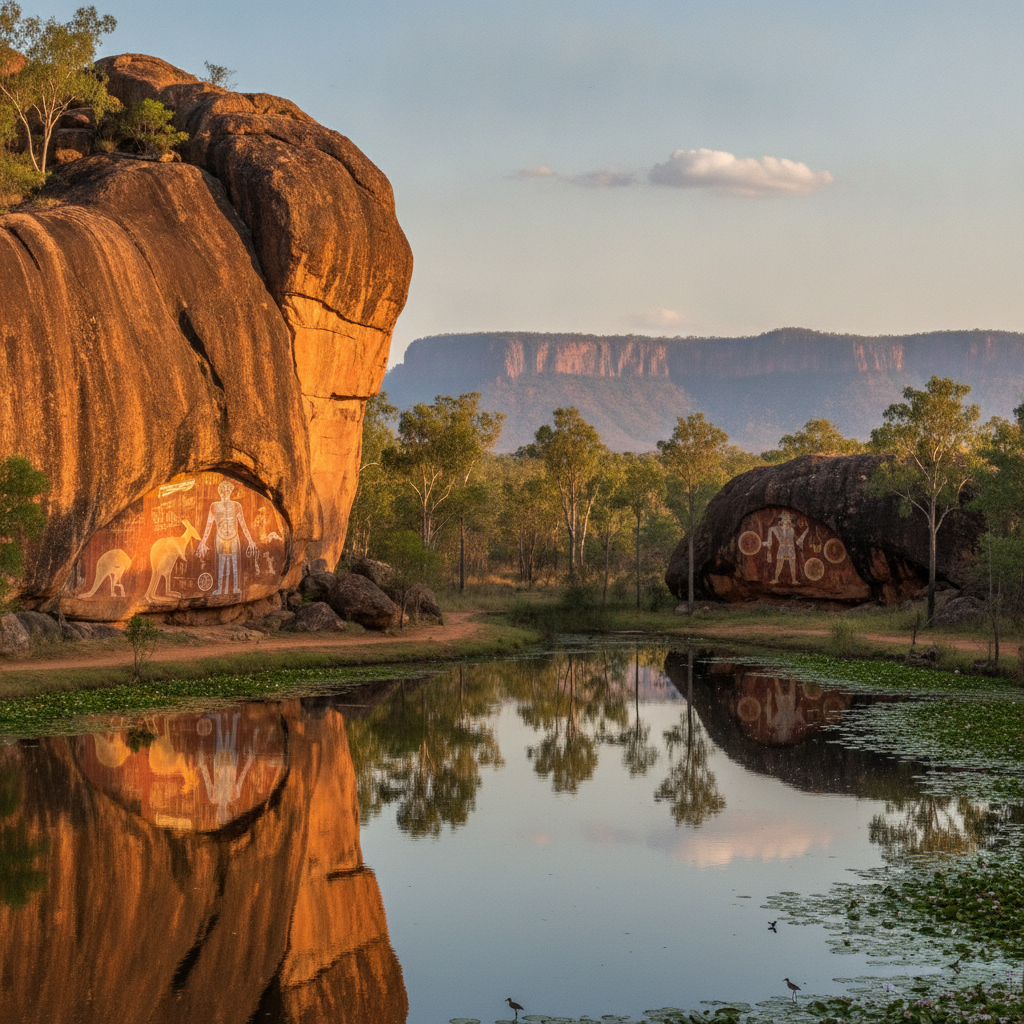
Burrunguy (Nourlangie) Story
A traditional owner explains the Burrunguy stories embedded in the Nourlangie landscape — every feature of the rock, every gallery of paintings, and every plant species has a name and significance in the Bininj knowledge system.
- 4
Bush Tucker Walk
A guided bush tucker walk through the Kakadu woodland identifies edible plants, honey sources, and the seasonal calendar that organises Bininj knowledge — the Aboriginal ecological calendar has six seasons, not two.
- 5
Firestick Farming Demonstration
Traditional Bininj fire management (cool burning) is the most sophisticated land management system developed by any culture — the mosaic of burnt and unburnt country created by seasonal burning maintains biodiversity and prevents catastrophic hot fires.
- 6
Sacred Site Explanation
Traditional owners explain the boundaries between accessible and restricted sacred sites in Kakadu — the park has over 5,000 documented rock art sites and many more sacred places that are not open to visitors but are actively managed by traditional owners.
Walk this route with audio
Stories play automatically as you reach each stop — no tapping needed.