Khiva Tash Khauli Palace and Khan's Harem
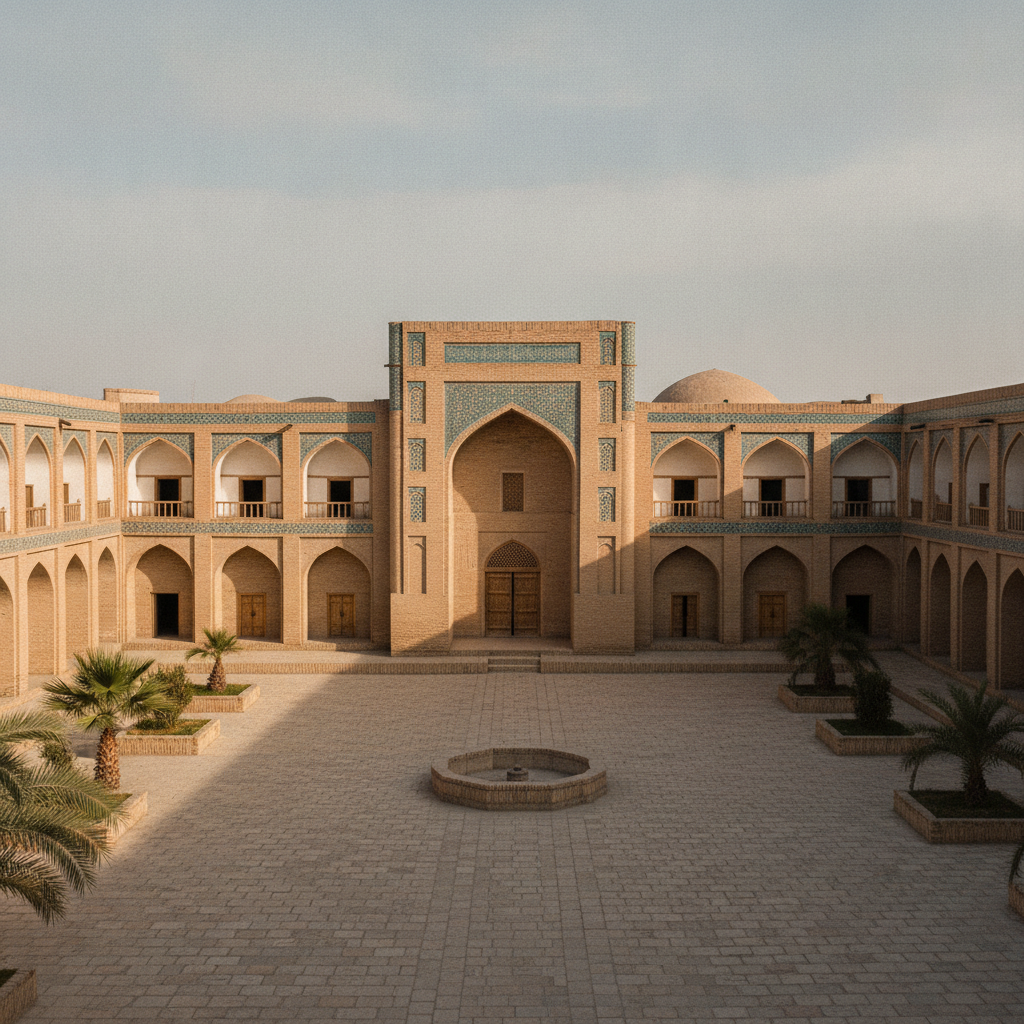
Visit the Tash Khauli Palace — the 19th-century palace complex built by Allah Kuli Khan between 1830 and 1838, the most elaborate palace in Khiva featuring a harem of over 160 rooms, the audience courtyard with its carved wooden columns, and the most spectacular tile work in the city, an example of Central Asian royal architecture at its 19th-century peak.
- 1
Harem Courtyard Entry
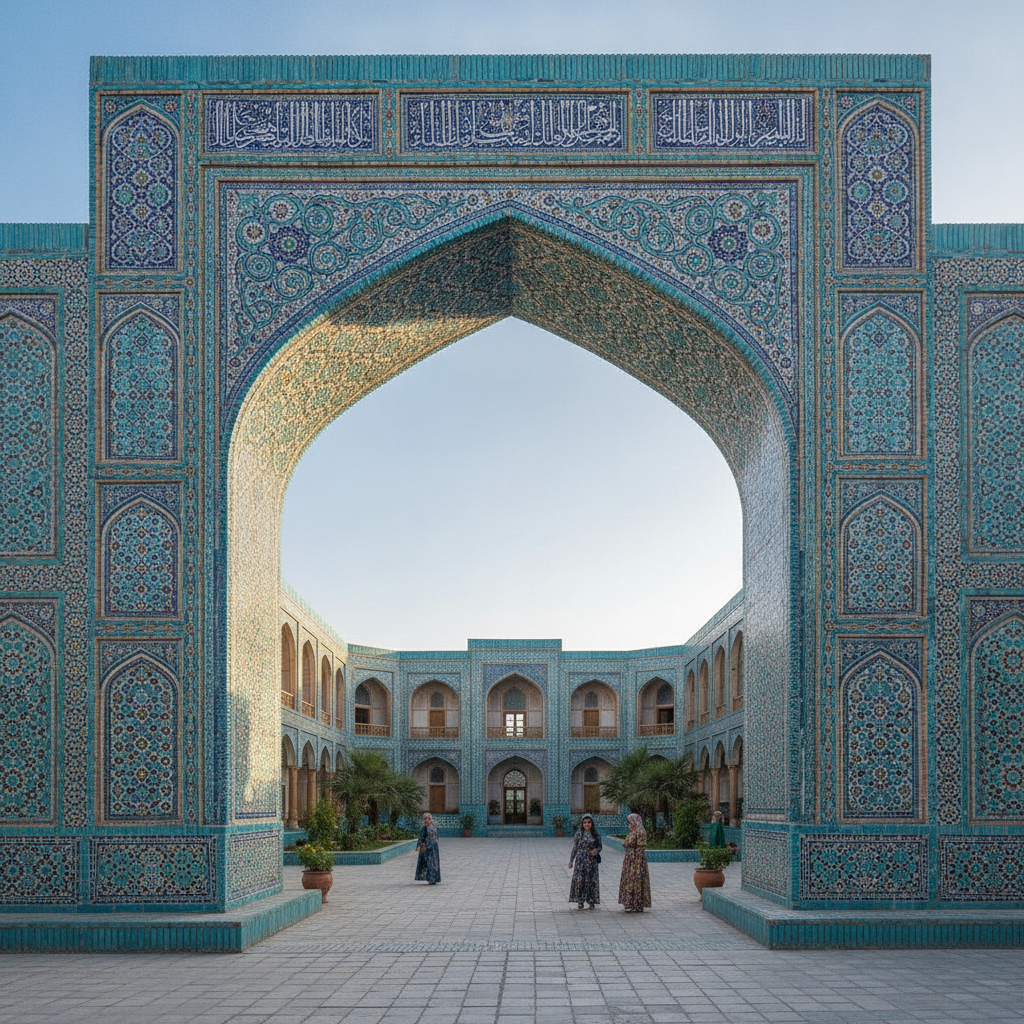
Enter the harem courtyard of Tash Khauli — the private residential quarter of the khan's wives and concubines, the courtyard surrounded by two-story rooms decorated with the brilliant blue, turquoise, and white majolica tiles that cover every surface, the geometric and floral patterns of the tile work among the finest in Central Asia.
- 2
Allah Kuli Khan Audience Court
The audience court of Allah Kuli Khan — the formal reception space where the khan met his nobles and received ambassadors, the wooden carved columns supporting the portico in front of the khan's throne, the decoration combining the Khorezm woodcarving tradition with the Chinese-influenced tile work introduced through the Silk Road.
- 3
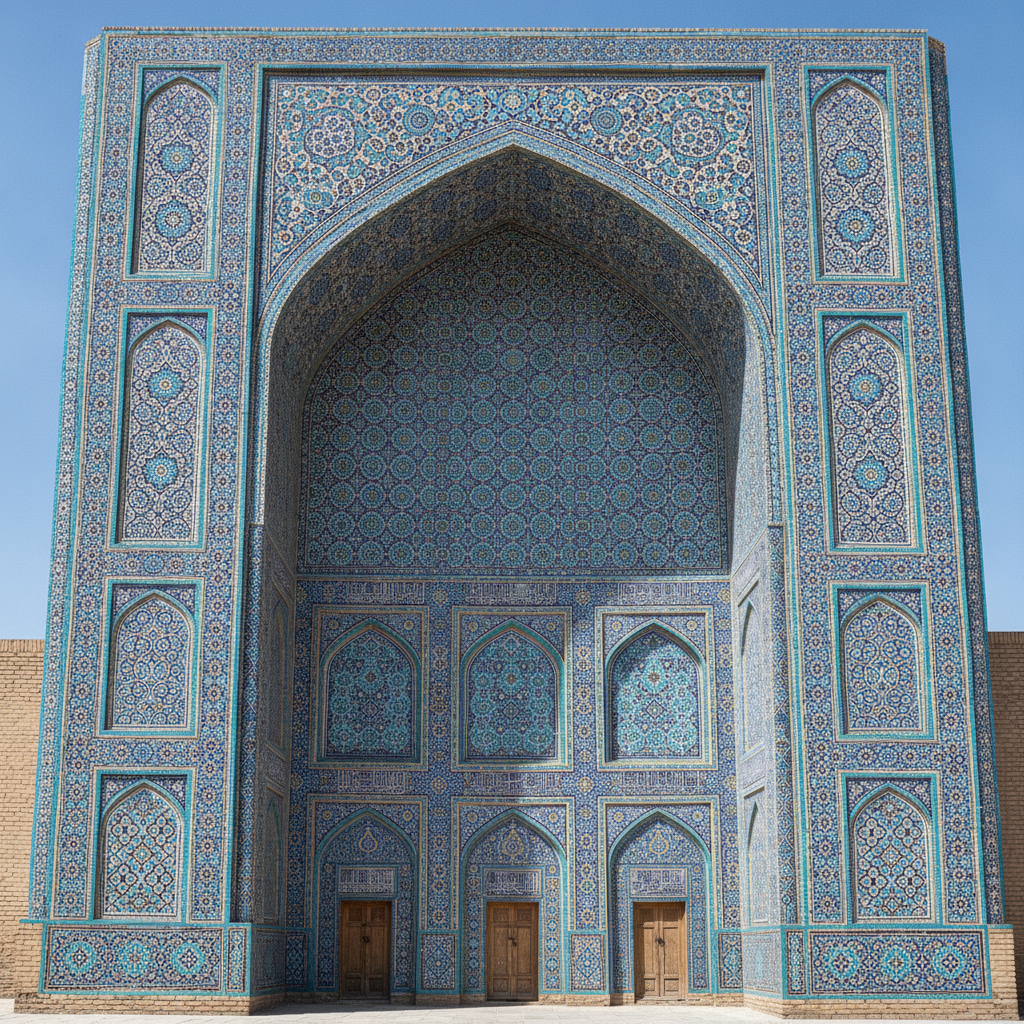
Tile Work Detail Study
The detailed study of Tash Khauli's tile work — the hexagonal wall tiles arranged in geometric patterns, the cartouches of Quranic calligraphy in white on blue, and the elaborate floral designs in the spandrels of the arches, the tile patterns produced by specialist craftsmen working in a tradition passed through family workshops.
- 4
Women's Quarters Architecture
The architecture of the women's quarters in the harem — the private rooms with their carved plaster niches for personal objects, the small windows designed for privacy rather than light, and the internal courtyard allowing outdoor space without exposure to the male quarters of the palace.
- 5
Palace Construction History
The construction history of Tash Khauli — built rapidly in 8 years (1830-1838) under the direction of Allah Kuli Khan who reportedly executed the master builder when he complained the pace was too fast, the palace reflecting the absolute power of the Khiva khans in the period between Russian conquest approaches.
- 6
City Views from Palace Roof
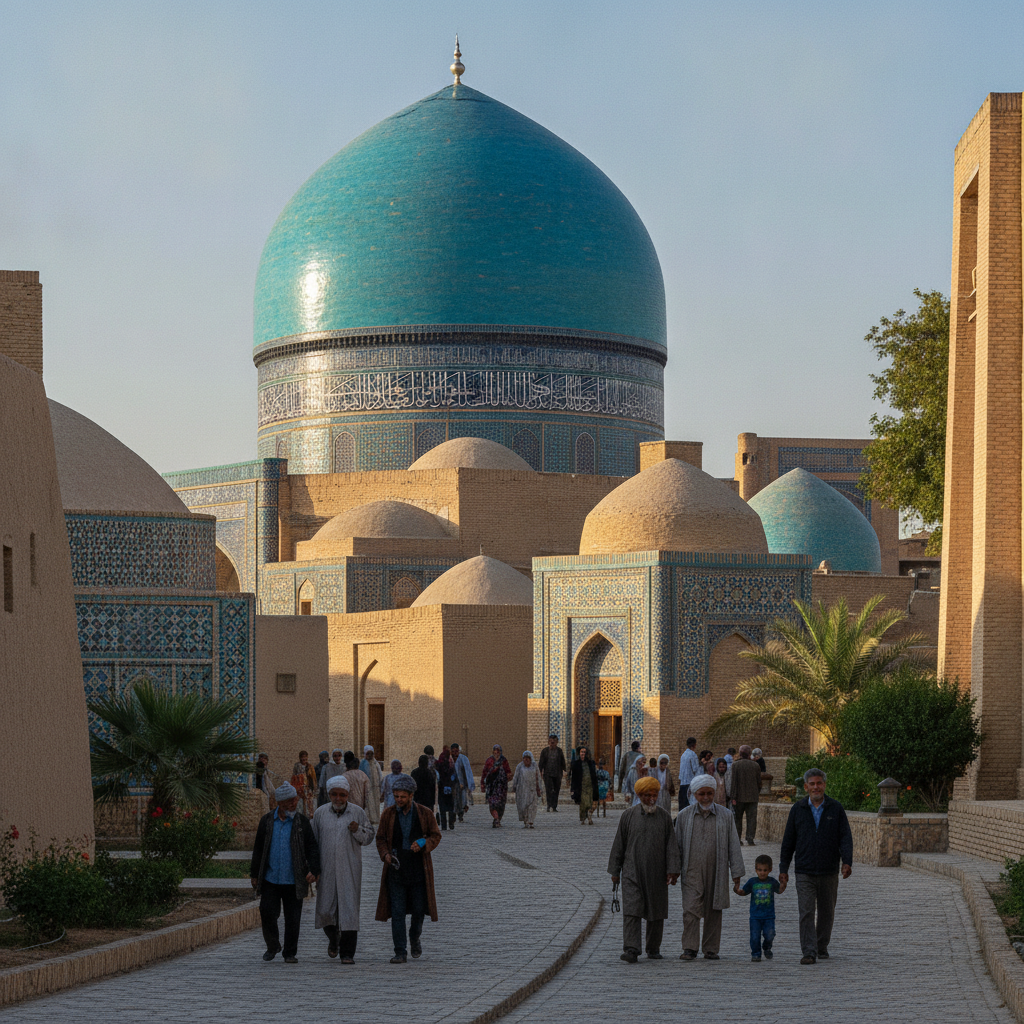
The views of Ichan Kala from the Tash Khauli roof terrace — the walled city visible as a dense cluster of mud-brick domes, minarets, and flat roofs, the blue domes of the major monuments distinguishing themselves above the uniform earth tones of the domestic architecture, the view giving the best sense of Khiva's medieval urban scale.
Walk this route with audio
Stories play automatically as you reach each stop — no tapping needed.