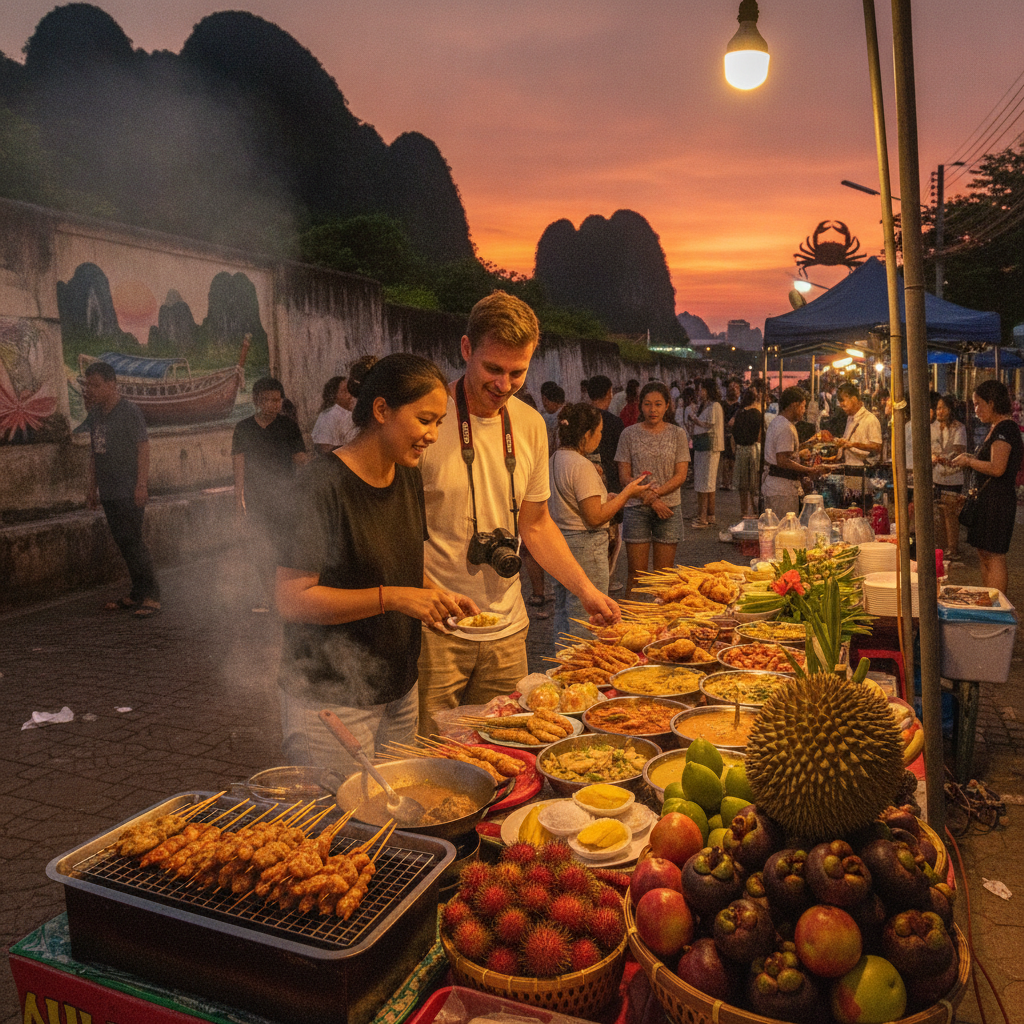
Krabi Food & Southern Thai Culture Walk
Eat through Krabi — the southern Thai food culture of Krabi province, influenced by the Malay, Chinese, and Thai culinary traditions of the peninsula, produces one of the most distinctive regional cuisines in Thailand, characterised by intense heat, deep spice complexity, and the abundant fresh seafood of the Andaman coast.
- 1
Krabi Morning Market
The morning market at the Krabi Town market complex serves the town's residential community before 10am — the fresh produce vendors (the southern Thai vegetables, the fresh coconut, the seasonal tropical fruits), the fresh fish vendors displaying the Andaman Sea catch from the overnight fishing boats (the whole red snapper, the barramundi, the various grouper species, the live crab, and the fresh squid), and the prepared food vendors selling the standard southern Thai breakfast foods (the khanom jeen rice noodles served with southern Thai curry, the roti flatbread with its Malay-Thai fusion topping tradition, and the khao tom rice soup) create the most comprehensive encounter with the ingredients of southern Thai cuisine available in a single location.
- 2
Massaman Curry Origin
The massaman curry (gaeng massaman) is the most internationally recognised product of southern Thailand's Muslim Malay culinary influence — the curry's distinctive spice profile (combining Thai chillies with the cinnamon, cloves, star anise, and cardamom of Malay and Indian spice trade cooking) and its typically mild heat level compared to other southern Thai curries reflect the Islamic food preparation tradition that prohibits the use of lard and which does not use pork (the most common southern Thai curry meat is beef or chicken in massaman). The Krabi restaurants serving the traditional massaman curry (with its braised beef, the whole spices that can be identified in the sauce, and the potato and peanut that distinguish it from other southern curries) provide the most direct encounter with this UNESCO-recognised culinary heritage in its geographical origin region.
- 3
Ao Nang Seafood Restaurants
The seafood restaurants along the Ao Nang beach road represent the commercial expression of the Andaman seafood culture — the glass tank display of live seafood (the Thai Andaman tiger prawns, the local crab species including the blue swimmer crab and the stone crab, the sea bass, the snapper, and the various mollusc species), the 'choose your protein, choose your cooking style' ordering system, and the beachfront terrace setting provide the most visitor-accessible form of the local fresh seafood culture. The seafood restaurants of the Ao Nang strip have adapted the local fishing catch to the requirements of international resort visitors (larger portions, reduced chilli heat, English-language menus), while maintaining the quality of the fresh Andaman catch that makes the seafood genuinely exceptional.
- 4
Roti and Murtabak
The roti vendors of Ao Nang and Krabi Town represent the Malay food influence that permeates the food culture of Thailand's Andaman coast — the roti flatbread (fried on a hot griddle, served plain with condensed milk, or stuffed with banana, egg, or the savoury murtabak filling of spiced meat and egg) is the standard street food breakfast of the Muslim Malay community of southern Thailand. The roti operation (the dough thrown into a thin sheet by the practiced technique of the roti vendor, then folded and fried on the hot oiled griddle) is one of the most visually compelling street food preparations in Thailand, and the roti with condensed milk and butter provides one of the most satisfying and affordable food experiences of the Krabi resort area.
- 5
Hat Yao Beach Restaurant
The beach restaurants at the quieter beaches north of Ao Nang (Hat Yao, Hat Khlong Muang) provide the most atmospheric fresh seafood dining experience in the Krabi province beach area — the simple beach restaurants with their plastic tables on the sand, their fresh fish from the morning market cooked in the southern Thai style (the whole snapper deep-fried and served with the sweet and sour three-flavour sauce, the crab stir-fried with yellow curry powder in the Southern Thai style), and the view of the Andaman Sea and the offshore karst from the table create a more authentic coastal dining experience than the resort restaurant operations of the Ao Nang main beach.
- 6
Krabi Cooking Class
The cooking classes offered by several Ao Nang and Krabi Town operations provide the most systematic encounter with southern Thai food preparation techniques — the market visit component (selecting fresh ingredients from the morning market), the instruction in the use of the southern Thai curry paste (the difference between the massaman paste, the gaeng som (sour curry) paste, and the gaeng tai pla (fish organ curry) paste that define the regional cuisine), and the hands-on preparation of 4-5 dishes provides a structured introduction to the food culture that complements the restaurant eating experience. The cooking class is the most popular paid activity in the Krabi area after the marine and climbing activities.
Walk this route with audio
Stories play automatically as you reach each stop — no tapping needed.