Makassar Gowa Kingdom & Sungguminasa Walk
Visit the historical Gowa Kingdom sites around Makassar — the Gowa-Tallo Sultanate that controlled the spice trade and resisted Dutch conquest until 1667 left a legacy of royal tombs, the Balla Lompoa palace museum, and the sites of the battles that determined the course of eastern Indonesian history.
- 1
Balla Lompoa Royal Museum
Balla Lompoa (Great House) in Sungguminasa is the traditional palace of the Gowa Kingdom — the large traditional Bugis building with its distinctive architectural style houses the royal museum displaying the regalia, weapons, and ceremonial objects of the Gowa royal family, including the crown of the sultans and the sacred keris daggers that are among the most historically significant Sulawesi artefacts outside the national museum in Jakarta.
- 2
Tomb of Sultan Hasanuddin
Sultan Hasanuddin of Gowa is Indonesia's most celebrated resistance hero in South Sulawesi — the sultan whose military resistance to the Dutch VOC earned him the title 'Rooster of the East' from the Dutch commanders he fought, and whose eventual defeat in the 1667 Treaty of Bongaya marked the end of Makassar's maritime dominance, is commemorated in the royal tomb complex where his grave is maintained as a national historical site and pilgrimage destination.
- 3
Sungguminasa Old Town
Sungguminasa, the royal capital of the Gowa Kingdom south of modern Makassar, has preserved more of the pre-colonial urban fabric than the city centre — the royal quarter with its palace, mosque, and attendant structures, surrounded by the residential areas of the court population, provides a physical context for understanding the spatial organisation of a pre-colonial Sulawesi kingdom that the Dutch systematically dismantled after their 1667 conquest.
- 4
Bantaeng Traditional Area
Bantaeng south of Makassar is one of South Sulawesi's least-visited historic towns — the small port that was an independent kingdom before incorporation into the Gowa Sultanate has a quiet historic waterfront, traditional fishing boat harbour, and the unhurried atmosphere of a South Sulawesi coastal town that has not experienced the tourism development of the more famous sites, representing an accessible alternative for visitors who want historical depth without tourist crowds.
- 5
Gowa Ancient Cemetery
The royal cemetery of the Gowa Kingdom contains the tombs of 36 sultans spanning the 14th to 20th centuries — the graves ranging from pre-Islamic era unmarked mounds to the elaborately decorated Islamic-era tombs of the sultans who converted in 1605 document the religious transformation of the Gowa Kingdom and the changing funerary aesthetics of four centuries of Sulawesi royalty in a single burial ground.
- 6
Makassar Strait Historical Context
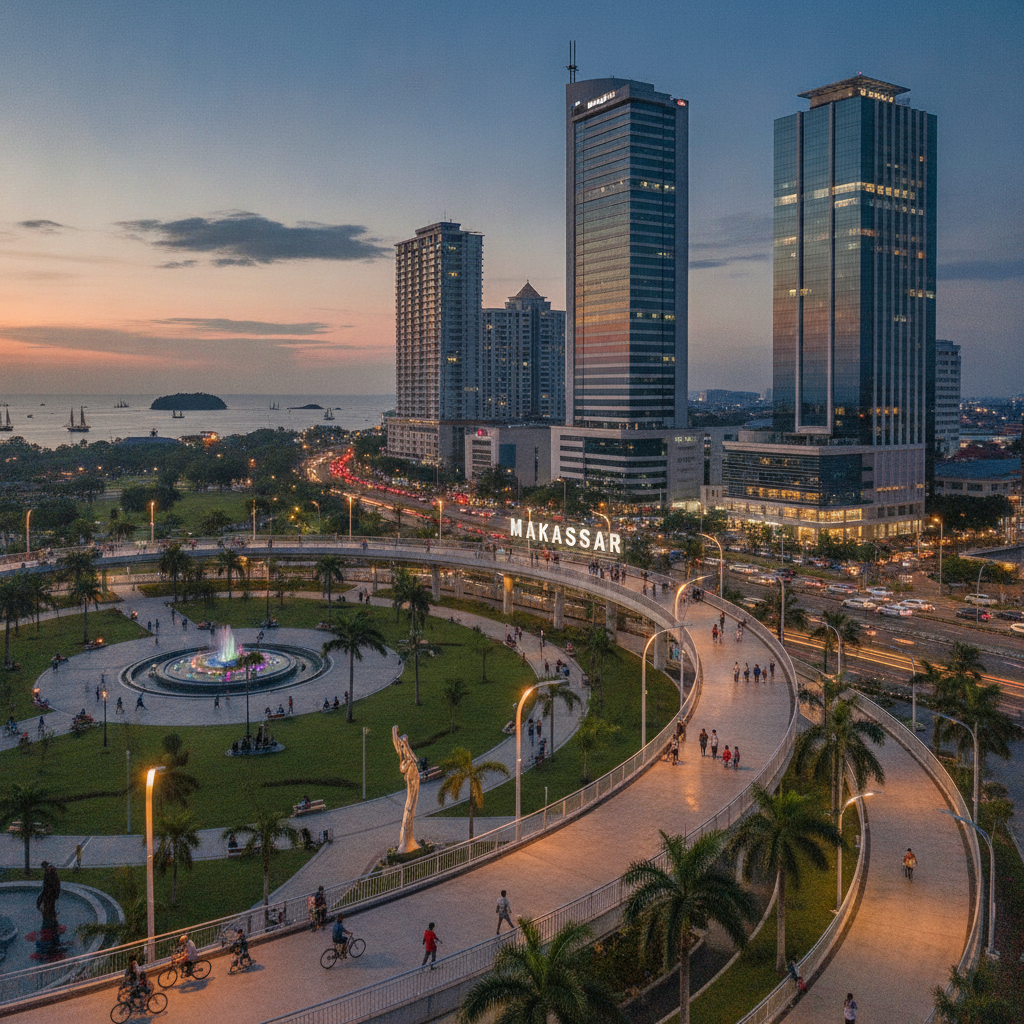
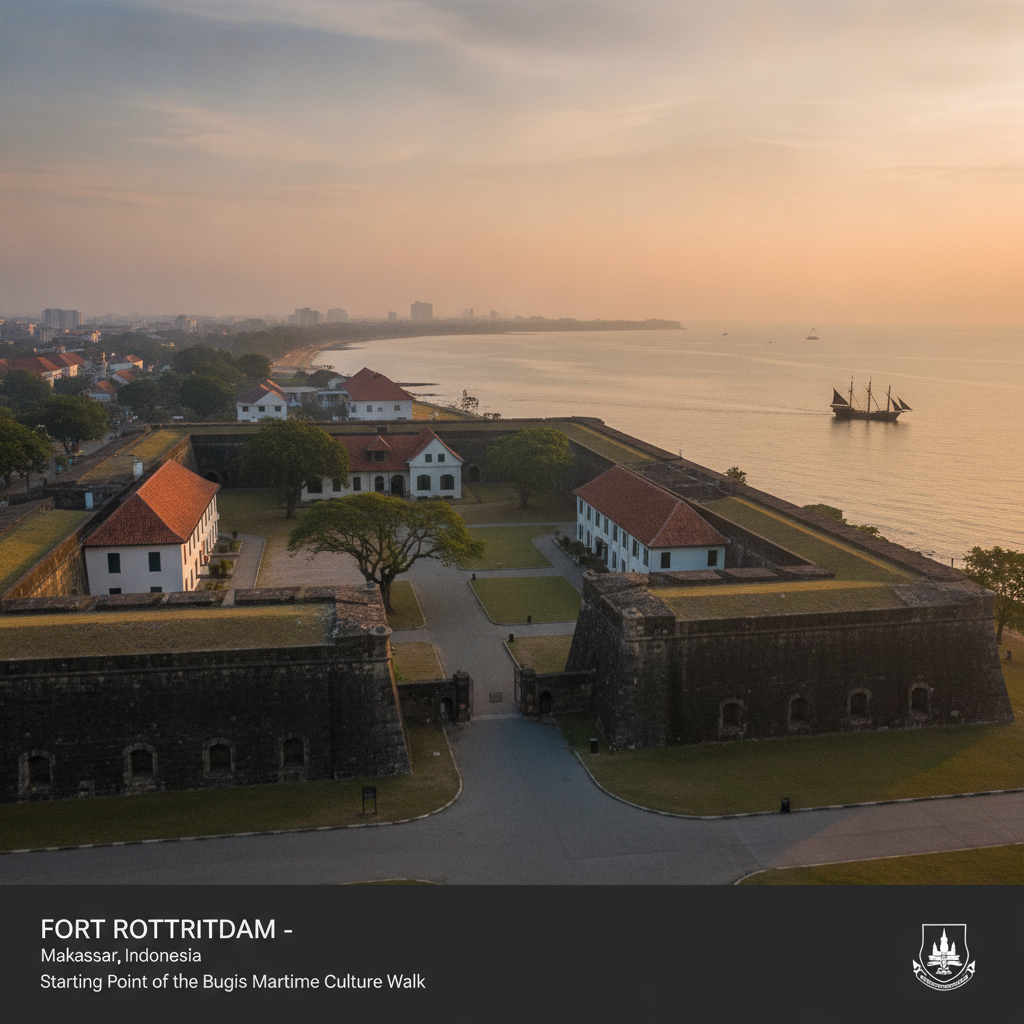
The Makassar Strait, now a scenic backdrop for the Losari sunset, was the strategic waterway that determined eastern Indonesia's fate in the 17th century — the VOC fleet that besieged Makassar in 1666-1667, the Bugis allied fleet of Arung Palakka, and the Gowa Kingdom's naval defences all operated in these waters. Standing on the Losari promenade and looking west across the strait provides a geographic orientation to the military and economic conflict that shaped the region's colonial history.
Walk this route with audio
Stories play automatically as you reach each stop — no tapping needed.