Merzouga Culture: The Gnawa of the Desert, the Blue Men of the Sahara, the Touareg Heritage, the Saharan Musical Traditions, and the Desert Cultural Identity
The Merzouga culture route covers the Gnawa community of Khamlia as the most desert-rooted single Gnawa village in Morocco, the Blue Men (Sahrawi and Touareg) as the most romantically described single Saharan people, the Touareg cultural heritage in the Moroccan desert context, and the Saharan musical traditions.
- 1
Khamlia Gnawa Village: The Desert Sub-Saharan Community
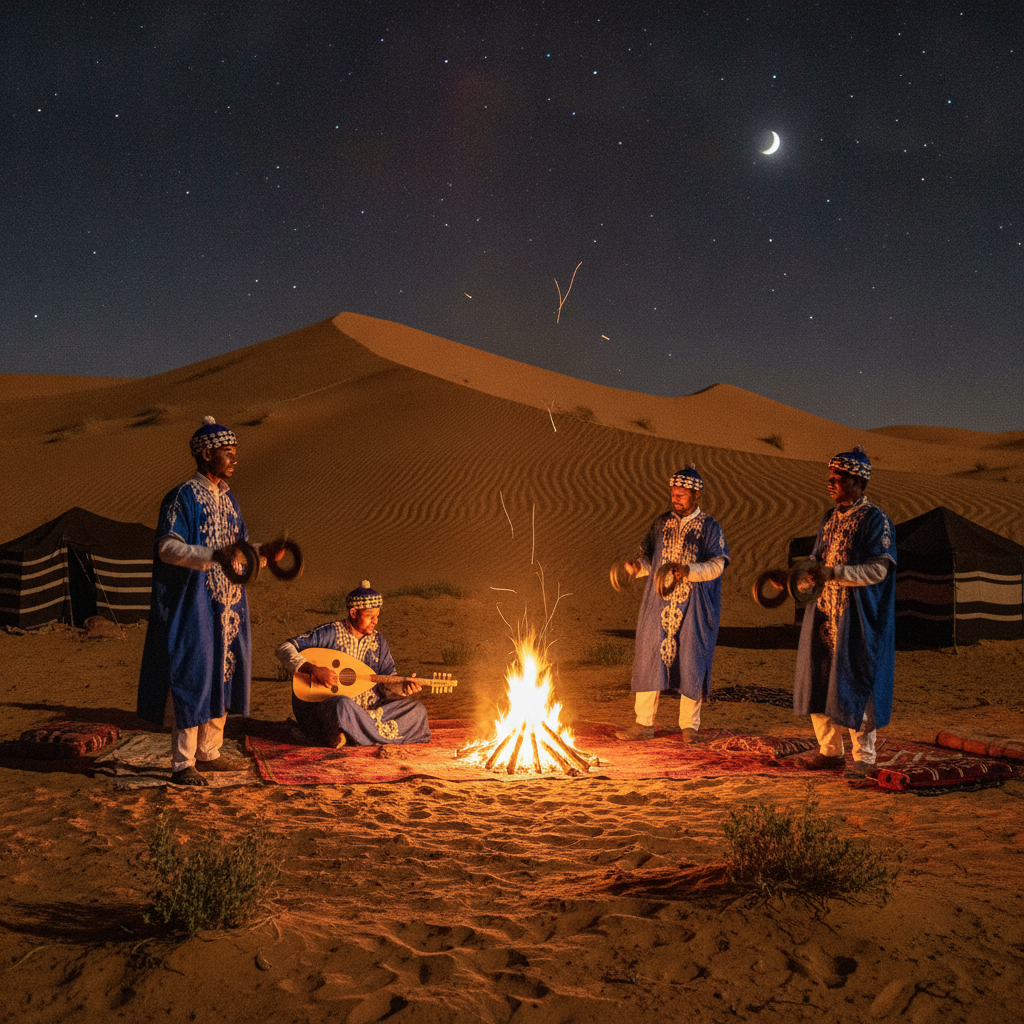
The Khamlia village Gnawa community (8 kilometers from Merzouga on the hamada track), the descendants of the West African slaves brought to the Tafilalet oasis via the trans-Saharan trade route from the Mali, the Hausa, and the Songhai empires who maintained the most completely West African single spiritual music tradition in the Moroccan desert setting, is the most geographically isolated single Gnawa community in Morocco and the Gnawa most directly connected to the Saharan trade route that originally brought the sub-Saharan African people to North Africa. The Khamlia guembri performance for the desert camp visitors is the most authentically Saharan single live music experience in the Merzouga desert tourism circuit.
- 2
Blue Men: The Sahrawi Desert Identity
The Blue Men of the Sahara (the Sahrawi and the related Moor nomadic communities of the Western Sahara and the Moroccan desert south) take their name from the indigo-dyed boubou robe and the tagelmust (face veil) that stains the skin with the most distinctively blue-tinged single desert complexion from the contact with the indigo dye. The Blue Men Touareg-related cultures of the Moroccan deep south are the most romantically described single Saharan people in the European desert literature tradition from the 19th century French explorers to the contemporary travel writing. The Blue Men camel herder encountered in the Erg Chebbi or the hamada is the most iconic single Moroccan desert encounter.
- 3
Touareg Heritage: The Desert Confederation
The Touareg (Tuareg) people, the most geographically extensive single Saharan Berber nomadic confederation covering the Algerian, the Libyan, the Malian, the Nigerian, and the Moroccan desert zones, are present in the Merzouga region as the most northerly single Moroccan Touareg community and the group that most directly maintains the Touareg craft tradition (the silver jewelry with the Southern Cross motif, the leather camel equipment, and the decorated sword) in the Moroccan market. The Touareg silver cross pendants sold in the Merzouga market are the most directly Saharan single jewelry tradition available in the Moroccan craft market.
- 4
Sahrawi Music: The Desert Sound
The Sahrawi music tradition of the deep Moroccan south, the most directly West African-influenced single Moroccan musical tradition with the intense polyrhythmic percussion, the call-and-response vocal structure, and the tidinit (the Sahrawi lute) providing the most hypnotic single Moroccan desert music base, is the most geographically specific single Moroccan regional music and the tradition most clearly separated from the Arabo-Andalusian classical music of the northern Moroccan cities. The Sahrawi music performance around the desert camp fire is the most atmospherically complete single live music experience in the Moroccan desert tourism and the performance most connected to the most ancient single Saharan musical tradition.
- 5
Desert Hospitality: The Nomad Tea Ceremony
The Saharan nomad tea ceremony (atay, the three-glass Moroccan mint tea ritual performed in the most ceremonially deliberate single social protocol: the first glass bitter as life, the second sweet as love, the third gentle as death) is the most universally observed single social convention in the Moroccan desert and the ritual that most clearly communicates the desert hospitality value of the most geographically isolated single Moroccan community. The Merzouga Berber tea ceremony in the desert camp is the most atmospherically complete single version of the ritual and the most directly Saharan single social experience in the Morocco desert tourism.
- 6
Imraren: The Camel Herding Tradition
The Imraren (camel herders) of the Erg Chebbi region, the Berber specialist camel herding families who maintain the most complete single knowledge of the dromedary camel (the most perfectly desert-adapted single large mammal) in Morocco, are the most directly employable single traditional knowledge source in the Merzouga desert tourism economy as the camel trek guides and the desert camp operators. The Imraren camel selection (the most carefully selected single camel for the tourist trek is the most docile single camel with the most consistently smooth single gait) and the desert navigation knowledge represent the most practically valuable single traditional knowledge in the Merzouga desert service sector.
Walk this route with audio
Stories play automatically as you reach each stop — no tapping needed.
More in Merzouga
Merzouga Circuit: The Tafilalet Grand Circuit, the Erfoud Fossil Route, the Rissani Heritage Trail, the Ziz Valley Connection, and the Southern Morocco Desert Road
Merzouga Practical: The CTM Bus from Erfoud, the Road from Ouarzazate, the Desert Camp Booking, the Optimal Visit Timing, the Seasonal Considerations, and the Departure Summary
Merzouga Region: The Tafilalet Oasis, the Sijilmassa Ruins, the Rissani Berber Market, the Erfoud Date Festival, and the Pre-Saharan Cultural Landscape
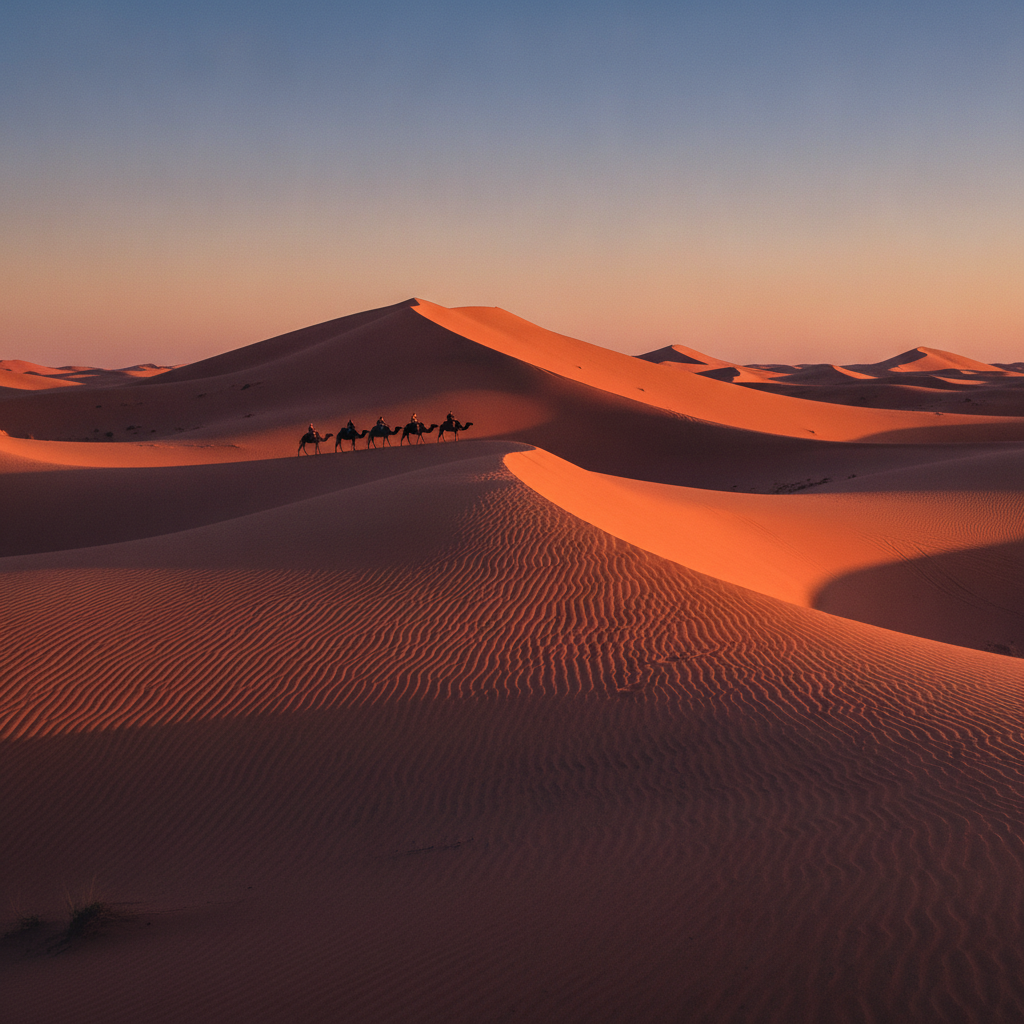
Merzouga Essential: The Erg Chebbi Sand Dunes, the Camel Trek to the Desert Camp, the Sahara Sunrise, the Berber Nomad Culture, and the Most Complete Single Saharan Desert Experience in Morocco
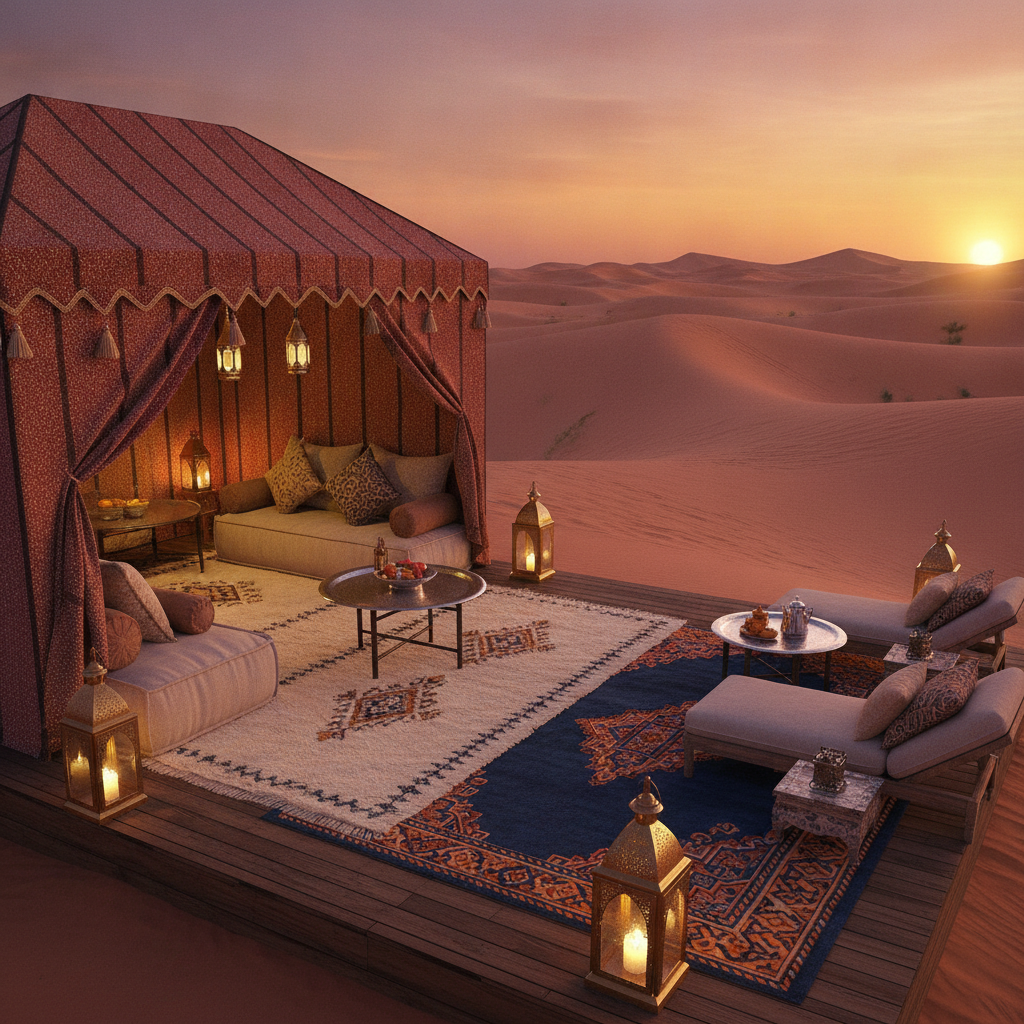
Merzouga Luxury: The Luxury Desert Camp, the Glamping Berber Tent, the Private Camel Trek, the Premium Stargazing Experience, and the High-End Saharan Desert Travel
