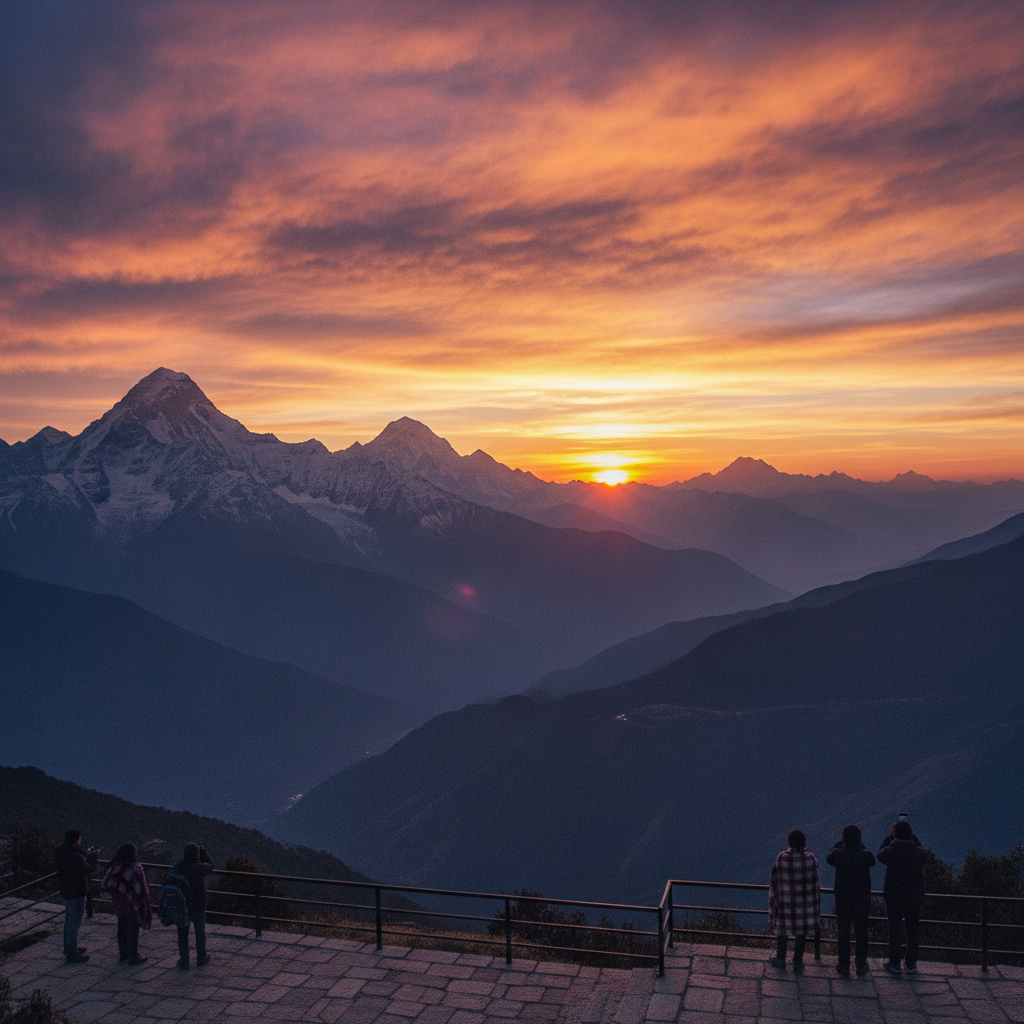
Nagarkot Himalayan Sunrise Panorama Walk
Watch the Himalayas ignite at dawn — Nagarkot's ridge position at 2175m offers the most celebrated single sunrise panorama accessible from any easily reached Nepal hill station, the snow peaks of eight Himalayan ranges visible from Dhaulagiri in the west to Kanchenjunga in the east as the first light touches the summits.
- 1
Nagarkot View Tower
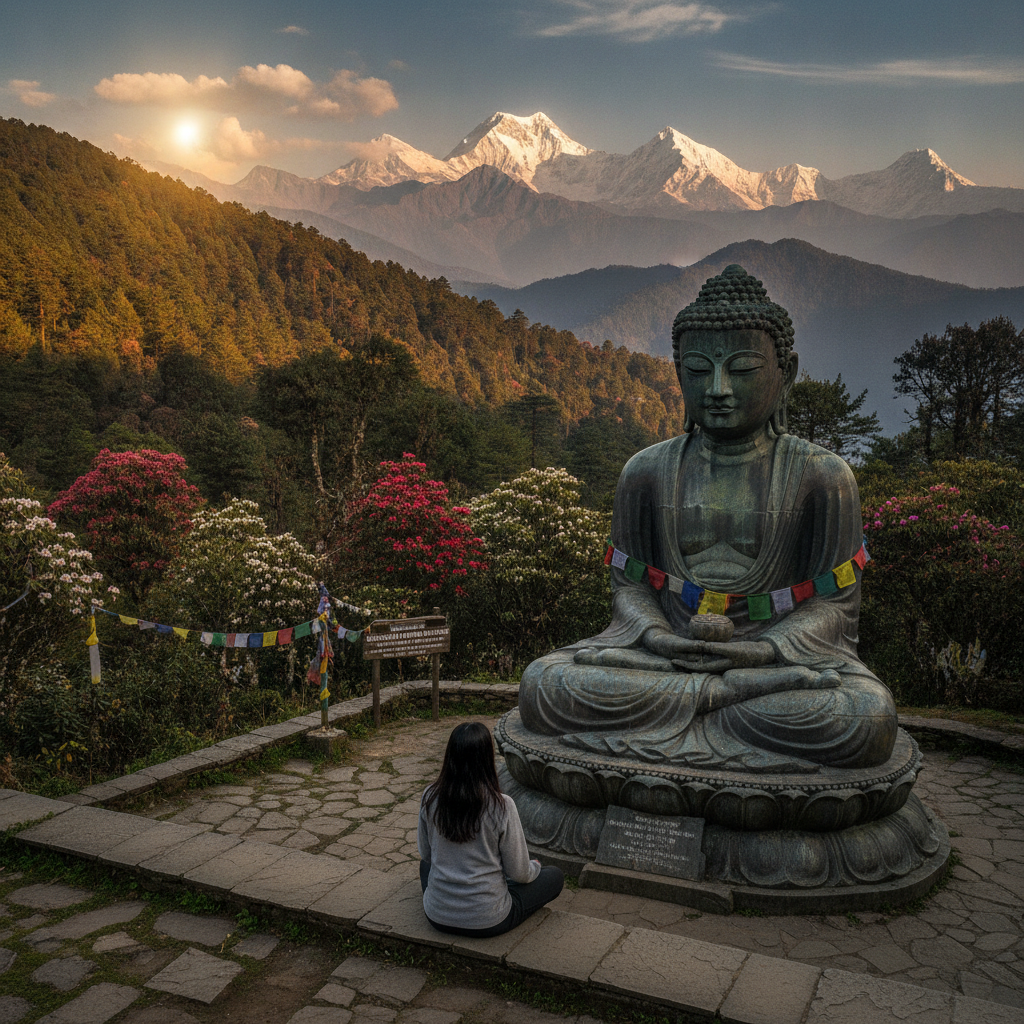
The Nagarkot View Tower (the observation platform at the highest accessible point on the Nagarkot ridge, positioned to maximise the northern panorama across the full arc of the visible Himalayan range from the pre-dawn darkness until the complete sunrise reveal) is the most panoramically positioned single observation point accessible at the hill station — the tower's specific view (the 180-degree arc from the Langtang massif in the north to the Annapurna range visible on clear days 120km to the west and the Everest group 150km to the east, the most geographically extensive single Himalayan panorama accessible from a road-reachable Nepal viewpoint) and the tower's pre-dawn atmosphere (the gathered visitors in the darkness waiting for the first light, the cold of the Nagarkot ridge before sunrise creating the most physically anticipatory single wildlife encounter accessible in the Nepal hill station, the collective silence of the assembled viewers broken only by the wind and the first bird calls as the eastern sky begins to lighten) create the most reliably spectacular single Himalayan sunrise experience accessible without trekking.
- 2
First Light Peak Glow
The first light on the Himalayan peaks from Nagarkot (the moment approximately 20-30 minutes before the visible sunrise when the highest peaks of the range catch the first direct sunlight, the Everest group and the Langtang summits lit in the most intense alpenglow accessible from any Nepal viewpoint — the deep red-orange illumination of the snow and the ice at the highest elevations creating the most dramatically colour-saturated single natural event accessible in Nepal's hill station experience) is the most photographically significant single moment accessible during the Nagarkot sunrise — the alpenglow's specific character (the colour visible only in the highest peaks initially, then descending the mountain faces as the sun rises behind the Nagarkot observer, the sequence of illumination moving from the 8000m summits through the lower ridges to the valley floors in the single most geographically scaled natural lighting display accessible in Nepal) and the viewing angle from the Nagarkot ridge (the observer positioned with the sun rising behind them, the mountains illuminated in the most frontally-lit single configuration accessible at any Nepal viewpoint, the shadows moving away from the viewer as the light advances) create the most technically optimal single viewpoint for the Himalayan sunrise experience.
- 3
Everest Silhouette View
The Everest silhouette view from Nagarkot (the distinctive triangular profile of Mount Everest visible on the clearest days 150km to the east, identifiable by the characteristic plume of wind-blown snow visible at the summit and the position of the peak above the lower intervening ridges) is the most emblematically significant single mountain sighting accessible at the Nagarkot viewpoint — the Everest identification from Nagarkot (the mountain's position in the southeastern part of the visible range, the peak identifiable by the experienced guide from its characteristic shape and its position relative to the closer Numbur and Gauri Shankar massifs in the foreground) and the sighting's atmospheric requirements (the October-November post-monsoon period and the February-March late winter providing the clearest air and the most reliable single Everest identification from the Nagarkot distance) create the most achievement-signifying single mountain identification accessible at any Nepal hill station. The Everest view from Nagarkot (the knowledge that the world's highest peak is visible at this distance, seen from the comfortable infrastructure of the hill station without any trekking or technical skill required) is the single most accessible encounter with the world's most famous mountain available from the Kathmandu valley region.
- 4
Langtang Range Morning
The Langtang range morning view from Nagarkot (the closest major Himalayan massif visible from the hill station, the Langtang Lirung at 7234m the most prominent single peak in the nearest range visible from the Nagarkot ridge, the glaciers and the snowfields of the Langtang valley visible in detail in the morning clarity as the sun illuminates the north face of the range) is the most detail-rich single Himalayan viewing experience accessible at the Nagarkot viewpoint — the Langtang range's proximity (approximately 60km from Nagarkot, the mountain faces visible in sufficient detail to identify the individual glaciers and the rock faces that form the most topographically detailed single Himalayan view accessible from a road-reachable Nepal hill station) and the range's morning character (the snow surface reflecting the morning sun at the most brilliantly illuminated angle accessible in the mid-morning, the ice seracs and the crevassed glacier zones visible in the most clearly differentiated single snow-and-ice landscape accessible from the Nagarkot ridge) create the most technically informative single Himalayan geology observation available at the hill station.
- 5
Valley Mist Clearance
The valley mist clearance at Nagarkot (the morning phenomenon when the night-formed mist that fills the valleys below the Nagarkot ridge gradually clears as the sun warms the lower air, the white mist sea visible below the hill station creating the most dramatically landscape-layered single view accessible from the ridge before the clearance reveals the valley farmland below) is the most dynamically evolving single natural spectacle accessible at the Nagarkot morning — the mist's specific character before clearance (the Bhaktapur plain and the Kathmandu valley concealed below the white layer, the Nagarkot ridge appearing as an island in the cloud sea with only the higher Himalayan peaks visible above the mist in the most topographically isolated single viewing position accessible at the Nepal hill station) and the clearance process (the mist burning off from the edges first, the valley landscape below gradually becoming visible in sections as the morning warms, the farmland, the towns, and the river valleys progressively revealed in the most dynamically landscape-revealing single natural process accessible at the Nagarkot viewpoint) create the most time-extended single natural spectacle available during the Nagarkot morning.
- 6
Post-Sunrise Trek Path
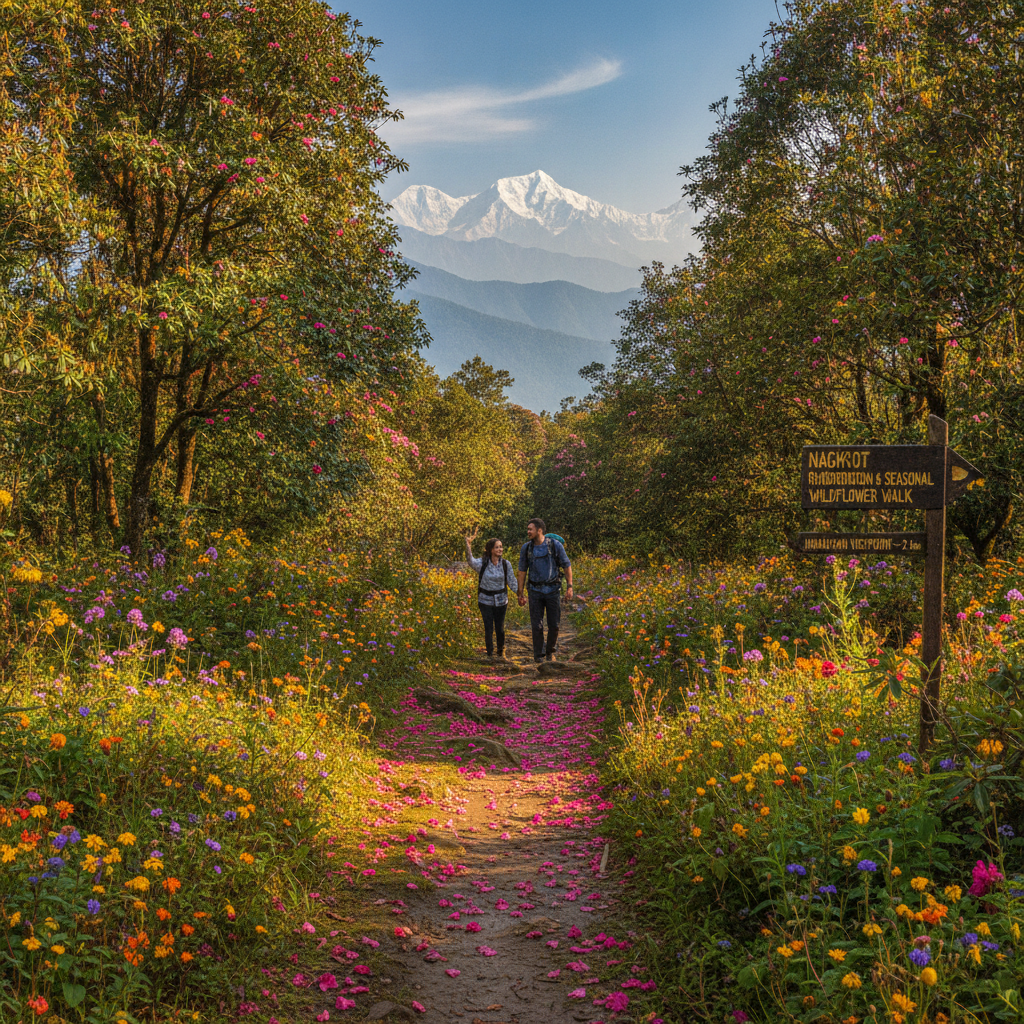
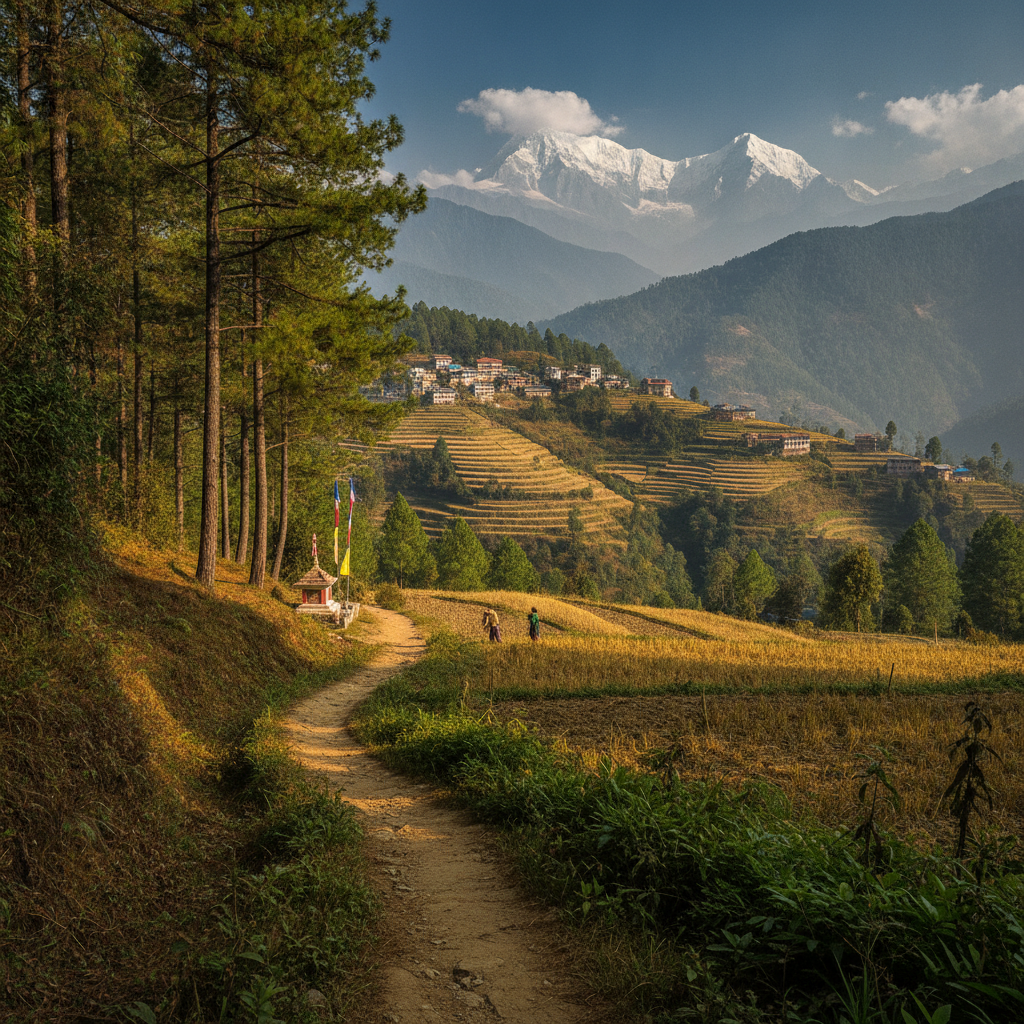
The post-sunrise trek path from the Nagarkot viewpoint (the descending trail from the ridge crest through the mixed forest and the terraced farmland that provides the most rewarding single post-sunrise walking experience accessible at the hill station, the morning light now illuminating the valley landscape below the ridge and the Himalayan panorama still visible behind as the path descends) is the most completely Nagarkot-experience-consolidating single walk accessible after the sunrise viewing — the path's character (the transition from the ridge's cold and exposed viewpoint to the warmer and more sheltered forest path, the birds most active in the post-dawn hour providing the most species-rich single bird encounter accessible during the Nagarkot morning walk) and the path's destination options (the descending route connecting to the Changu Narayan temple, the Bhaktapur road, and the various lower viewpoints accessible on the morning walk that extend the hill station experience into the surrounding landscape) create the most actively rewarding single post-sunrise activity available at the Nagarkot hill station.
Walk this route with audio
Stories play automatically as you reach each stop — no tapping needed.