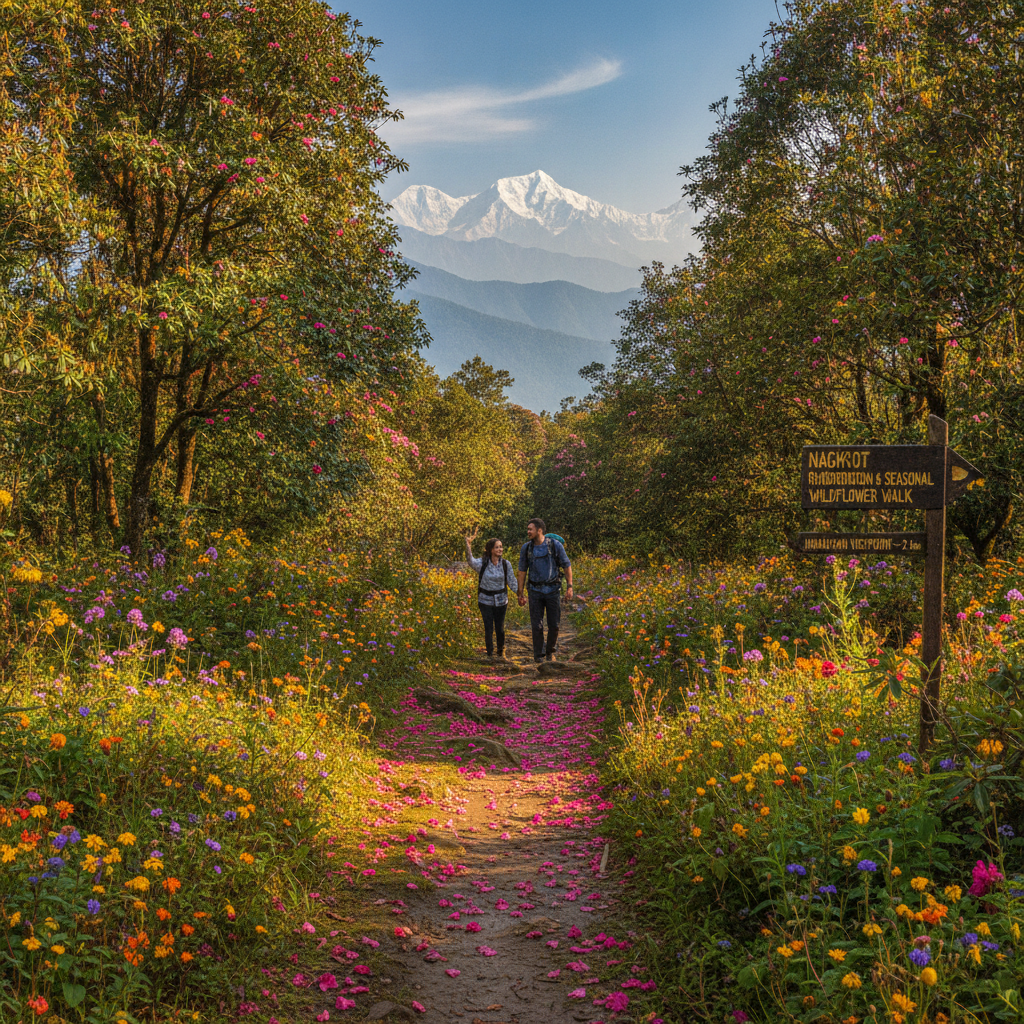
Nagarkot Rhododendron & Seasonal Wildflower Walk
See Nepal's national flower in bloom at Nagarkot — the rhododendron forests on the Nagarkot ridge burst into the most colour-intense single flowering display accessible near Kathmandu from February through April, the crimson and pink Rhododendron arboreum blooms visible against the Himalayan snow creating the most dramatic single seasonal nature spectacle accessible at the hill station.
- 1
Rhododendron Forest Entry
The rhododendron forest entry at Nagarkot (the path entering the section of the ridge forest where the Rhododendron arboreum — Nepal's national flower and the most immediately identifiable single tree species accessible in the Nepal hill country — grows in the most dense single concentration accessible near the Nagarkot viewpoint) is the most seasonally spectacular single forest entry accessible near Kathmandu during the flowering period — the rhododendron forest's February-April character (the dense crimson blooms on the bare branches of the tree rhododendrons creating the most colour-saturated single forest interior accessible in Nepal, the flowers visible from the forest floor looking up through the canopy as the most completely enclosing single colour experience accessible in the Nagarkot forest) and the forest's specific species mix (the large-tree Rhododendron arboreum at the lower elevation giving way to the smaller Rhododendron barbatum with its hairy leaf margins at the upper sections of the forest, the two species' overlapping flowering season creating the most colour-ranged single rhododendron display accessible within the Nagarkot forest walk) create the most botanically specific single seasonal spectacle accessible near Kathmandu.
- 2
Crimson Bloom Viewpoint
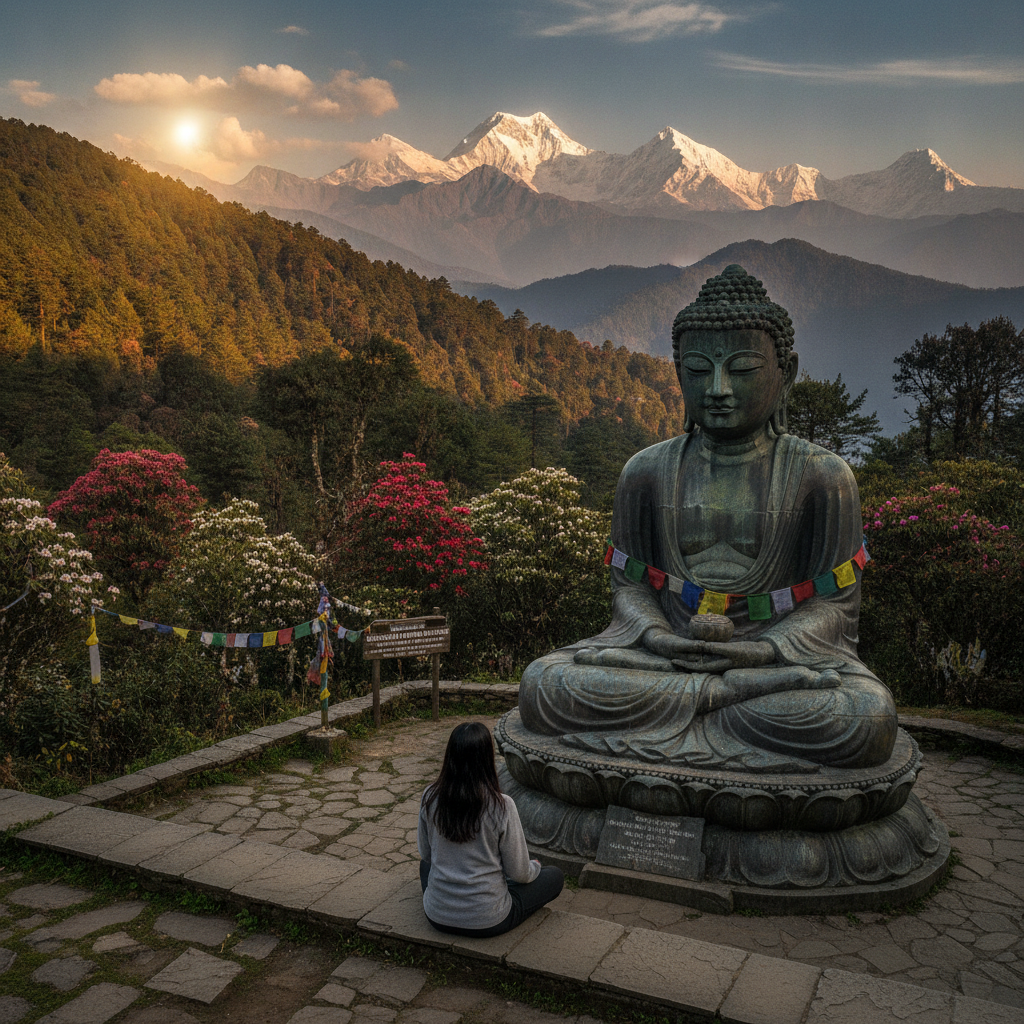
The crimson bloom viewpoint in the Nagarkot rhododendron forest (the clearing where the rhododendrons are most densely concentrated and where the combination of the crimson flower masses and the Himalayan panorama visible behind the forest edge creates the most compositionally dramatic single seasonal landscape accessible at the hill station) is the most photographically spectacular single seasonal viewpoint accessible near Kathmandu — the bloom viewpoint's specific composition opportunities (the crimson rhododendron flowers in the foreground or the frame edges, the forest path visible below the flower canopy, and the white Himalayan peaks visible above the tree tops in the background creating the most colour-contrast-rich single Nepal landscape photograph accessible near Kathmandu) and the viewpoint's peak season timing (the mid-March to mid-April period when the rhododendrons are at the fullest single flowering stage accessible before the monsoon approaches, the combination of the peak bloom and the still clear mountain views accessible in this window making it the most photographically complete single seasonal week accessible at the Nagarkot forest viewpoint) create the most seasonally specific single photography location available at the hill station.
- 3
Spring Bird Activity
The spring bird activity in the flowering rhododendron forest at Nagarkot (the most bird-species-active single period accessible in the hill station forest, the April arrival of the summer migrants from the lowlands coinciding with the rhododendron flowering that attracts the nectar-feeding species — the sunbirds, the flowerpeckers, and the various warbler species arriving for the breeding season visible in the most animated single bird-forest-activity accessible near Kathmandu) is the most birdwatching-productively seasonal single forest walk available at the hill station — the spring migration's specific bird community at Nagarkot (the Grey-headed Canary Flycatcher, the Yellow-bellied Fantail, and the various minivet species arriving in the rhododendron forest simultaneously with the flowering, creating the most colour-rich single combined botanical-and-ornithological spectacle accessible in the Nepal hill country) and the forest's specific spring acoustic environment (the overlapping songs of the arriving migrants creating the most species-rich single bird soundscape accessible in the Nagarkot forest during the breeding season arrival, the dawn chorus at its most complex and most sonically rich in the early April period) create the most completely seasonally-bird-rewarding single forest walk accessible near Kathmandu.
- 4
Wild Orchid Discovery
The wild orchid discovery in the Nagarkot forest (the identification of the native orchid species that inhabit the rhododendron and the oak forest floor and the tree bark at the Nagarkot elevation — the terrestrial and the epiphytic orchid species that are the most botanically specialist-rewarding single plant group accessible in the hill station forest) is the most plant-discovery-rewarding single botanical encounter accessible at Nagarkot — the orchid species accessible in the Nagarkot forest zone (the Coelogyne cristata — the white crystalline orchid that is the most spectacularly flowering single epiphytic orchid accessible in Nepal's mid-hill zone, typically visible in the January-March period on the moss-covered oak trunks in the most sheltered single forest locations accessible on the Nagarkot walk) and the forest floor orchids (the Habenaria and the Platanthera species visible in the more open forest floor sections, the smaller and the more easily overlooked single orchid forms that require the most attentive single botanical observation accessible during the forest walk) create the most botanically specialist-rewarding single nature walk available at the Nagarkot hill station beyond the standard rhododendron and panorama experience.
- 5
Monsoon Greenery Walk
The monsoon greenery walk at Nagarkot (the forest walk during the June-September monsoon period when the Nagarkot ridge forest transforms to the most luxuriantly green single forest interior accessible at the hill station, the rain-fed ferns, the mosses, and the various herb species emerging in the moist forest floor creating a completely different seasonal forest character from the dry season walk) is the most botanically lush single seasonal forest experience accessible near Kathmandu — the monsoon forest's specific character (the mist that frequently enshrouds the Nagarkot ridge during the monsoon reducing the mountain visibility to zero but creating the most atmospheric single enclosed forest experience accessible at the hill station, the grey-white mist in the forest interior transforming the pine and the rhododendron trees into the most ghost-forest-atmospherically evocative single natural scene accessible near Kathmandu) and the monsoon's botanical productivity (the most diverse single flowering season for the forest herbs and the grassland wildflowers accessible at the hill station, the June-August period producing the most species-rich single wildflower display accessible in the Nagarkot forest floor despite the reduced mountain viewing) create the most seasonally contrasting single forest walk available at the Nepal hill station.
- 6
Autumn Clear Day Walk
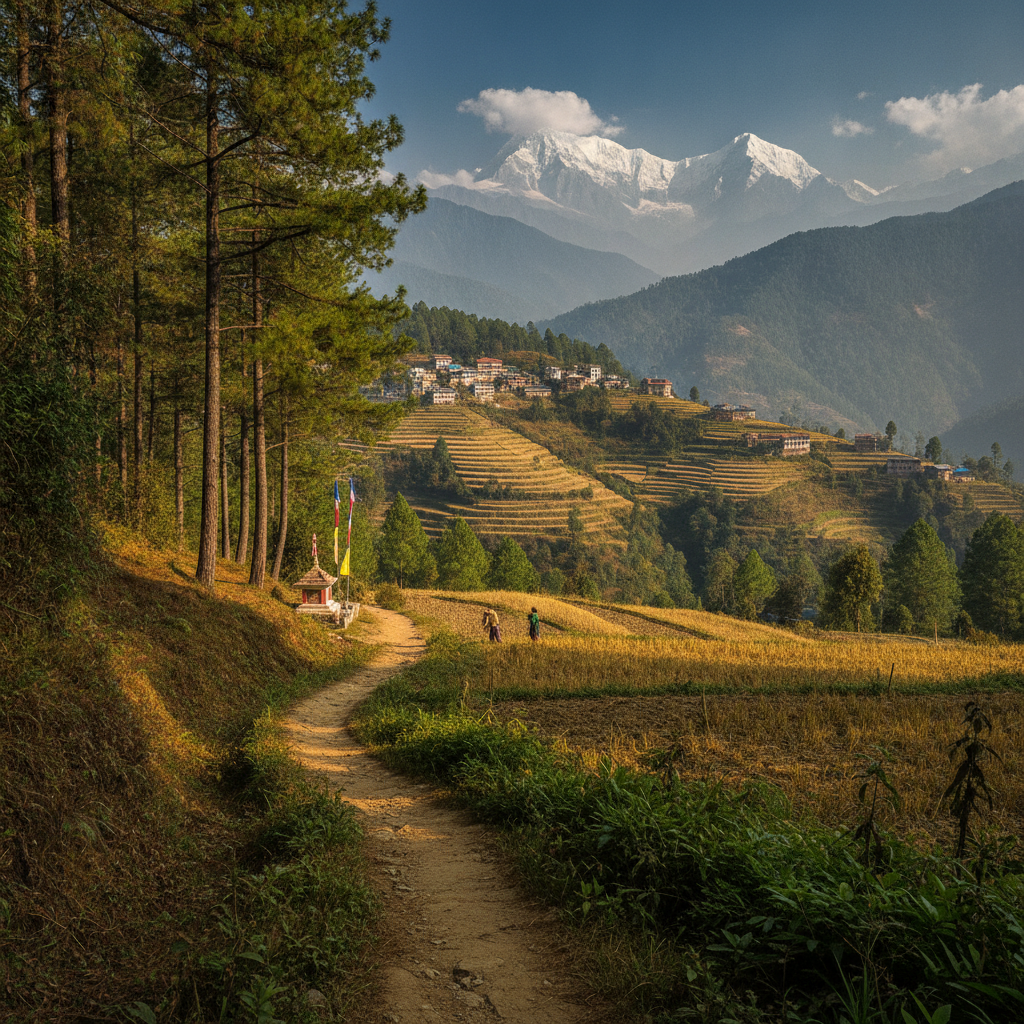
The autumn clear day walk at Nagarkot (the October-November post-monsoon forest walk when the recently cleared air provides the most crystal-clear single mountain visibility accessible during the year, the rhododendron leaves at their most richly coloured autumn red visible beside the path, and the entire forest freshly washed by the preceding monsoon rains creating the most saturatedly green single post-monsoon forest accessible near Kathmandu) is the most completely combined seasonal walk available at the hill station — the autumn walk's specific advantages (the October-November period providing both the clearest single mountain views accessible during the Nagarkot year and the most comfortable single walking temperature accessible at the hill station elevation, the post-monsoon air combining the clarity of the dry season with the botanical freshness of the recently watered vegetation) and the forest's autumn bird community (the November passage migrants moving through the Nagarkot forest on the southward migration creating the most unpredictably species-rich single bird encounter accessible at the hill station, the rare species occasionally pausing in the Nagarkot forest during the autumn passage providing the most rewarding single chance encounter available during the Nepal birdwatching year) make the autumn Nagarkot forest walk the most completely rewarding single seasonal nature experience accessible near Kathmandu.
Walk this route with audio
Stories play automatically as you reach each stop — no tapping needed.