Padang Nasi Padang Food Origin Walk
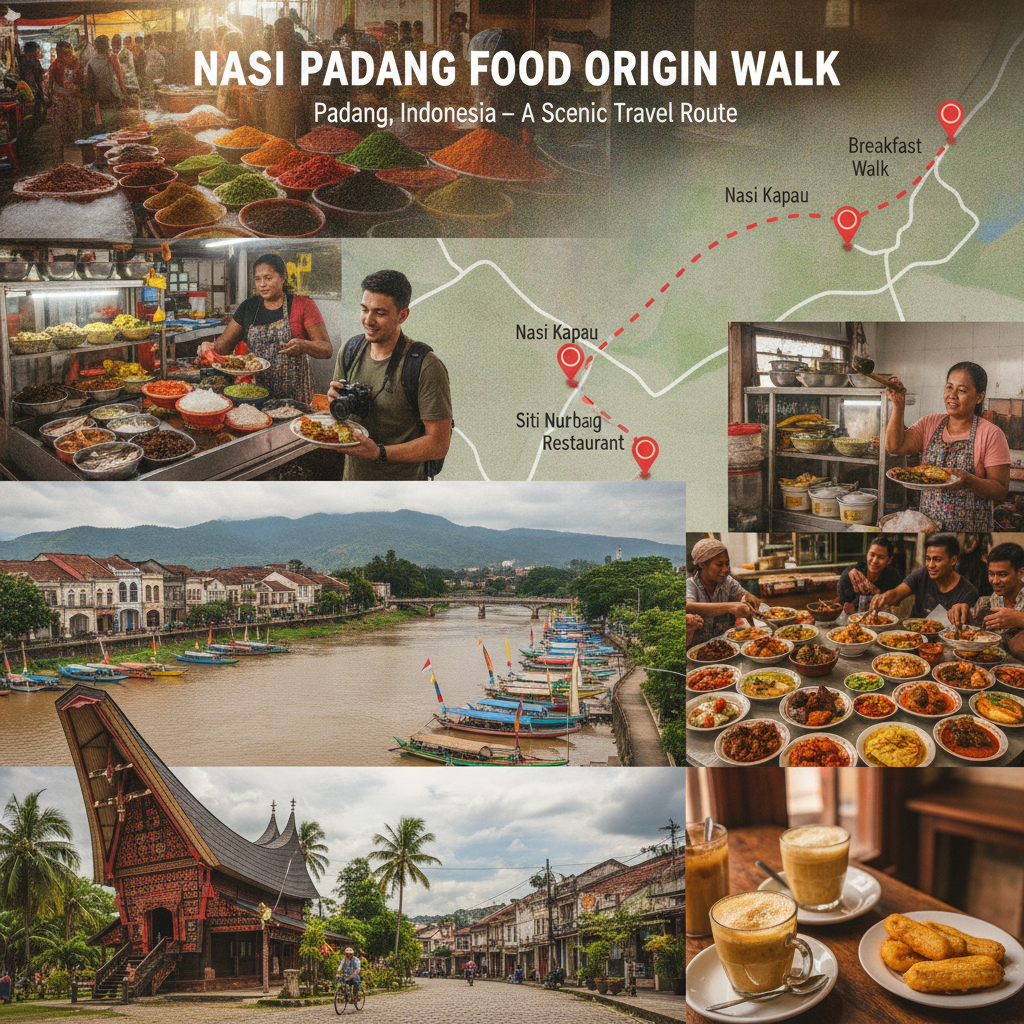
Eat Padang cuisine at its source — the West Sumatran city that gave its name to one of the world's most recognised meal formats serves its nasi Padang in more authentic, diverse forms than anywhere in the Indonesian diaspora, with rendang, gulai, and the full twenty-dish spread available at its finest in the restaurants and street stalls of the capital city.
- 1
Sate Mak Syukur Padang
Sate Mak Syukur in Padang Panjang (an hour from Padang) is considered the finest Sate Padang restaurant in Sumatra — the beef satay with its rich yellow spiced sauce served with lontong rice cakes, in a recipe maintained by the founding family's descendants, attracts visitors specifically from across Indonesia who make the trip to taste the authentic preparation of a dish that has been simplified and modified in the thousands of Padang restaurants across the archipelago. The original Sate Padang from this region uses a specific combination of spices and a distinctive rice flour-thickened sauce that defines the dish.
- 2
Nasi Padang Original Restaurant
The Padang restaurants in Padang itself serve the original format of the meal that bears the city's name — the multiple small dishes placed simultaneously on the table (you pay only for what you eat) served at room temperature in the traditional format includes preparations that have been adapted or simplified in diaspora restaurants: the asam pedas (sour spicy fish), the gulai gajebo (fatty beef rib curry), the specific sambal hijau (green chilli sambal) of West Sumatra, and the various organ meat preparations that constitute authentic Minangkabau cooking unavailable in the modified diaspora version.
- 3
Pasar Raya Central Market
Pasar Raya Padang is the largest market in West Sumatra — the sprawling market with its fresh produce section, spice market, textiles, household goods, and food stalls provides the most comprehensive cross-section of West Sumatran daily commerce available in a single location. The market's spice section sells the fresh turmeric, the specific red and green chilli varieties essential to Minang cooking, the keluak (black nut used in rendang), and the fresh coconut in all its processed forms that supply both the city's domestic kitchens and the padang restaurant industry that operates throughout Indonesia.
- 4
Es Durian Pasar Raya
The durian ice cream stalls at Pasar Raya Padang serve West Sumatra's favourite dessert — the crushed ice drizzled with sweetened durian flesh, often combined with avocado, coconut milk, and other local fruits, has been the signature sweet treat of Padang's market culture for generations. The stalls operating from Pasar Raya serve the peak-season durian from the surrounding highland orchards, and the combination of the powerful durian flavour with the iced base creates a dessert experience that is both intensely regional and intensely seasonal.
- 5
Kedai Kopi Traditional Coffee
The traditional coffee houses (kedai kopi) of the Batang Arau district maintain a coffee culture that predates the contemporary specialty coffee movement by a century — the darkly roasted robusta coffee brewed in the traditional cara tubruk style (coffee grounds steeped directly in the glass with hot water and sweetened condensed milk) and consumed alongside traditional Minangkabau snacks like kue pinyaram and kue talam at the wooden tables of the old coffee houses represents the authentic coffee culture of West Sumatra before international coffee trends arrived.
- 6
Dendeng Balado Specialty
Dendeng balado is Padang's most distinctive snack food — the thinly sliced dried beef fried crisp and then coated in a bright red sambal balado (dry-fried chilli paste) creates an intensely flavoured, chewy, spicy preparation that is both a restaurant dish and a packaged food sold as a gift from West Sumatra to friends and family elsewhere. The dendeng shops near Padang's main bus terminal sell vacuum-packed dendeng balado to the travellers departing for other cities, making it the definitive edible souvenir of Padang and a product whose quality is determined by the freshness of the beef and the heat level of the chilli used.
Walk this route with audio
Stories play automatically as you reach each stop — no tapping needed.