Queen Zenobia and Palmyrene Empire
Learn about Queen Zenobia, the 3rd century ruler of Palmyra who built a breakaway empire challenging Rome, visiting the Arab castle that overlooks the ancient city and the sites associated with the most famous woman in Syrian history.
- 1
Qalaat ibn Maan
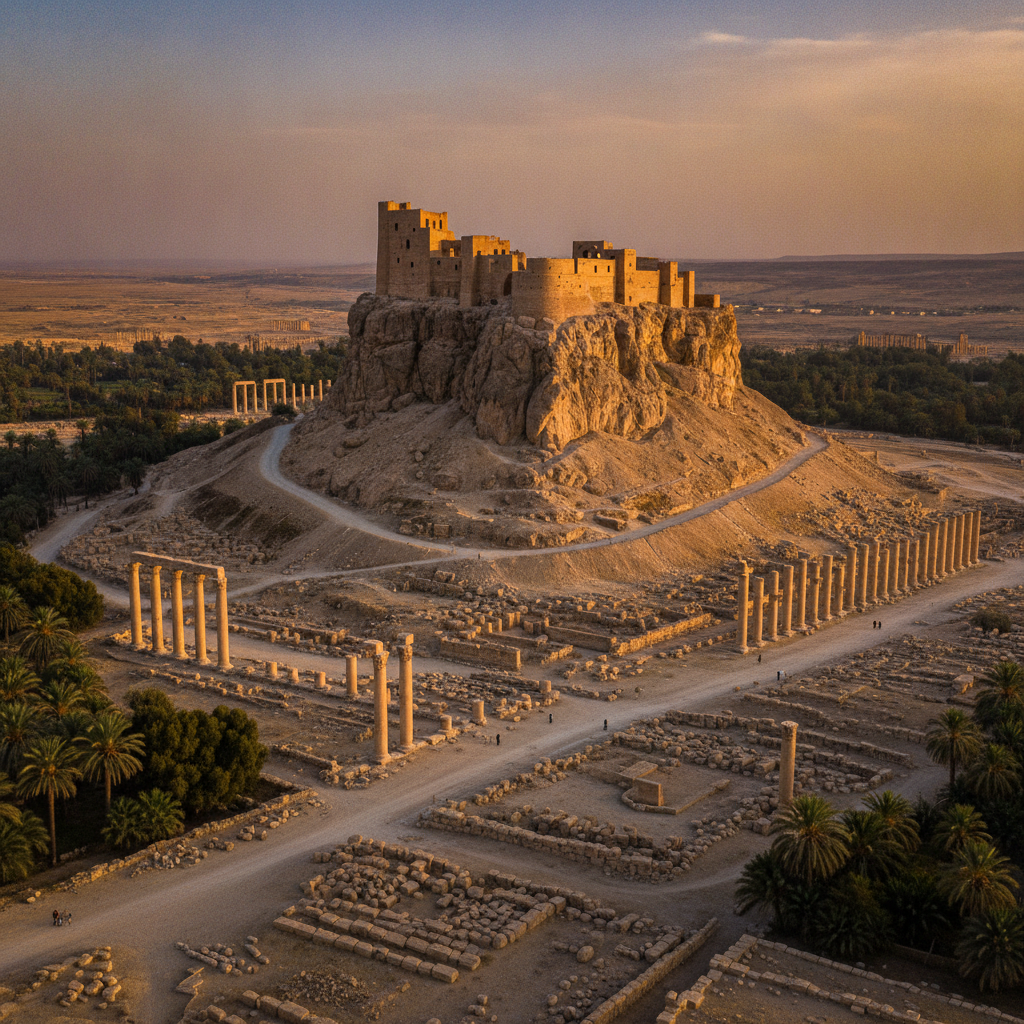
Climb to Qalaat ibn Maan, the 17th century Arab castle on the hill above ancient Palmyra from which the entire ancient city and the surrounding desert are visible, the hilltop providing the panoramic view that makes the scale and setting of ancient Palmyra comprehensible.
- 2
Zenobia History
Learn about Queen Zenobia who served as regent for her son Vaballathus after the assassination of her husband Odaenathus in 268 CE, then conquered Egypt, Arabia, and much of Asia Minor to create the short-lived Palmyrene Empire challenging Roman authority.
- 3
Roman Confrontation
Understand the confrontation between Zenobia and Emperor Aurelian that ended the Palmyrene Empire in 272 CE when Aurelian defeated her armies at the Battle of Immae near Antioch, the Roman legions then besieging and capturing Palmyra itself.
- 4
Zenobia Legacy
Explore the legacy of Zenobia, the remarkable Syrian queen whose learning, beauty, and ambition made her the most famous woman of the ancient world, her subsequent life in Rome as a captured queen debated by ancient sources.
- 5
Camp of Diocletian
See the Camp of Diocletian at the northwestern end of ancient Palmyra where the Roman emperor built a military camp after suppressing a Palmyrene revolt, the fortified camp and its associated temple complex a reminder of Rome determination to control this desert trading city.
- 6
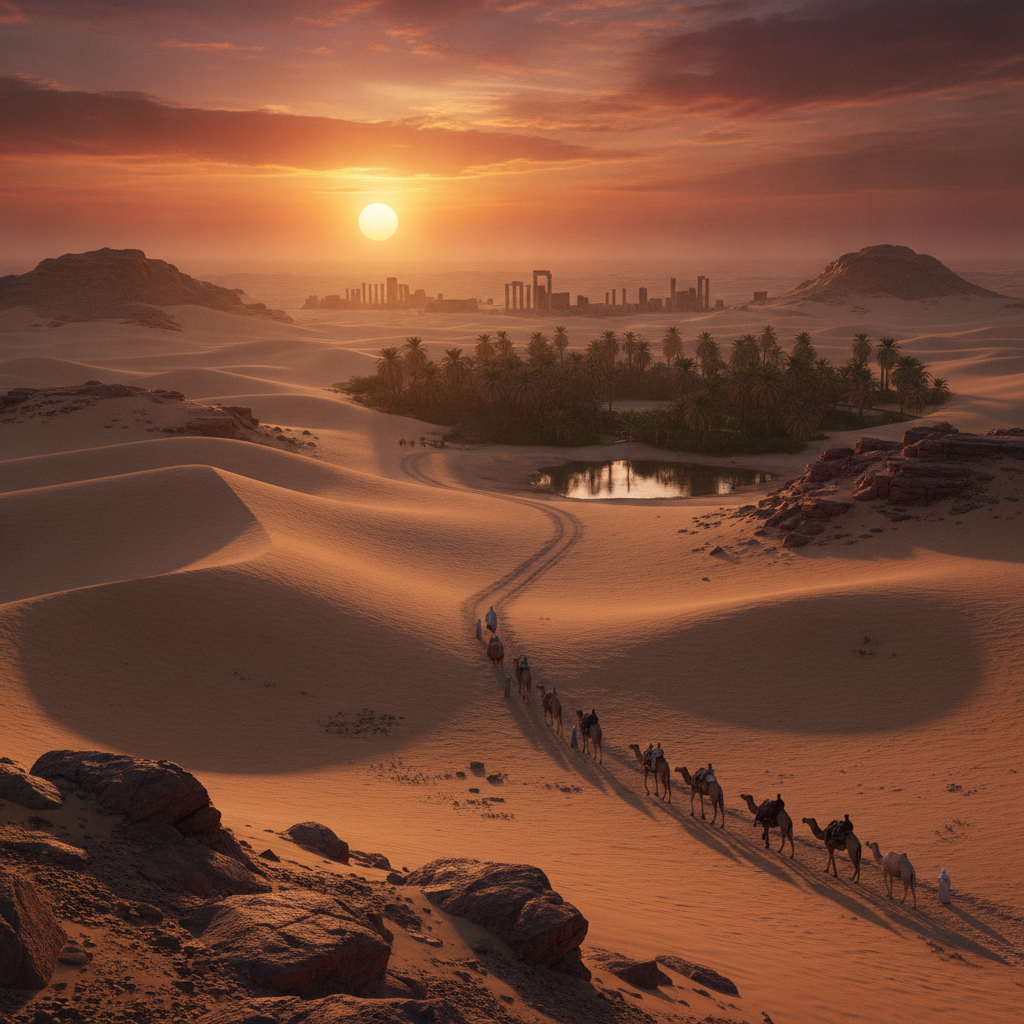
Ancient Oasis
See the spring and oasis of Efqa that made Palmyra possible in the desert landscape, the ancient water source that sustained both the ancient city and the modern town of Tadmur, the geographical basis for the existence of this extraordinary desert metropolis.
Walk this route with audio
Stories play automatically as you reach each stop — no tapping needed.