Redang Island Turtle Conservation & Research Walk
Engage with Redang's turtle conservation programme — the Redang Island Turtle Conservation (RITC) project monitors the nesting green and hawksbill turtles on the island's beaches, collects data on the resident feeding turtle population in the marine park, and runs a public education programme for resort visitors.
- 1
RITC Research Station
The Redang Island Turtle Conservation research station near the main resort beach runs the island's turtle monitoring programme in collaboration with the Department of Marine Parks Malaysia — the station's activities include tagging nesting females with flipper tags and PIT (passive integrated transponder) microchips, recording nest parameters (clutch size, incubation temperature, hatching success), and conducting daytime surveys of the feeding turtle population in the marine park. The research data accumulated over two decades of monitoring at Redang provides one of the longest-running sea turtle population datasets in Malaysia.
- 2
Turtle Nesting Beach Patrol
The nocturnal beach patrol programme at Redang during the nesting season (May to September) allows volunteers and selected resort visitors to accompany the research team on the beach walk that monitors nesting turtles — the patrol team's protocol (maintaining red light discipline, approaching nesting turtles only from behind, maintaining silence during egg-laying) ensures that the monitoring activity does not disturb the nesting process. The frequency of green turtle nesting at Redang (the island records over 1,000 nests per season in good years) makes the nesting beach patrol one of the most productive sea turtle observation programmes accessible to volunteers in Southeast Asia.
- 3
Hatchery Nest Monitoring
The turtle hatchery at Redang (where nests at risk from tidal inundation or beach erosion are relocated to protected sand above the high tide line) allows the research team to monitor incubation conditions and hatching success rates with controlled variables — the hatchery's data on the relationship between incubation temperature and sex determination (higher temperatures produce more female hatchlings in sea turtles) provides information about the potential impacts of climate warming on turtle sex ratios. The hatchling release events at the hatchery, where newly emerged hatchlings are released at the water's edge to make their way into the sea, are the most emotionally engaging public participation event in the Redang conservation programme.
- 4
Turtle Population Status
The green turtle (Chelonia mydas) population using Redang as a nesting beach has shown measurable recovery since the marine park designation in 1994 — the annual nesting count has increased from the depressed levels of the early 1990s (when uncontrolled egg collection had reduced nesting numbers significantly) to the current levels that make Redang one of the most important green turtle nesting beaches in the South China Sea. The hawksbill turtle (Eretmochelys imbricata) population at Redang is smaller but stable, and the monitoring data shows consistent presence of nesting hawksbills on the less disturbed beaches around the island.
- 5
Marine Turtle Biology Exhibit
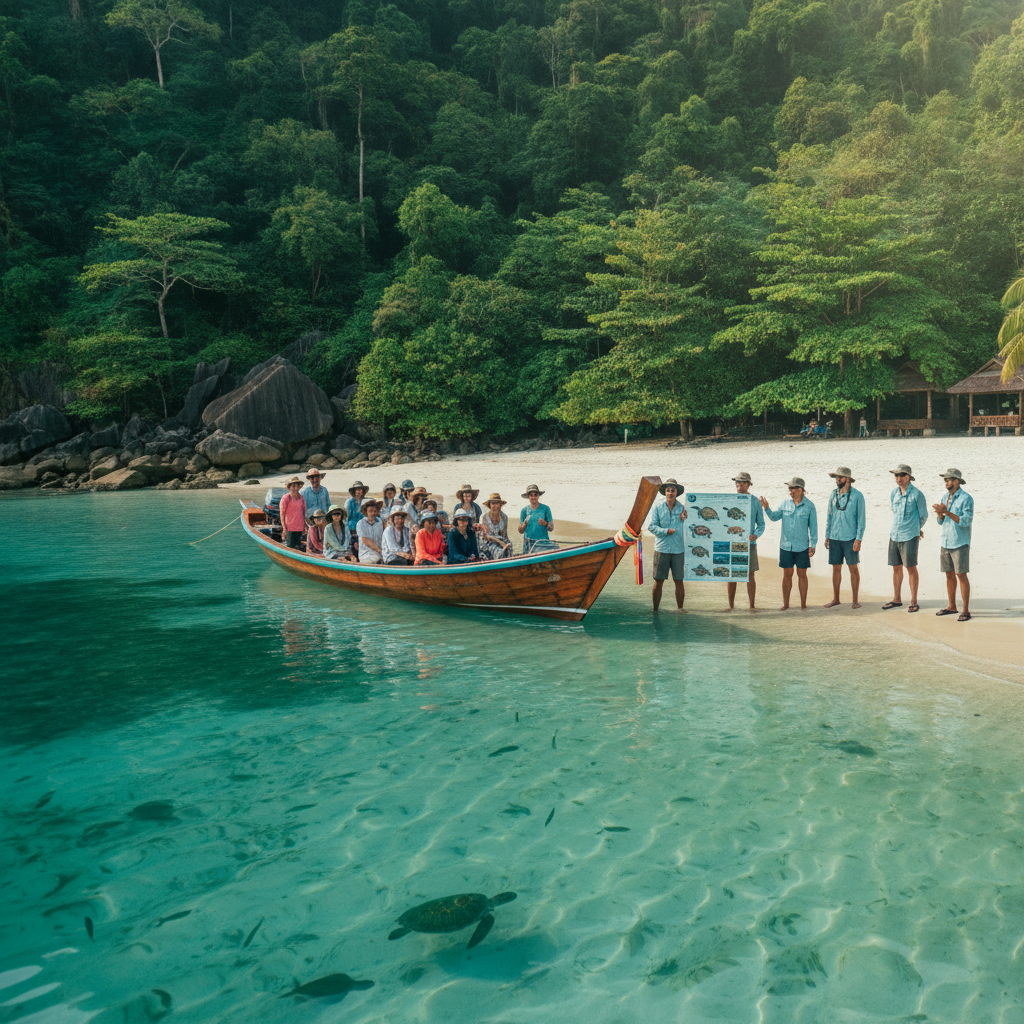
The Marine Park information centre on Redang includes educational displays on sea turtle biology — the life cycle of the sea turtle (from hatchling to adult spanning 20-30 years before first reproduction), the navigation mechanism by which turtles find their natal beach after decades at sea, and the range of threats (plastic ingestion, fishing net entanglement, boat strikes, beach development, and climate change) facing the species are documented in the most comprehensive single-site turtle education display available in the Terengganu marine parks. The display's connection to the real turtles visible in the marine park's water gives the educational content immediate practical relevance for visitors.
- 6
Feeding Turtle Snorkel Protocol
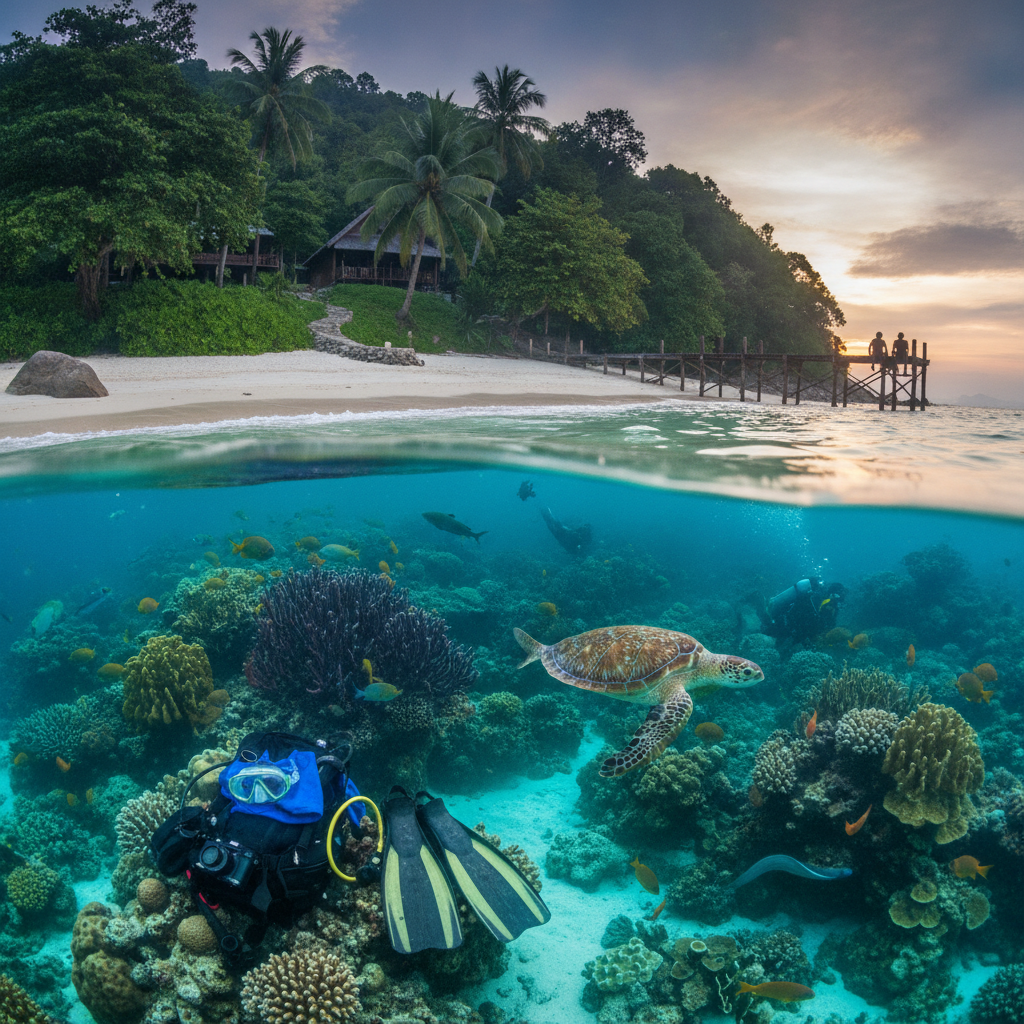
The Marine Park rules for turtle snorkeling at Redang specify a minimum 2-metre distance from any turtle, a prohibition on touching turtles, no flash photography, and immediate cessation of any snorkeling activity that causes a turtle to alter its natural behaviour — the protocol, enforced by the Marine Park rangers and increasingly by the dive centre guides and responsible resort operators, is designed to ensure that the commercial value of turtle viewing does not come at the cost of the turtles' welfare. Research at Redang and other turtle snorkel sites has demonstrated that repeated disturbance by snorkelers reduces turtle foraging time and increases stress hormone levels, motivating the strictly enforced distance protocol.
Walk this route with audio
Stories play automatically as you reach each stop — no tapping needed.