Koh Samui Big Buddha & Temple Walk
Explore Koh Samui's sacred sites — the island's Buddhist temples, from the iconic Big Buddha on the northeastern islet to the forest temples in the interior hills, reveal the Thai religious culture that continues alongside the resort economy and provides the most direct encounter with the island's cultural identity.
- 1
Wat Phra Yai Big Buddha
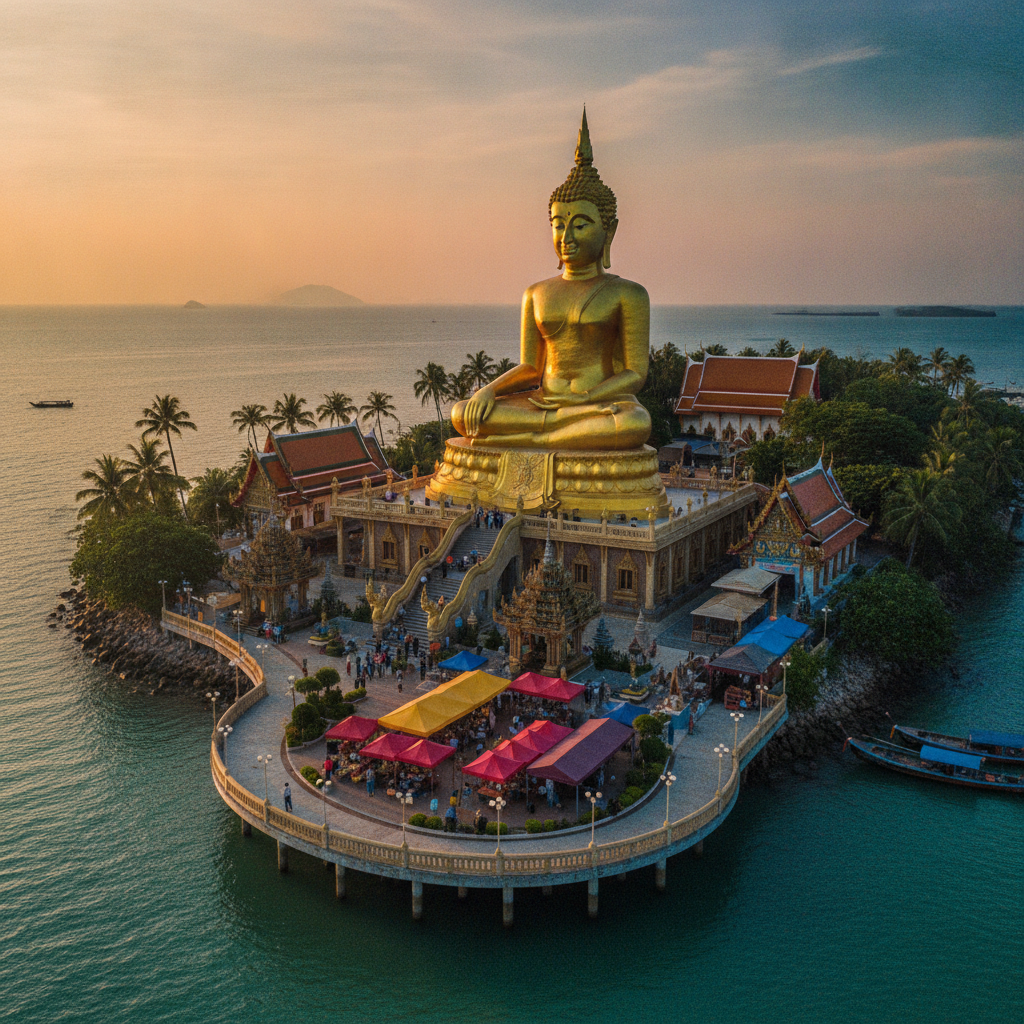
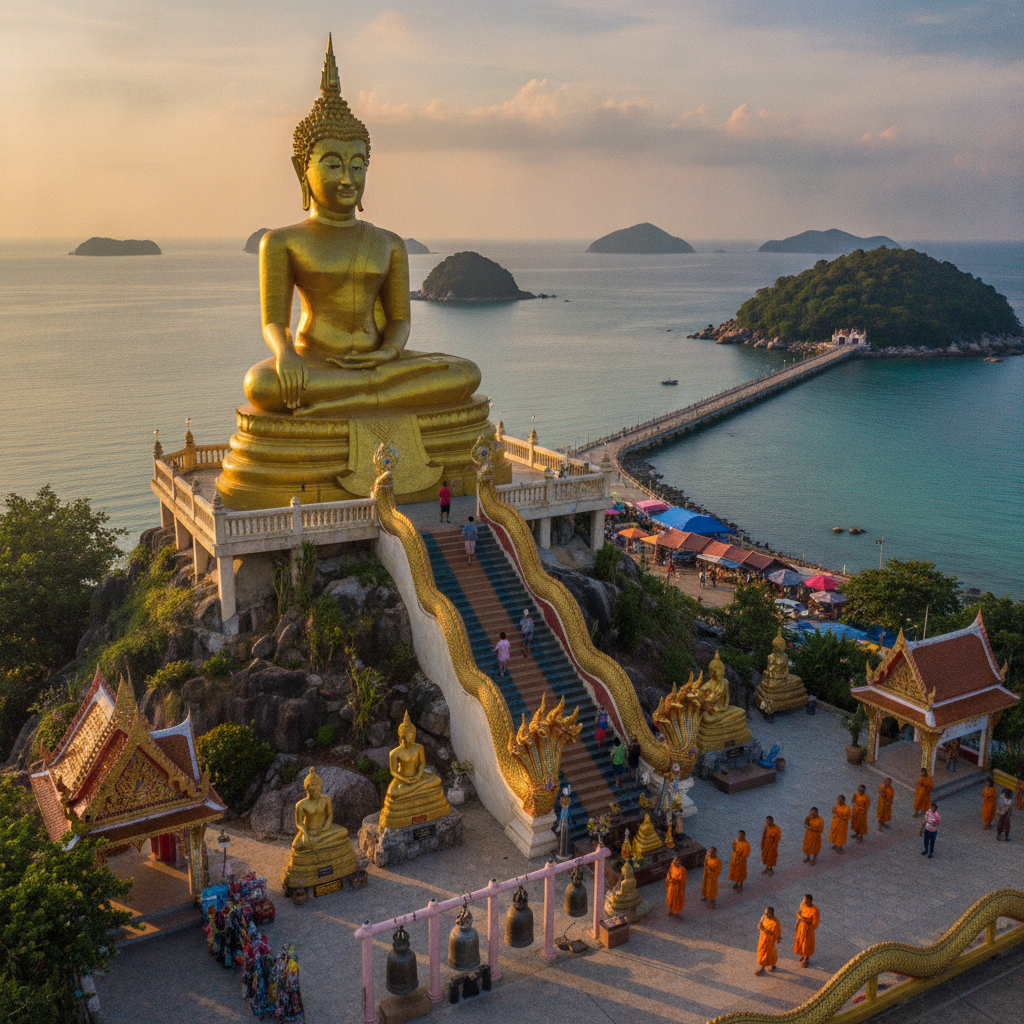
The Big Buddha (Phra Yai) on the small islet of Ko Fan off Koh Samui's northeast coast is the island's most photographed landmark — the 12-metre golden seated Buddha visible across the water from the main coastal road is approached via a causeway lined with vendor stalls and flanked by the naga (sea serpent) balustrades that frame the ceremonial staircase. The temple complex around the Big Buddha has a large prayer hall, donation bells, and the typically informal and welcoming atmosphere of Thai Buddhist public temples where visitors of any background are welcome to make offerings, light incense, and observe the daily rituals of the resident monk community.
- 2
Wat Plai Laem Temple
Wat Plai Laem near the Big Buddha is a spectacular contemporary Thai Buddhist and Chinese Buddhist hybrid temple built over a lake — the centrepiece 18-armed statue of the Chinese Goddess of Mercy Guanyin (Kuan Yin) standing on a lotus blossom platform in the lake, surrounded by smaller deity statues, creates the most visually extraordinary religious complex on Koh Samui. The temple's blend of Thai Buddhist and Chinese Mahayana Buddhist iconography reflects the Chinese Thai community's synthesis of both traditions, and the fish and turtle feeding tradition at the lake (where merit is made by feeding the pond's residents) creates the most participatory religious activity at any Koh Samui temple.
- 3
Khunaram Temple Mummified Monk
Wat Khunaram houses the preserved body of the venerated monk Luang Pho Daeng in a glass-encased shrine — the mummified monk, seated in the meditation posture in which he died in 1973, is one of the most striking religious exhibits on the island. The preservation of deceased monks in a display case is a tradition in Thai Buddhism for monks of great spiritual achievement, and the veneration practice at Wat Khunaram (where devotees make offerings before the case and pray for the monk's blessing) provides insight into the popular religious practice of Thai Buddhism that is rarely visible in the more tourist-oriented temple sites.
- 4
Wat Samret Temple
Wat Samret in the central hills of Koh Samui is built around an Indian Mahar Naga statue alongside a large reclining Buddha — the temple's hillside setting among the coconut palms of the island's interior, away from the coastal resort development, provides the most atmospheric and least touristy temple experience on the island. The temple's surroundings demonstrate the remnant coconut palm landscape of the pre-tourism Koh Samui economy that continues to function between the resort areas and the national park boundaries.
- 5
Grandmother Temple Folk Spirits
The folk spirit shrines (san phra phum) that appear throughout Koh Samui's landscape — the spirit houses outside every hotel, the roadside shrines with their offerings of flowers, incense, and food, and the larger community shrines that mark significant local spiritual sites — document the animist tradition that underlies Thai Buddhist practice. The spirit world of Koh Samui (incorporating Chinese, Malay, and indigenous Thai supernatural beliefs alongside the formal Buddhist cosmology) is visible in the everyday offerings and the community spirit festivals that take place at the major spirit shrines throughout the year.
- 6
Ang Thong National Marine Park Boat
Ang Thong National Marine Park, accessible by day-trip boat from Koh Samui's main piers, is a protected archipelago of 42 limestone islands in the Gulf of Thailand that inspired the fictional island setting of Alex Garland's novel 'The Beach' — the national park's extraordinary karst landscape, the emerald green saltwater lake hidden in the crater of one of the islands (Ko Mae Ko), the sea kayaking through the sea caves and between the towering limestone cliffs, and the snorkeling in the protected marine park waters provide the most dramatic natural environment encounter accessible from the Koh Samui resort base.
Walk this route with audio
Stories play automatically as you reach each stop — no tapping needed.