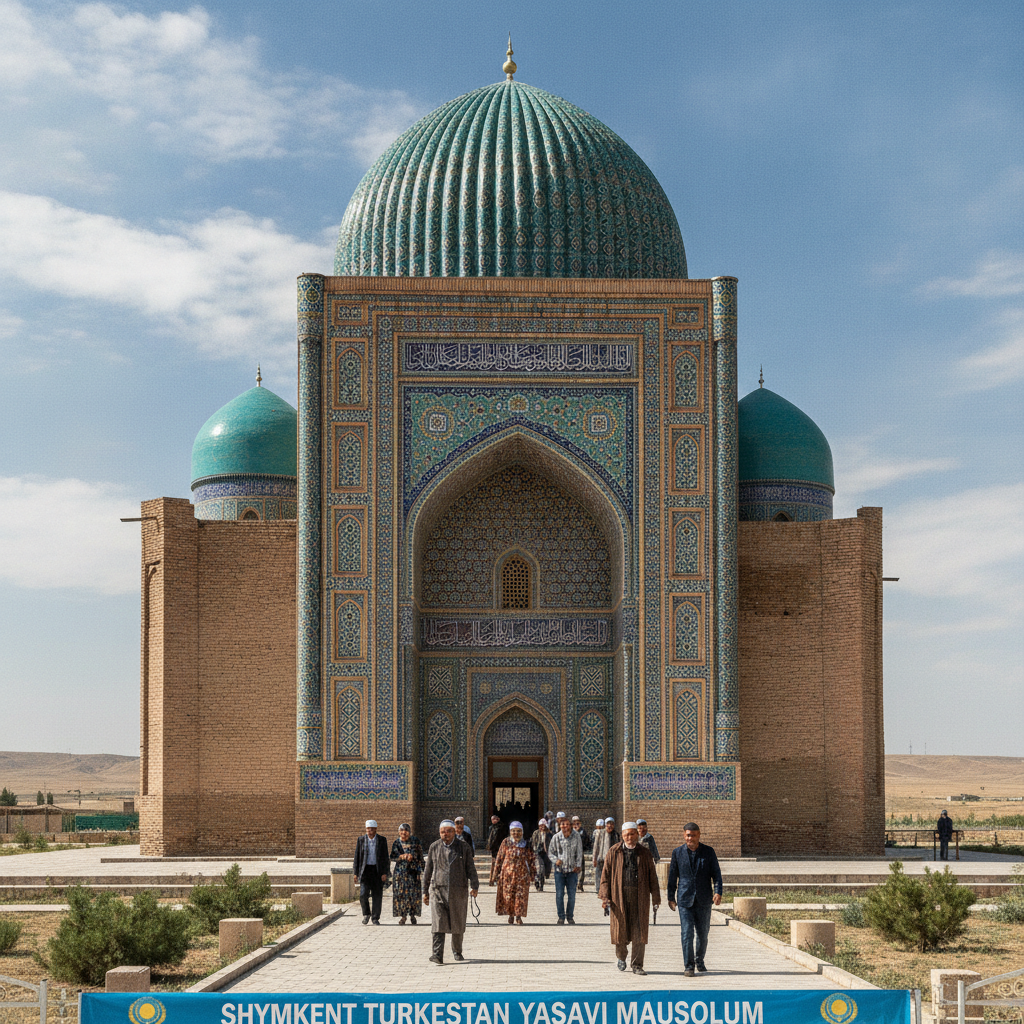
Shymkent Turkestan Yasawi Mausoleum Pilgrimage
Visit Turkestan from Shymkent — the ancient city 160 kilometers north of Shymkent that contains the magnificent mausoleum of Khoja Ahmed Yasawi, the 14th-century Timurid masterpiece commissioned by Tamerlane, the spiritual capital of Kazakhstan and the most important Islamic pilgrimage site in Central Asia after Mecca, Medina, and the shrines of Iraq.
- 1
Yasawi Mausoleum Exterior
The exterior of the Khoja Ahmed Yasawi Mausoleum in Turkestan — the enormous Timurid structure commissioned by Tamerlane in 1389 and left deliberately unfinished at his death in 1405, the turquoise-tiled ribbed dome rising 39 meters above the entrance portal with its intricate muqarnas decoration and Kufic inscriptions, the mausoleum the largest and best-preserved Timurid building in Central Asia outside Samarkand.
- 2
Yasawi Mausoleum Interior
The interior of the Yasawi Mausoleum — the central hall with its massive bronze cauldron (taikazan) used to heat water for ritual ablutions, the tomb chamber of Khoja Ahmed Yasawi himself, the library, mosque, and the dozens of additional tomb spaces for the saint's descendants and followers, the building functioning simultaneously as a shrine, mosque, and mausoleum complex.
- 3
Khoja Ahmed Yasawi Legacy
The legacy of Khoja Ahmed Yasawi — the 12th-century Sufi poet and teacher whose Turkic-language poetry (Divan-i Hikmet) made Islam accessible to the nomadic Kazakh people in their own language, the founder of the Yasawiyya Sufi order whose influence spread across Central Asia and into Anatolia, the spiritual father of Kazakh Islam whose shrine is the focus of national pilgrimage.
- 4
Hilvet Underground Mosque
The Hilvet underground mosque at Turkestan — the cave where Yasawi spent the last decades of his life in meditation after age 63, the underground retreat where he believed it improper for him to live above ground after the death of the Prophet Muhammad at that age, the cave now enclosed in a structure at the edge of the mausoleum complex.
- 5
Turkestan Archaeological Sites
The archaeological sites around Turkestan — the medieval city that was known as Yasi before its renaming, the remains of the ancient city including the citadel and the medieval urban fabric excavated around the mausoleum, the museum displaying the finds from the city that was an important Silk Road center from the 6th century CE onward.
- 6
Pilgrimage Bazaar Turkestan
The pilgrimage bazaar of Turkestan — the market serving the thousands of pilgrims who visit the Yasawi shrine, the stalls selling religious souvenirs, prayer beads, Sufi music recordings, and the food offerings distributed as charitable gifts at the shrine, the bazaar economy that has served pilgrims for six centuries around the most important Muslim shrine in Kazakhstan.
Walk this route with audio
Stories play automatically as you reach each stop — no tapping needed.
More in shymkent
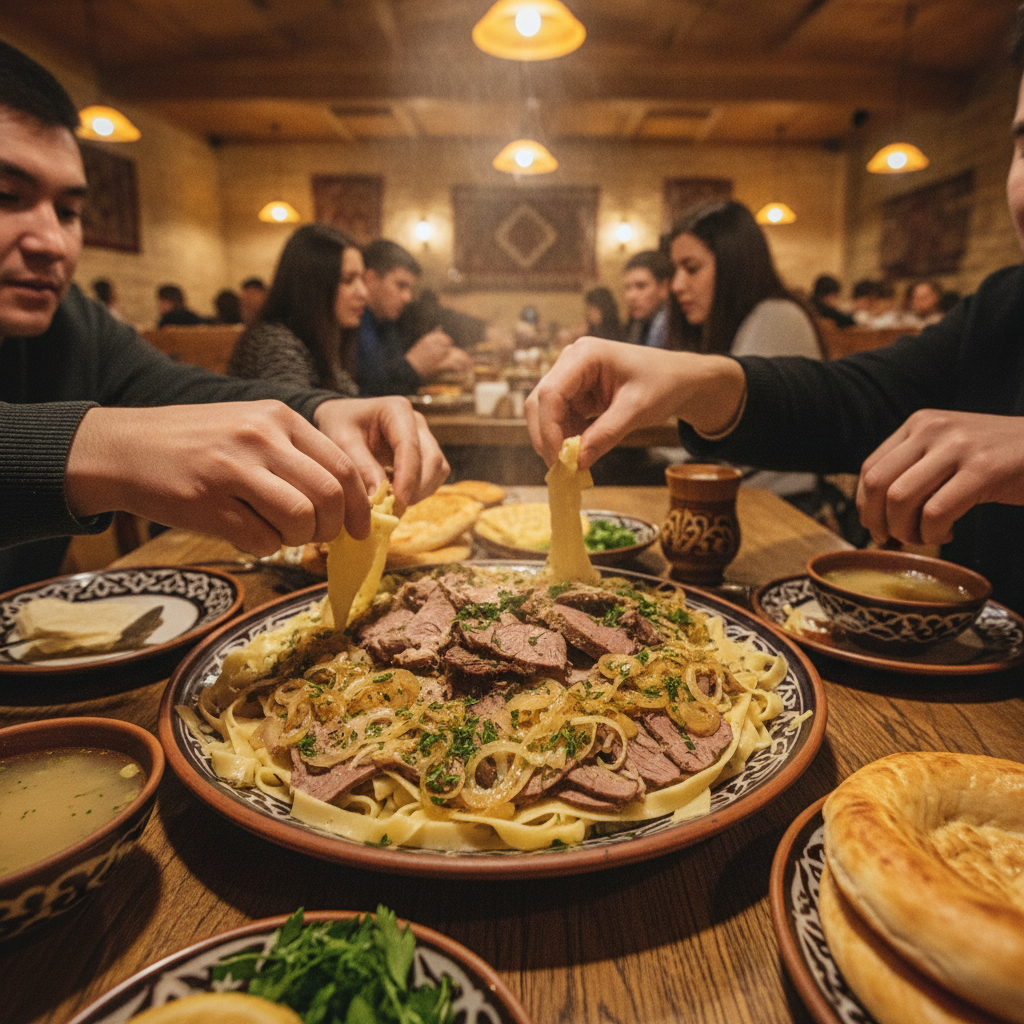
Shymkent Food Culture Southern Kazakhstan Cuisine
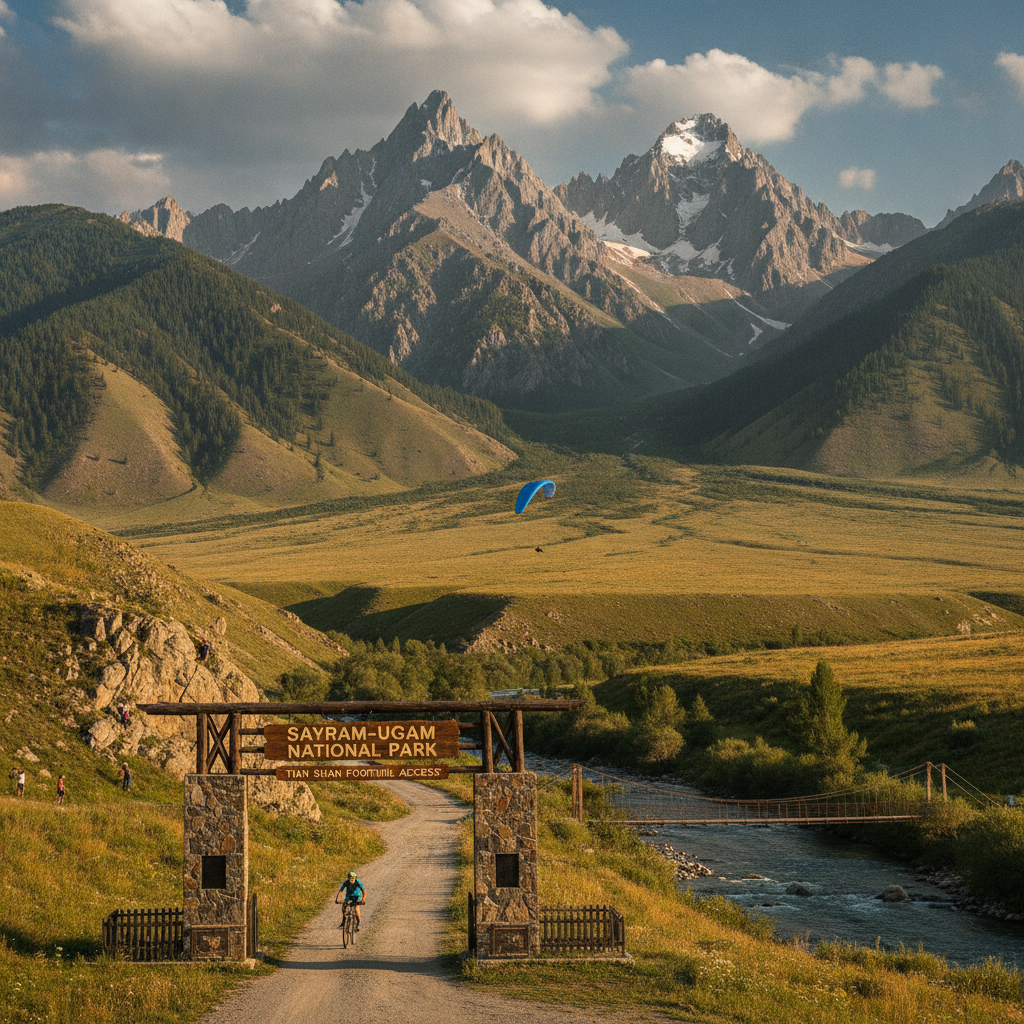
Shymkent Adventure Sports Tian Shan Foothill Access
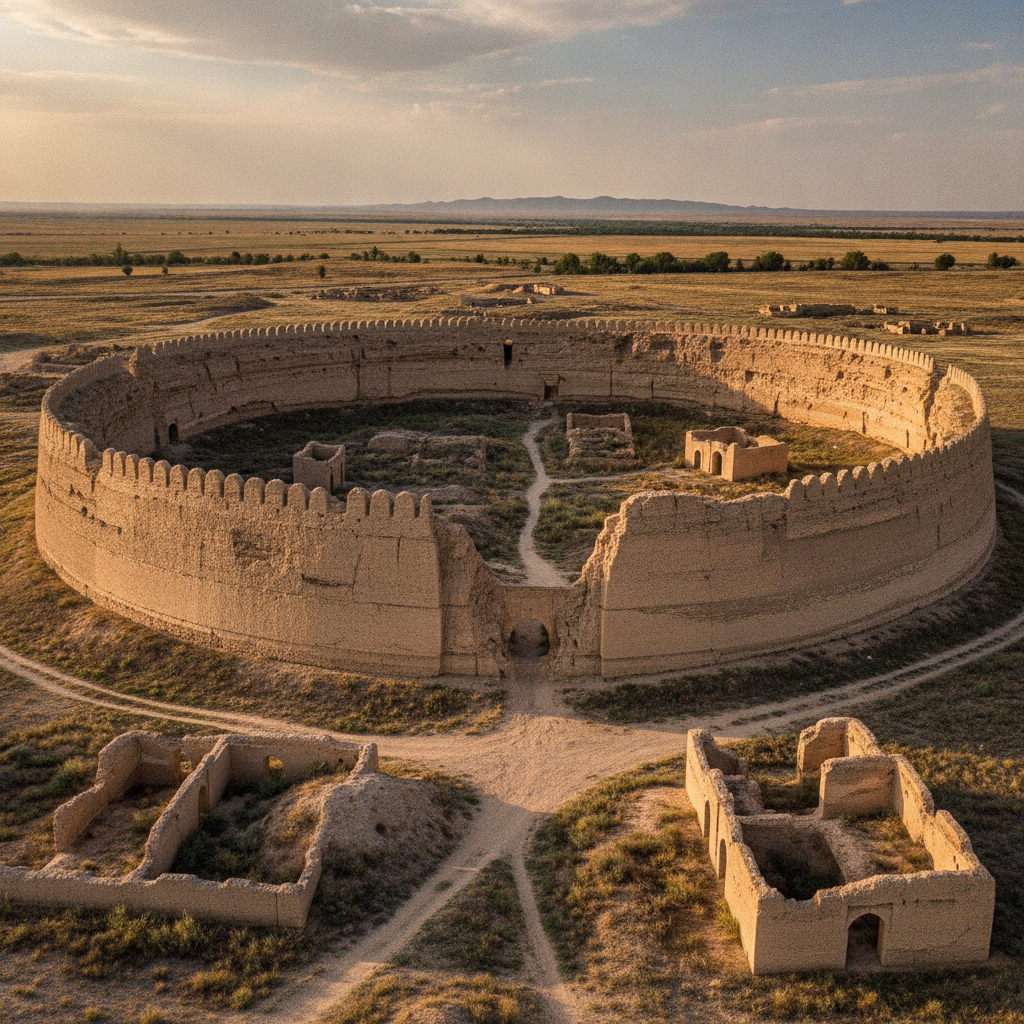
Shymkent Sauran Ancient Medieval City Ruins

Shymkent Russian Colonial Soviet Industrial History
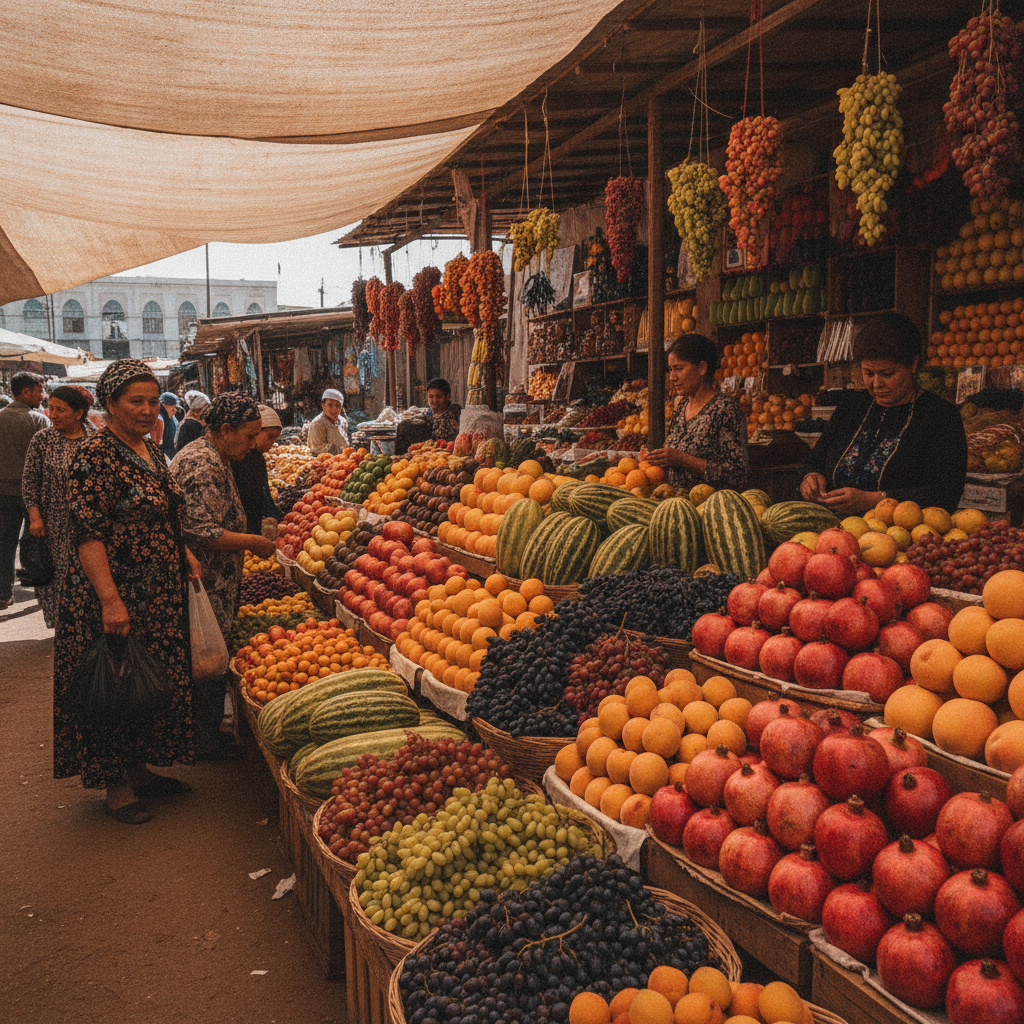
Shymkent South Kazakhstan Fruit Agricultural Bounty