Tabriz Azerbaijani Cuisine and Cultural Identity
Experience the distinctive Azerbaijani culture of Tabriz through its cuisine, music, and the proud regional identity of Iran's Azerbaijani minority, whose language, food traditions, and folk culture create a cultural experience significantly different from Persian Tehran.
- 1
Traditional Tabriz Restaurant
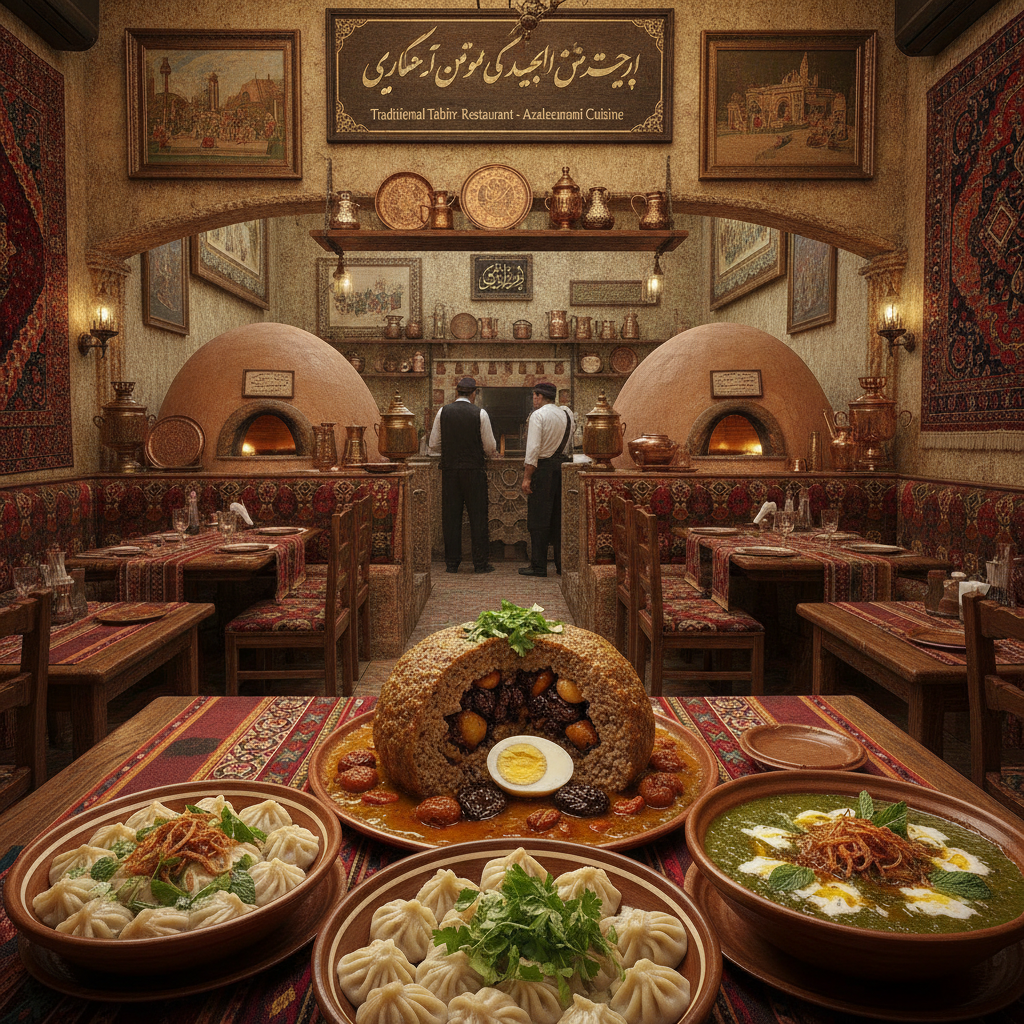
Eat at a traditional Tabriz restaurant where the Azerbaijani cuisine of northwestern Iran — dushbara (tiny lamb dumplings), kufteh Tabrizi (giant meatballs stuffed with dried fruits and eggs), and ash-e dugh (yogurt soup) — differs significantly from the Persian cuisine of central Iran in ingredients, techniques, and flavor profiles.
- 2
Kufteh Tabrizi Making
Learn about kufteh Tabrizi, the famous giant meatball of Tabriz that can be as large as a small melon, stuffed with walnuts, dried fruits, saffron, and a whole boiled egg, the dish representing a cooking tradition influenced by the Turkic culinary heritage of the Azerbaijani people.
- 3
Azerbaijani Music Performance
Listen to Azerbaijani mugham music — the classical modal music tradition of the Azerbaijani people shared between Iran and the Republic of Azerbaijan — where the tar lute, kamancha fiddle, and daf frame drum accompany singers in long improvisatory performances of extraordinary emotional depth.
- 4
Azerbaijani Language Culture
Encounter the Azerbaijani language spoken by the majority of Tabriz's population, a Turkic language distinct from Persian that reflects the Turkic migrations of the medieval period that transformed the linguistic character of this historically Iranian-speaking region.
- 5
Traditional Crafts Bazaar
Browse the traditional crafts section of the bazaar where the distinctive crafts of Azerbaijani culture — kilim weaving, felt-making, woodcarving — are produced alongside the Persian carpet tradition, the craft market reflecting the cultural hybridity of a city at the intersection of Iranian and Turkic civilizations.
- 6
Evening Tea House
Spend time in a traditional Tabriz tea house where the social rituals of Azerbaijani hospitality — the constant offering of tea, the communal conversation, the unhurried sitting — express a culture that values leisure, human connection, and the pleasures of shared time in a way that has structured life in this trading city for centuries.
Walk this route with audio
Stories play automatically as you reach each stop — no tapping needed.