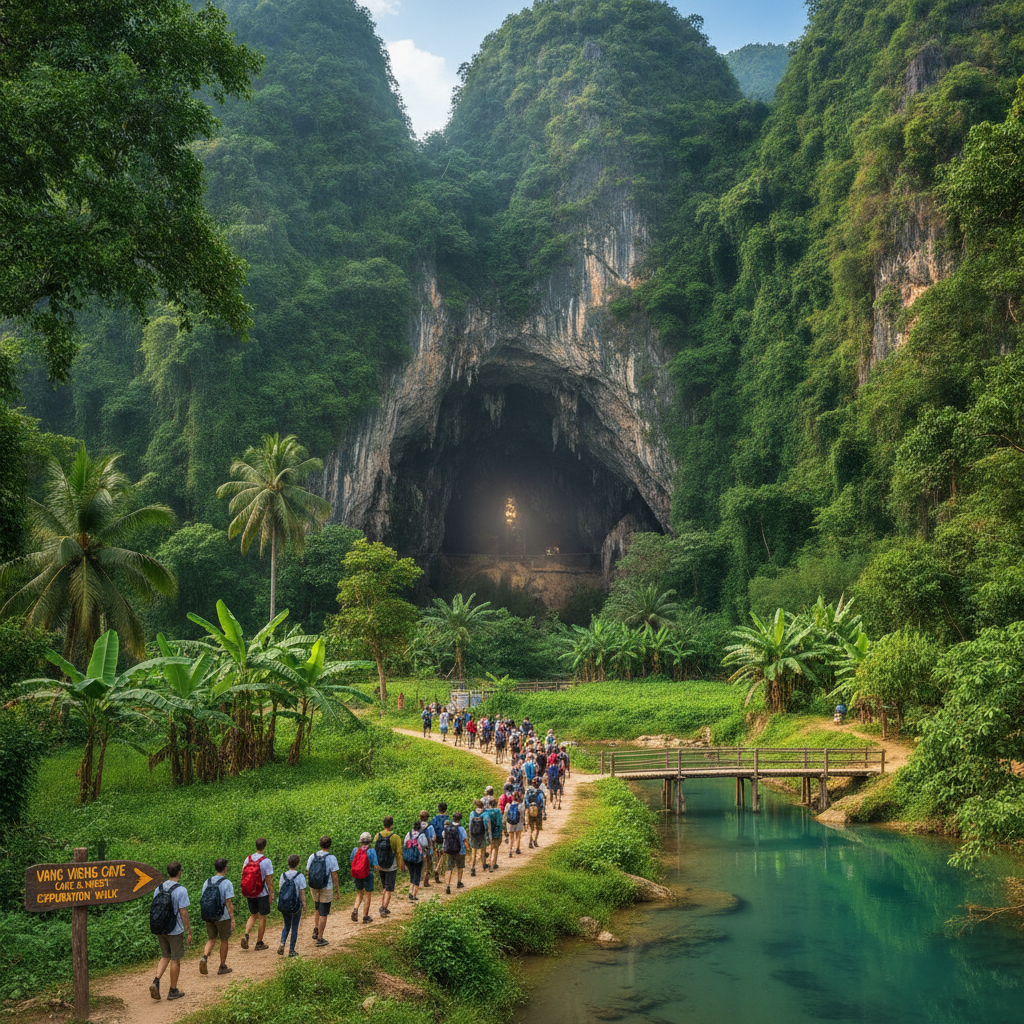
Vang Vieng Cave & Karst Exploration Walk
Explore Vang Vieng's caves — the limestone karst landscape around Vang Vieng contains dozens of accessible cave systems, from the famous Tham Chang (Elephant Cave) to the river cave at Tham Nam, creating the most extensive cave exploration accessible in mainland Southeast Asia.
- 1
Tham Chang Cave
Tham Chang (Elephant Cave or Jang Cave), directly behind the riverside resort area of Vang Vieng, is the most conveniently accessible cave from the town centre — the cave system (accessible by the steep staircase from the resort reception area to the main cave entrance in the cliff face above the Nam Song River) contains the most dramatically positioned viewpoint in Vang Vieng: the cave entrance terrace looking out through the cave mouth over the river and the karst valley below, with the limestone formations of the cave interior visible in the half-light behind the viewer and the panoramic valley visible through the natural window of the cave opening. The cave's history (used as a defensive fortification by both the French colonial forces and the revolutionary Pathet Lao at different periods of the 20th century) adds a military historical layer to the geological interest of the cave system.
- 2
Tham Nam Water Cave
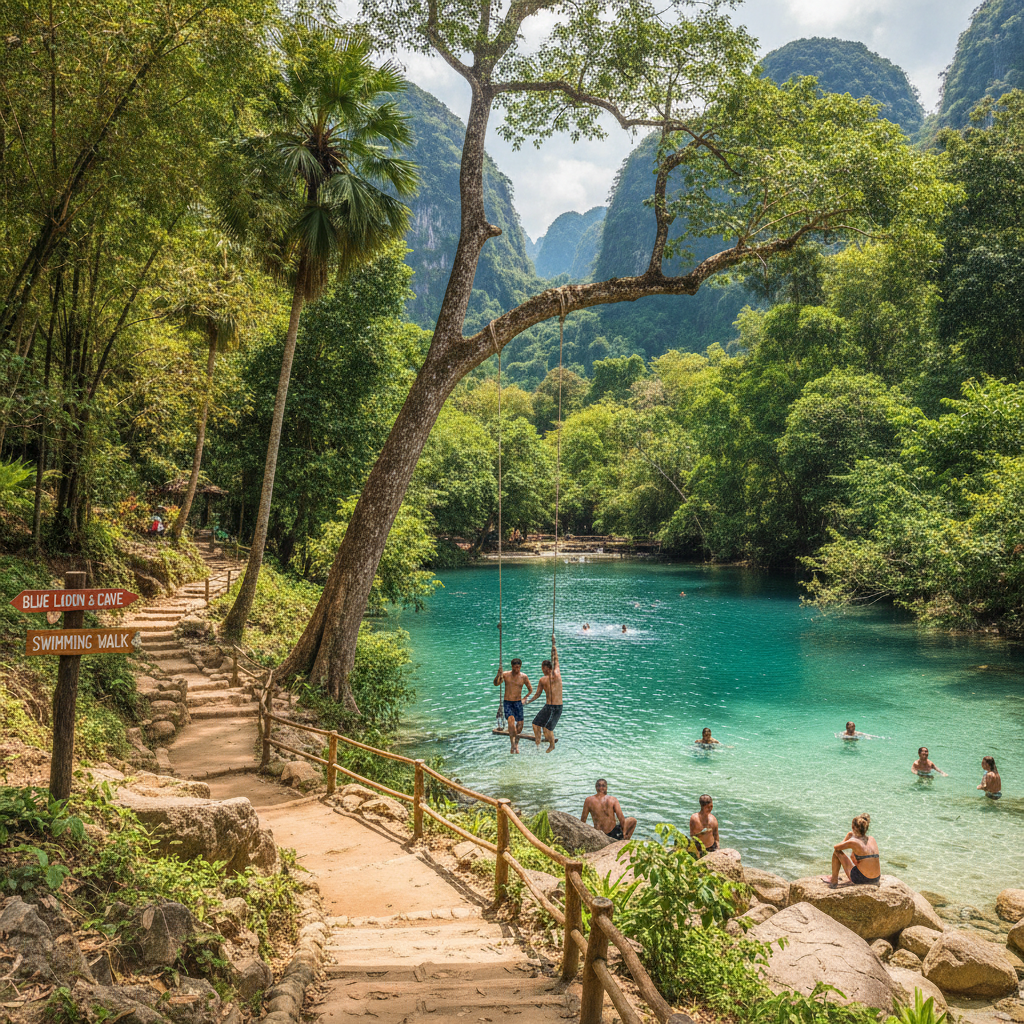
Tham Nam (Water Cave), the river cave accessible from the Blue Lagoon area north of Vang Vieng, is the most unusual cave experience accessible in the region — the cave is entered by swimming or wading into the water (the underground river that exits through the cave mouth and feeds the Blue Lagoon) and then pulling oneself through the cave on the bamboo rope that serves as the navigation guide in the darkness of the cave interior. The cave's experience (the absolute darkness of the cave interior broken only by the visitors' headlamps, the cool water surrounding the swimmer, the cave formations visible in the torchlight, and the steady pull on the bamboo rope through the passages that sometimes narrow to require the swimmer to flatten against the water surface) is the most immersive single cave experience accessible in Laos.
- 3
Tham Hoi Cave Trek
Tham Hoi (Snail Cave) is the longest cave accessible in the Vang Vieng area — the cave system extends 14km into the limestone hill, with the first 2km accessible to the general visitor and the full extent accessible only to those with caving equipment and guides. The cave's formations (the stalactites and stalagmites, the cave pearls, the flowstone deposits, and the underground pools of clear water in the deeper sections) are the most elaborate accessible in the Vang Vieng cave network, and the cave's depth means that the temperature drops significantly in the interior sections, providing a welcome contrast to the outdoor heat. The cave tour includes the headlamp (required in the cave's depth beyond the reach of natural light) and the guide who navigates the cave passages.
- 4
Karst Tower Climbing
The rock climbing on the karst limestone towers accessible from the Vang Vieng operator base (the vertical limestone faces of the Nam Song valley's karst towers providing some of the most dramatic sport climbing available in Southeast Asia, with routes graded from beginner to advanced on the characteristic pocketed and tufa-draped limestone) has developed into a significant activity alongside the tubing and kayaking — the climbing operators in Vang Vieng provide equipment (harnesses, shoes, helmets) and guide instruction for the full range of visitor experience levels, from the complete beginner attempting the first routes at the base of the limestone tower to the experienced climber working the multi-pitch routes that ascend to the tower summits. The karst tower summits (accessible to climbers on the equipped routes) provide the most dramatic elevated viewpoints over the Vang Vieng valley accessible without helicopter transport.
- 5
Pha Ngern Cave Viewpoint
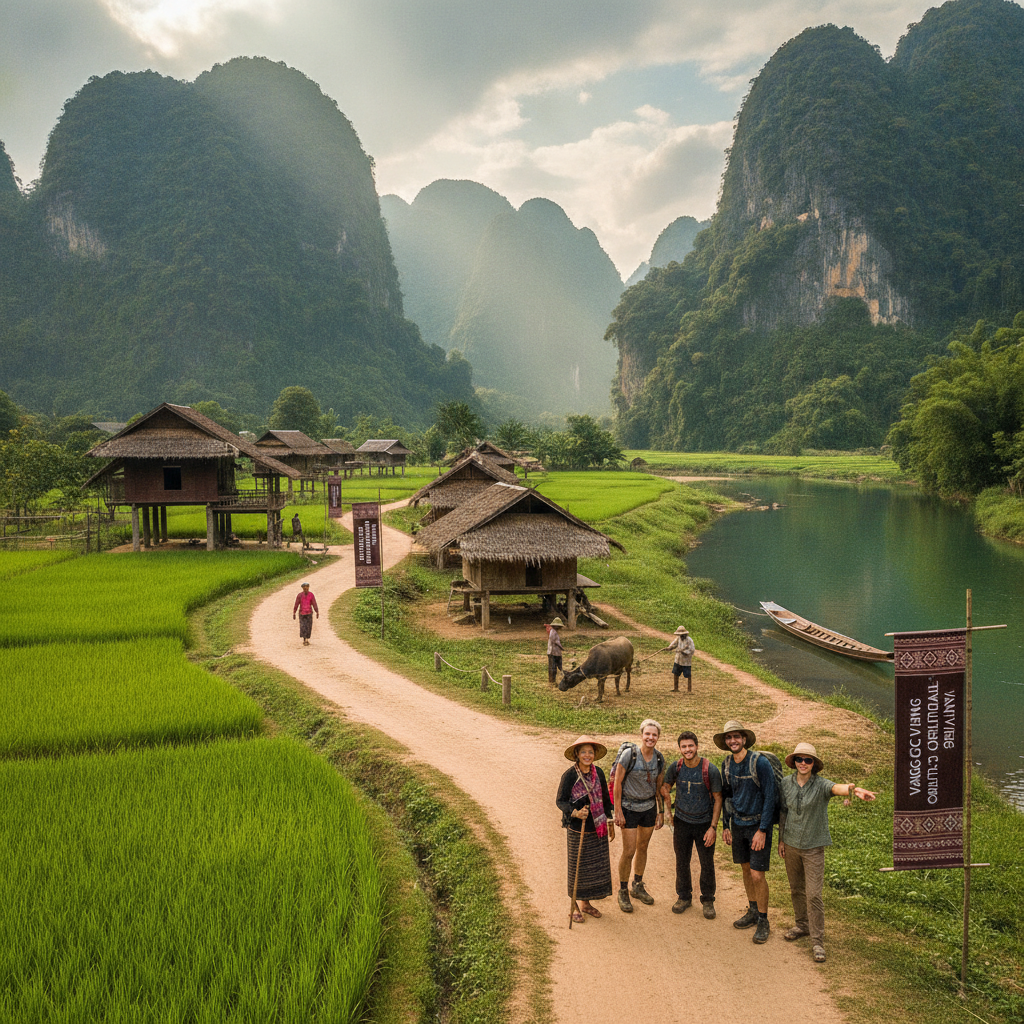
Pha Ngern cave and viewpoint (accessible by the bicycle route west of the Nam Song River, crossing the bamboo bridge and following the dirt track through the rice fields to the base of the karst hill) provides the most complete accessible viewpoint over the Vang Vieng basin from the cave position — the cave entrance terrace (the natural rock platform at the cave mouth, reached by the steep fixed-rope ascent from the base) provides a 270-degree panoramic view of the valley, with the Nam Song River visible in both the upstream and downstream directions, the town of Vang Vieng visible across the valley floor, and the full karst tower landscape of the surrounding hills creating the most complete single-vista survey of the Vang Vieng landscape accessible on foot.
- 6
Cave Temple Buddhist Shrine
The Buddhist shrines installed in the Vang Vieng cave systems (the small temples and the Buddha image collections in the cave chambers of Tham Chang and several of the other larger cave systems accessible near the town) represent the traditional Lao Buddhist use of cave environments as sacred spaces for meditation, retreat, and religious practice — the cave temple tradition (the installation of Buddhist shrines in natural cave chambers, with the cave's atmospheric qualities of coolness, darkness, and geological drama creating the appropriate contemplative environment for Buddhist practice) is found throughout the Lao karst landscape and is the most specifically Lao form of the Asian cave temple tradition. The offering flowers, incense sticks, and merit-making activities visible at the cave shrines document the continued local devotional practice at the cave holy sites alongside the tourist activity.
Walk this route with audio
Stories play automatically as you reach each stop — no tapping needed.