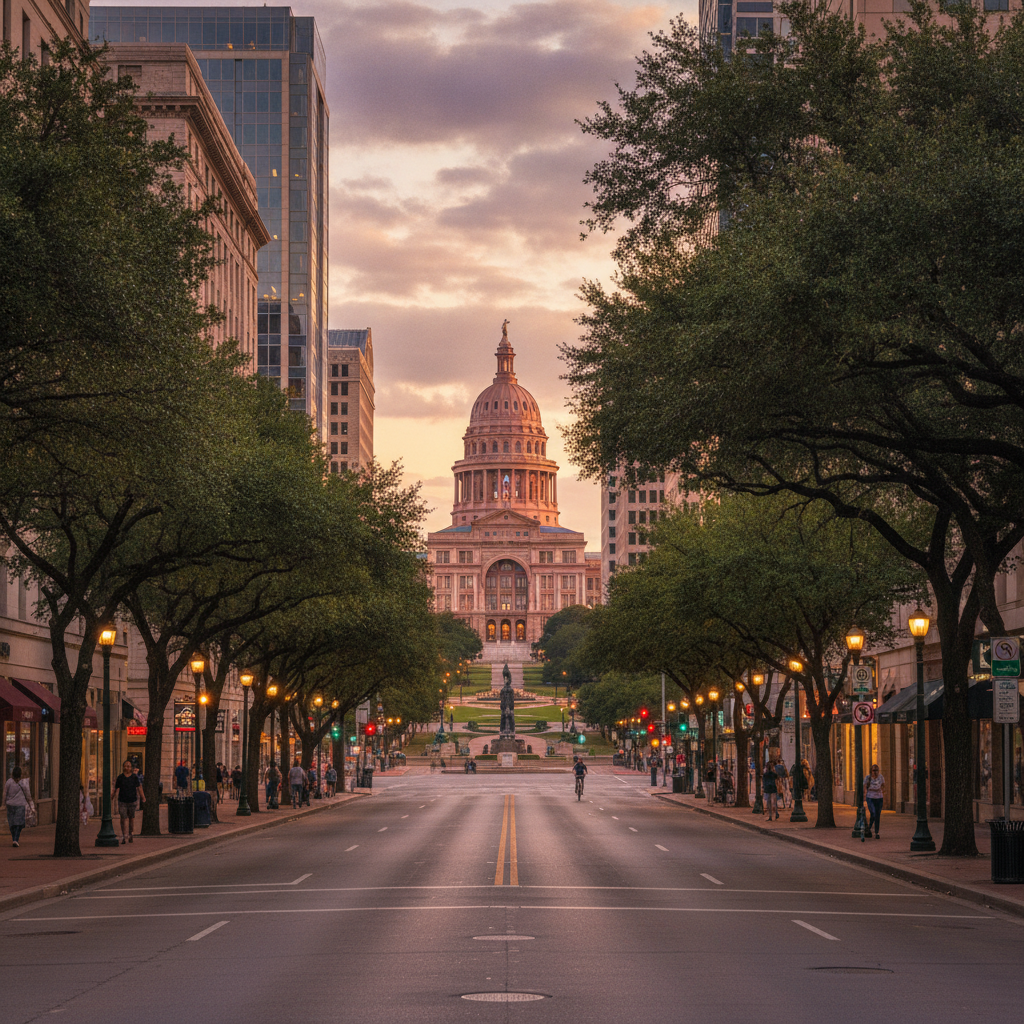
Campidoglio dello Stato del Texas, Congress Avenue e il Centro di Austin
The Texas State Capitol (1100 Congress Avenue, Austin — the seat of the Texas state government, built 1882-1888 in the Italian Renaissance Revival style from sunset red granite quarried in Marble Falls, Texas — the tallest state capitol building in the United States (308 feet / 94 metres to the top of the Goddess of Liberty statue) and 14 feet taller than the US Capitol in Washington DC) dominates the Congress Avenue corridor, the grand axis of downtown Austin.
- 1
Texas State Capitol — Rotunda & Senate Chamber
The 1888 Renaissance Revival Capitol dome rises 14 feet taller than the US Capitol. The rotunda's terrazzo star floor, Senate and House chambers, and portraits of Texas governors trace the state's political history.
- 2
Congress Avenue Bridge — Bat Colony at Dusk
The Congress Avenue Bridge hosts the world's largest urban bat colony — 1.5 million Mexican free-tailed bats emerge at dusk from April to October, one of Austin's most spectacular natural events.
- 3
Sixth Street Historic District
Victorian commercial buildings from the 1870s-1880s line this entertainment corridor, the birthplace of Austin's live music scene. Blues clubs, honky-tonks, and dive bars fill the pedestrianized strip every night.
- 4
South Congress Avenue (SoCo)
SoCo is Austin's hippest mile — vintage boutiques, trailer food parks, the Continental Club (1955), and the landmark Hotel San José. The 'I Love You So Much' mural on Jo's Coffee is Austin's most photographed wall.
- 5
Rainey Street Converted Bungalows
A block of 1920s craftsman bungalows converted to bars, restaurants, and food trucks makes Rainey Street Austin's most eclectic social hub. Garden patios, craft beer, and outdoor games define the atmosphere.
- 6
Governor's Mansion & Capitol Grounds
The 1856 Greek Revival Governor's Mansion and the 22-acre Capitol grounds with native live oak groves and Civil War monuments form the ceremonial heart of Texas political life, open for guided tours.