Cattedrale di Sale di Zipaquirá e gli Altopiani Andini della Colombia
The Salt Cathedral of Zipaquirá (the underground Roman Catholic cathedral built within the tunnels of a salt mine in Zipaquirá, 49 km north of Bogotá — the most remarkable religious architecture in the Americas) is the most visited tourist attraction in Colombia after Cartagena, and one of the most extraordinary architectural experiences in the world — a cathedral carved entirely from salt rock, 180 metres underground.
- 1
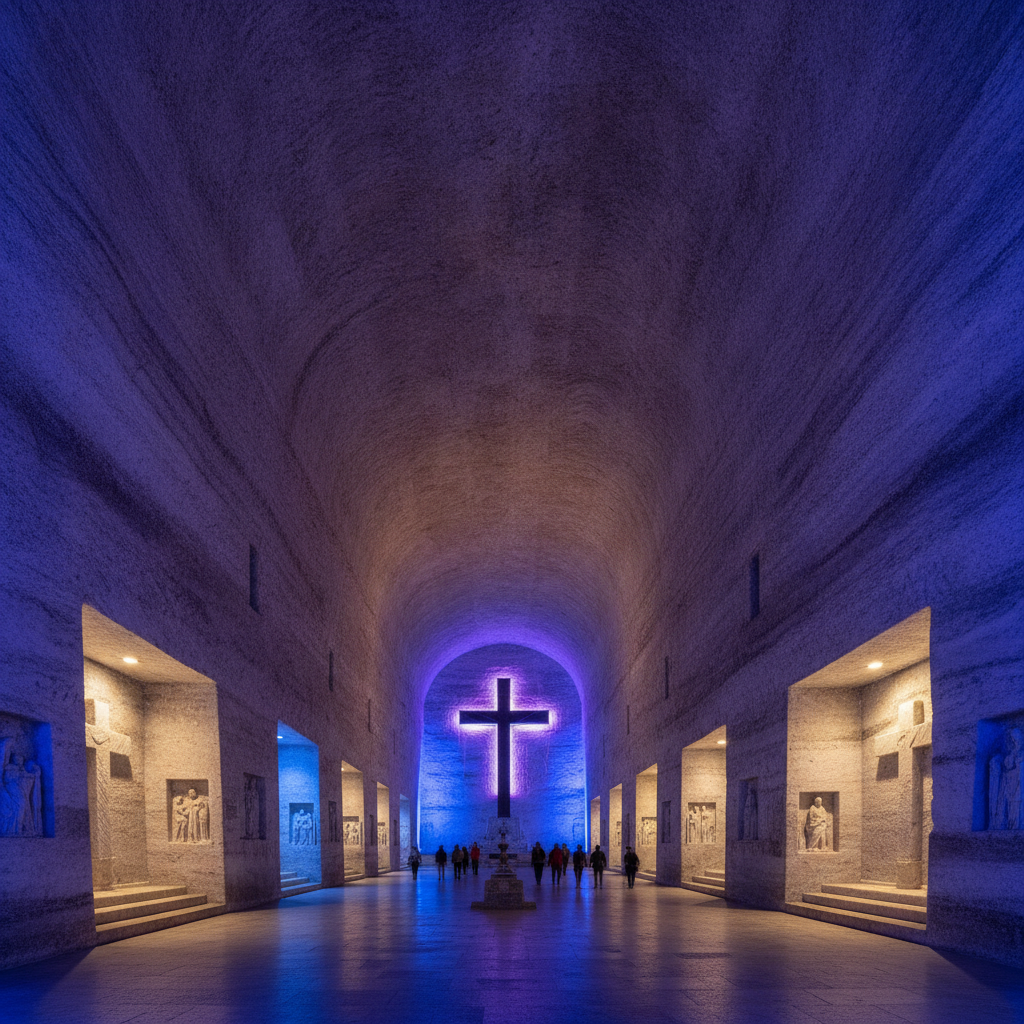
Salt Cathedral — Underground Main Nave (200m Deep)
The Salt Cathedral's main nave, 23m high and 75m long, is carved entirely from a working salt mine 200m underground — the largest underground Catholic church in the world, completed 1995, drawing 600,000 visitors annually.
- 2
14 Stations of the Cross — Salt-Carved Alcoves
The tunnel approach to the cathedral passes through 14 alcoves (representing the Stations of the Cross) illuminated in blue, purple, and white light — the 1km underground walk is a theatrical spatial experience unlike any other church.
- 3
Zipaquirá Colonial Town & Cathedral Above Ground
Zipaquirá's main plaza and 18th-century colonial cathedral stand above the salt mine — a pleasant Colombian highland town whose white-washed buildings, salt-crystal shops, and Cundinamarca handicrafts reward a post-cathedral stroll.
- 4
Muisca Salt Heritage — Pre-Columbian Trade Networks
The Muisca people controlled the Zipaquirá salt deposits for centuries before Spanish conquest, trading salt across the Andes. The 'Zipa' (chief of the Muisca Confederacy) held the monopoly that made this highland plateau the center of pre-Columbian Colombia's economy.
- 5
Sabana Railway Steam Train from Bogotá
The weekend tourist steam locomotive from Bogotá's La Sabana station travels 48km across the boggy Sabana plateau to Zipaquirá — a 2-hour journey in restored 1950s carriages through potato fields and Andean wetlands.
- 6
Original Salt Mine Tunnels — Engineering History
The original Zipaquirá mine (worked since the 17th century) extends 8km of tunnels through an evaporite salt deposit at 2,600m altitude — the engineering challenge of mining salt without flooding the tunnels defines the town's industrial heritage.