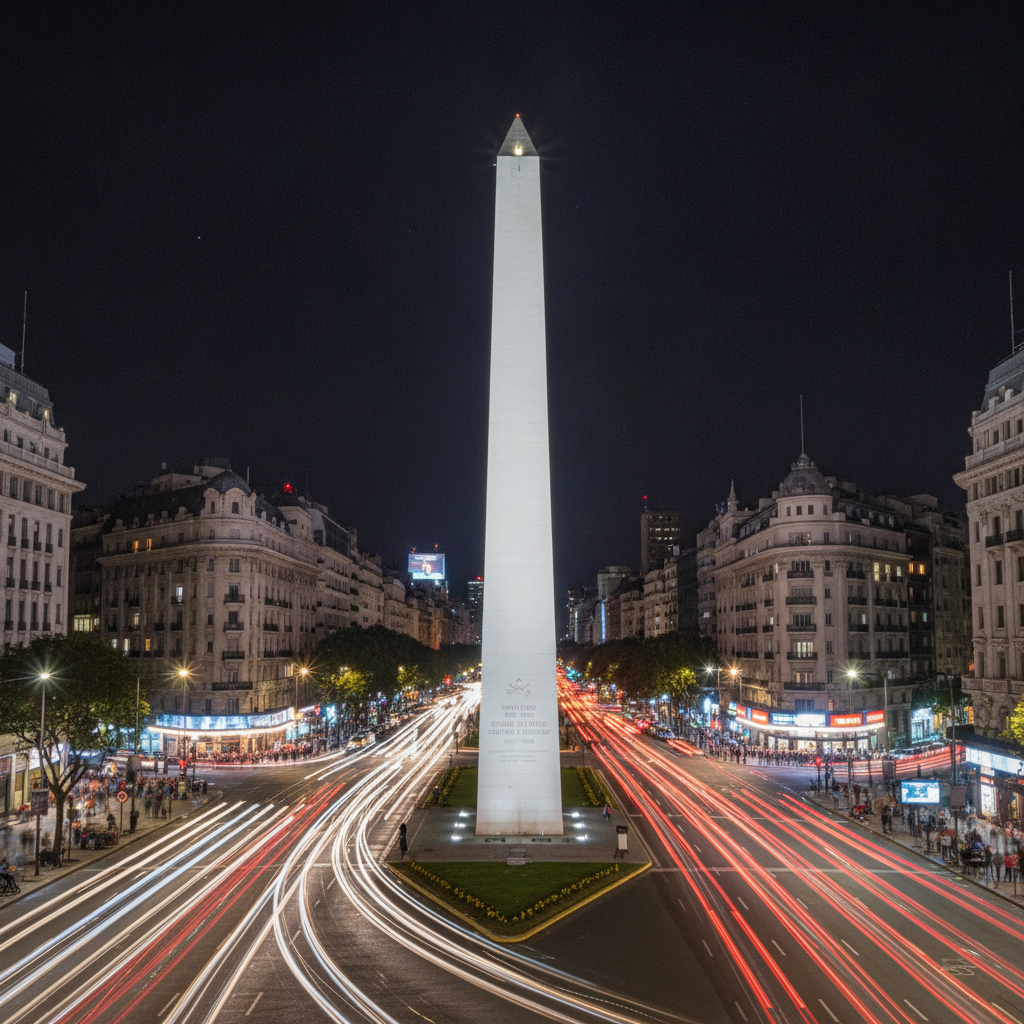
Avenida 9 de Julio, l'Obelisco e il Grande Viale di Buenos Aires
Avenida 9 de Julio (the main north-south artery of Buenos Aires, claimed to be the widest avenue in the world at its widest point (140 metres, 14 lanes of traffic plus two footpaths and a dividing median), running approximately 3 km through the heart of the city from Constitución in the south to Retiro in the north): at the intersection of Avenida 9 de Julio and Avenida Corrientes stands the Obelisco de Buenos Aires (the 67.5-metre white obelisk built 1936 to commemorate the 400th anniversary of the first founding of the city in 1536 and the site of the first raising of the Argentine flag) — the most recognizable landmark of modern Buenos Aires.
- 1
Obelisco — Argentina's Most Recognized Monument
The 67m Obelisco (built in 31 days, 1936) marks the spot where Buenos Aires was officially founded (1580) and where the Argentine flag was first raised in the city (1812). National football victories trigger spontaneous gatherings of 500,000 people at its base.
- 2
Avenida Corrientes — Buenos Aires' Broadway
Avenida Corrientes is Buenos Aires' theatre mile — 100+ independent theatre companies operate in converted storefronts along the 'off-Corrientes' circuit, making Buenos Aires second only to New York in the density of theatrical productions per capita.
- 3
Café Tortoni — Buenos Aires' Oldest Café (1858)
The Café Tortoni (Avenida de Mayo, 1858) is Argentina's oldest and most historically significant café — Borges, Gardel, and Piazzolla were regulars; the tango shows in the basement are tourist but the upstairs marble and mahogany interior is impeccable.
- 4
Casa Rosada — Argentina's Pink Presidential Palace
The Casa Rosada's color comes from mixing ox blood with white paint (a 19th-century tradition to prevent oxidation) — the balcony where Eva Perón addressed the descamisados and where Madonna filmed her Evita scene is open during guided tours.
- 5
Librería El Ateneo Grand Splendid — World's Most Beautiful Bookshop
El Ateneo Grand Splendid (Avenida Santa Fe, converted 1919 opera house) is consistently voted the world's most beautiful bookshop — 120,000 books fill the stalls and boxes; the stage serves as a reading café.
- 6
Avenida de Mayo — Spanish Renaissance Boulevard
The Avenida de Mayo (1894) connecting Casa Rosada to Congress is Buenos Aires' most Parisian boulevard — the Palacio Barolo (1923, the tallest building in South America when built), the Café de los Angelitos, and the art nouveau Yrigoyen apartment blocks line the 1.4km walk.