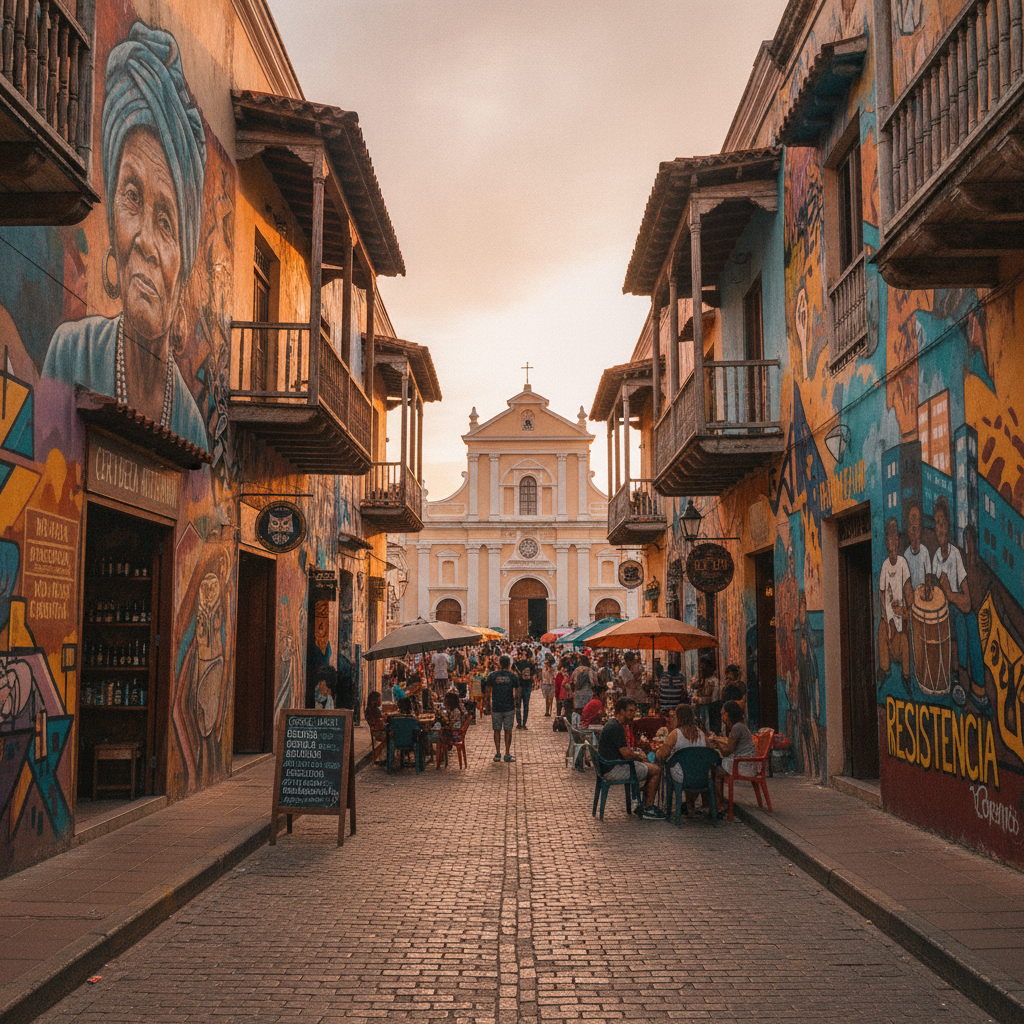
Getsemaní, Street Art e la Scena Creativa di Cartagena
Getsemaní (the neighbourhood immediately outside the city wall of Cartagena — the former working-class neighbourhood that has undergone the most dramatic creative transformation of any neighbourhood in Colombia in the 2010s, from a dangerous, marginalized area to the most vibrant arts, street food, craft beer, and nightlife destination in Cartagena) is now the most exciting neighbourhood in the city.
- 1
Plaza de la Trinidad — The Heart of Getsemaní
Plaza de la Trinidad (Barrio Getsemaní) was the 1811 meeting point where Cartagena's working class voted for independence from Spain — today the plaza fills nightly with locals, backpackers, and street vendors; cumbia dancers and marimba musicians perform spontaneously around the 1750 Trinidad church; vendors sell fresh coconut and chicha.
- 2
Getsemaní Street Art — Murals of Identity and Resistance
Getsemaní's murals (covering 200+ walls) began as community art in 2010 to resist gentrification and reclaim public space — artists including Vertigo Graffiti, Bestiario, and international collaborators have created a 1km outdoor gallery documenting Afro-Caribbean history, cumbia culture, and local personalities alongside abstract and surrealist works.
- 3
La Movida Nightlife — Rooftop Bars and Cumbia Clubs
Getsemaní's nightlife (concentrated on Calle de la Sierpe and around the plaza) is Cartagena's most authentic alternative to the Walled City luxury hotels — Bazurto Social Club hosts live cumbia and champeta music from 10pm on Fridays; rooftop bars at Media Luna Hostel and Selina offer city views at 40,000–80,000 COP per cocktail.
- 4
Cementerio de Manga — 200,000 Crypts on a Hill
The Cementerio Universal de Manga (1870, across the Puente Heredia from Getsemaní) holds over 200,000 crypts spread across a hillside facing the bay — elaborate 19th-century Colombian elite mausoleums contrast with colourful working-class tomb towers; guided tours explain the social hierarchy encoded in burial placement and crypt materials.
- 5
Barrio Getsemaní — Afro-Colombian Cultural Heritage
Getsemaní was historically the neighbourhood of enslaved Africans and freed Black artisans who built Cartagena's fortifications — the community's Afro-Colombian heritage survives in the cumbia drum circles (champeta and bullerengue music) that continue in the plaza on weekend nights and in the annual November 11 Independence procession.
- 6
Mercado Bazurto — Cartagena's Chaotic Local Market
Mercado de Bazurto (15 minutes from Getsemaní by taxi) is Cartagena's main working market — 5,000+ stalls sell fresh fish, tropical fruits (mamoncillo, maracuyá, corozo, níspero), live animals, and everything the Walled City restaurants need; the market's own fondas serve the best sancocho de pescado (fish stew) in the city at 15,000 COP.