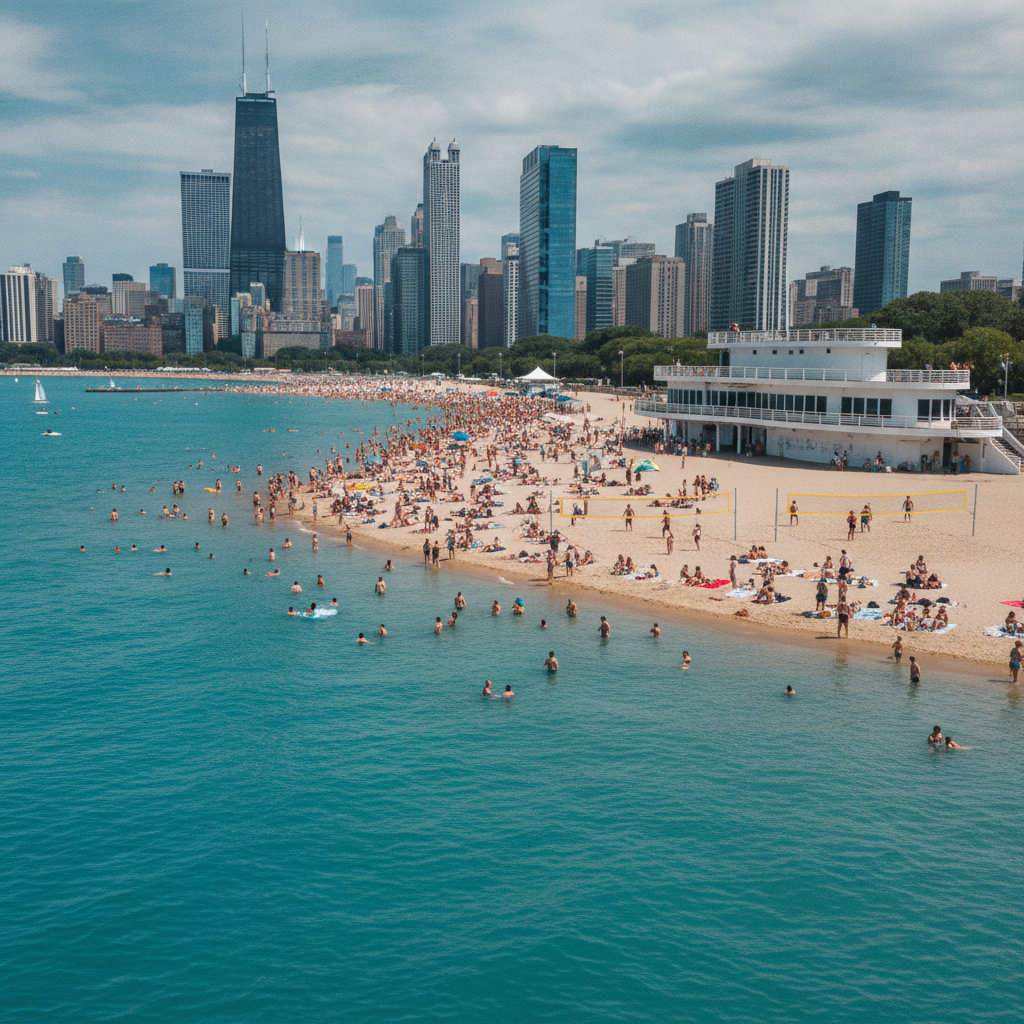
Lincoln Park, lo Zoo, North Avenue Beach e Old Town
Lincoln Park — the 1,208-acre public park stretching 10 kilometres along Chicago's North Side lakefront — is the largest of Chicago's 580 parks and one of the most used urban parks in the United States, combining the Lincoln Park Zoo (the oldest free admission zoo in the United States), North Avenue Beach, the Lincoln Park Conservatory, and the neighbourhood of Old Town (one of Chicago's oldest and most distinctive residential areas).
- 1
Lincoln Park Zoo — Free Admission Since 1868
The Lincoln Park Zoo (one of the world's oldest free zoos, open 365 days/year) occupies 49 acres along the lakefront in Lincoln Park — the Regenstein African Journey exhibit houses gorillas, pygmy hippos, and okapis; the 1873 Antelope & Zebra Area is the oldest building still used for animals in the US; attendance exceeds 3 million per year without charging admission.
- 2
North Avenue Beach — Chicago's Most Social Shoreline
North Avenue Beach (1.5 miles of sand, Lincoln Park) is the most popular urban beach in the Midwest — the Art Deco steamship-shaped beach house (1939) rents kayaks and SUPs; beach volleyball nets attract competitive players; the lakefront path extends 18 miles in both directions; Lake Michigan reaches 24°C in late July.
- 3
Old Town — Second City Comedy & Wells Street Music
Old Town (Wells Street, north of North Avenue) is Chicago's historic bohemian quarter — The Second City comedy club (1959, Belmont & N Wells) launched the careers of Bill Murray, John Belushi, Tina Fey, Steve Carell, and Stephen Colbert; the Old Town School of Folk Music (4544 N Lincoln) has hosted Pete Seeger, Joni Mitchell, and Gillian Welch.
- 4
Lincoln Park Conservatory — Victorian Tropical Greenhouse
The Lincoln Park Conservatory (1895, free admission) is a Victorian-era glass and steel greenhouse containing a permanent Palm House, Fern Room, Orchid House, and Show House — the 90-foot Moreton Bay Fig tree has been growing in the Palm House for over 100 years; the adjacent Grandmother's Garden is Chicago's oldest formal garden (1893).
- 5
Peggy Notebaert Nature Museum — Urban Ecology
The Peggy Notebaert Nature Museum (Fullerton Parkway, 1999) focuses on the natural history of the Chicago region — the Judy Istock Butterfly Haven (2,700 sq ft tropical habitat housing 1,000 free-flying butterflies) is the most popular exhibit; the Wilderness Walk recreates the savanna ecosystem that covered Chicago before European settlement.
- 6
Oz Park — Wizard of Oz Bronze Statues
Oz Park (2021 N Burling, Lincoln Park) is a neighbourhood park dedicated to L. Frank Baum, who wrote The Wizard of Oz while living in Chicago in 1899 — bronze statues of Dorothy & Toto, the Scarecrow, the Tin Man, the Cowardly Lion, and Glinda the Good Witch are placed around the park; the adjacent Bauhaus-style fieldhouse hosts community events year-round.