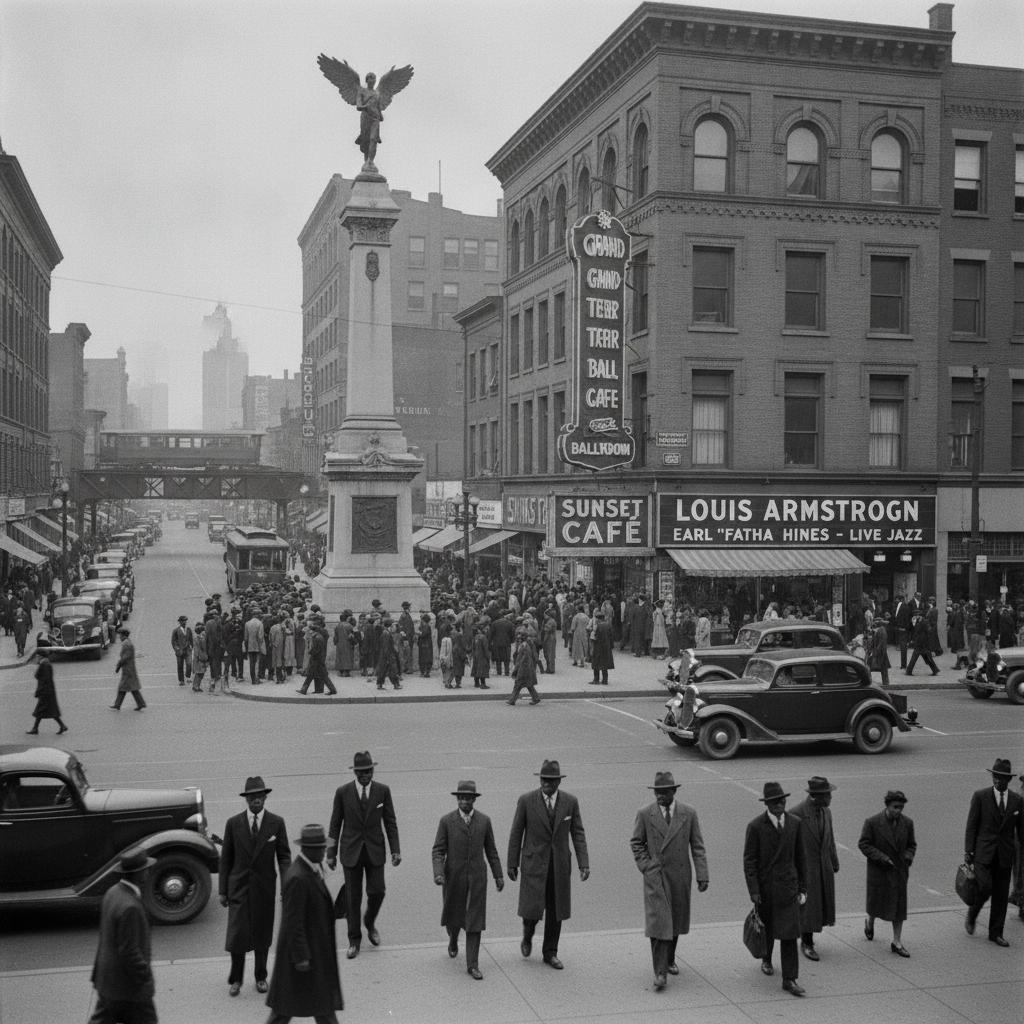
Bronzeville, Pullman e la Storia Afroamericana del South Side
The South Side of Chicago — the vast swath of the city south of the Loop, home to approximately 1 million residents — is the historic heart of African-American Chicago, the destination of the Great Migration (the movement of approximately 6 million African Americans from the rural South to northern cities between 1910 and 1970) and the birthplace of Chicago Blues, gospel music, and much of the cultural innovation that made Chicago one of the most creatively significant cities in 20th-century American history.
- 1
Pullman National Monument — America's First Model Factory Town
Pullman (far South Side, established 1880 by George Pullman) was designed as a complete self-contained industrial town — the redbrick row houses, church, hotel, library, and factory were all built to one architectural plan; it was the site of the 1894 Pullman Strike (30,000 workers, federal troops sent by President Cleveland) that established Labor Day as a national holiday.
- 2
A. Philip Randolph Pullman Porter Museum
The Pullman Porter Museum (East 111th Street) documents the Brotherhood of Sleeping Car Porters (founded 1925 by A. Philip Randolph) — the first Black labour union in the US, which negotiated with the Pullman Company for 12 years before winning a contract in 1937; the 20,000 Pullman Porters were the backbone of the Black middle class and financed the Chicago civil rights movement.
- 3
U.S. Steel South Works Site — Rust Belt Memory
The former U.S. Steel South Works site (3,000 acres, Southeast Side) employed 20,000 steelworkers at its peak (1950s) before closing in 1992 — the site is being redeveloped as a mixed-use lakefront park; the Calumet History Museum documents the region's steel, rail, and meatpacking industries and the Eastern European immigrant communities they created.
- 4
Bronzeville's Cultural Legacy — Chess Records & Gospel Roots
Bronzeville (35th–51st Streets) is where Chicago Blues became Chicago Soul — Chess Records (2120 S Michigan Ave, founded 1950) recorded Muddy Waters, Chuck Berry, Bo Diddley, Etta James, and the Rolling Stones (who flew from England specifically to record here in 1964); the Chicago Gospel Music Place at the Carter Temple documents Thomas A. Dorsey's invention of gospel music at Pilgrim Baptist Church.
- 5
Pilsen — Mexican Mural Arts & National Museum of Mexican Art
Pilsen (Lower West Side) is Chicago's Mexican cultural centre — the National Museum of Mexican Art (free, 1,800-member permanent collection spanning 3,000 years of Mexican art) is the largest Latino museum in the US; Pilsen's street murals (covering every available surface) rank with East LA and Houston as the finest Mexican-American mural tradition in the country.
- 6
South Shore Cultural Center — Lakefront Ballroom
The South Shore Country Club (1916, converted to public use 1974) is a lakefront palace built for Chicago's Protestant elite that excluded Jewish and Black members — after public takeover, it became a community cultural centre serving South Shore's predominantly Black neighbourhood; Michelle Obama played tennis here as a child on the courts still open to the public.