Nuova Cucina Nordica e la Rivoluzione Gastronomica di Copenaghen
Copenhagen is the capital of the global food revolution known as 'New Nordic Cuisine' — the culinary movement that began in 2004 when the chefs René Redzepi, Claus Meyer, and their colleagues published the New Nordic Manifesto, committing to cooking with local, seasonal, and foraged Scandinavian ingredients; the movement's most famous restaurant, Noma (founded 2003, voted the World's Best Restaurant four times), closed its physical restaurant in January 2024 but continues as a research and fermentation laboratory and pop-up dining experience.
- 1
Noma's Legacy — How One Restaurant Changed Global Cooking
Noma (closed in 2024 as a full-service restaurant, transitioning to a food lab) twice held the title of World's Best Restaurant (2010, 2011, 2012, 2021) — René Redzepi's hyperlocal New Nordic cuisine (no Mediterranean ingredients, only Scandinavian foraged and fermented products) redefined global gastronomy and trained 70+ chefs who opened two-Michelin-star restaurants worldwide.
- 2
Geranium — Three Michelin Stars, Views of Fælledparken
Geranium (Fælledparken, 3 Michelin stars, consistently ranked World's Best Restaurant 2022) serves a 20-course menu focused on plant-forward New Nordic cooking — Chef Rasmus Kofoed represents Denmark's New Nordic second generation; the restaurant occupies the 8th floor of the Parken football stadium with park and harbor views; dinner (without wine) costs DKK 4,200.
- 3
Torvehallerne Food Market — 60 Stalls Under Glass Domes
Torvehallerne (Israels Plads, 2011, 60 stalls under two glass domes) is Copenhagen's premium food market — selling artisan cheese, freshly smoked salmon, Nordic charcuterie, craft coffee from The Coffee Collective, and the iconic smørrebrød to eat standing; Saturday mornings draw 10,000 visitors; the market demonstrates how fine ingredients are embedded in Copenhagen's daily food culture.
- 4
Amass Restaurant — Sustainability-First Dining
Amass (Refshalevej, former shipyard, Chef Matt Orlando) operates with zero-waste kitchen principles — sourdough discard becomes crackers; coffee grounds become soil amendment; off-cuts become stocks; the dining room uses reclaimed industrial materials; the 8-course menu (DKK 1,200) changes weekly based on what Amass's kitchen garden and local farms produce.
- 5
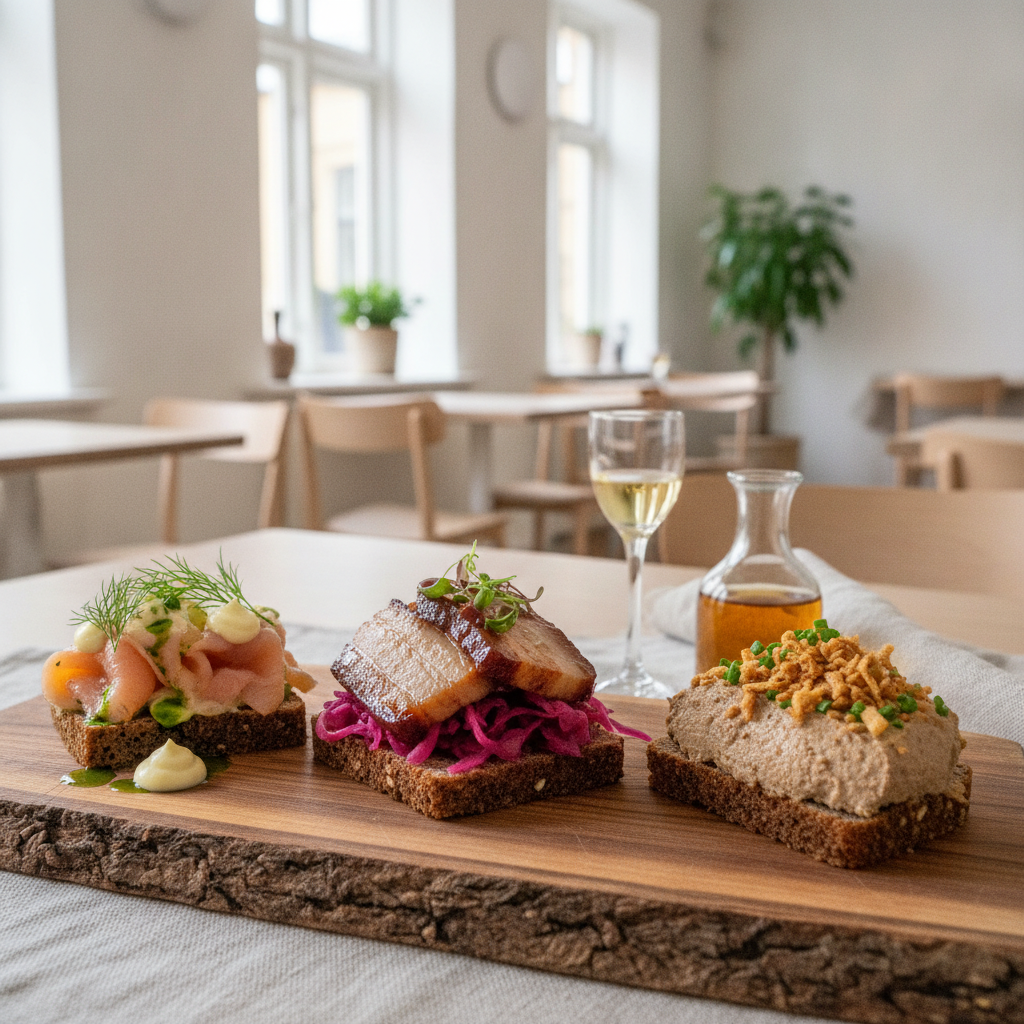
Smørrebrød Tradition — 100 Years of Open Sandwich Craft
Smørrebrød (buttered rye bread with toppings — liver pâté with pickled cucumber, herring in 12 preparations, roast beef with remoulade) is the Danish national lunch — the formal smørrebrød restaurant (konditori) peaked in the 1950s; traditional practitioners Schønnemann (1877, Hauser Plads), Aamanns (2006, Øster Farimagsgade), and Kødbyens Fiskebar uphold the tradition.
- 6
Paper Island — Street Food Market on Former Warehouse Island
Paper Island (Christianshavn, Papirøen) is a seasonally operated street food market (May–October) in a former paper storage warehouse — 40 vendor stalls represent Copenhagen's most diverse food scene: Shawarma from Palestinian vendors, smoked brisket from American-trained pitmasters, and Korean fried chicken alongside traditional Danish æbleskiver pancakes.