Gita ad Agra — Il Taj Mahal, il Forte di Agra e Fatehpur Sikri
Agra (200 kilometres south of Delhi, 2-3 hours by the Gatimaan Express or Shatabdi Express train) — the former Mughal capital of Akbar the Great and Shah Jahan and the site of the most celebrated building in the world: the Taj Mahal (Taj Bibi ka Maqbara — the white marble mausoleum built by Emperor Shah Jahan 1632-1653 in memory of his favourite wife Mumtaz Mahal, who died in childbirth in 1631) — is the most popular day trip destination from Delhi and the single building that brings more international tourists to India than any other.
- 1
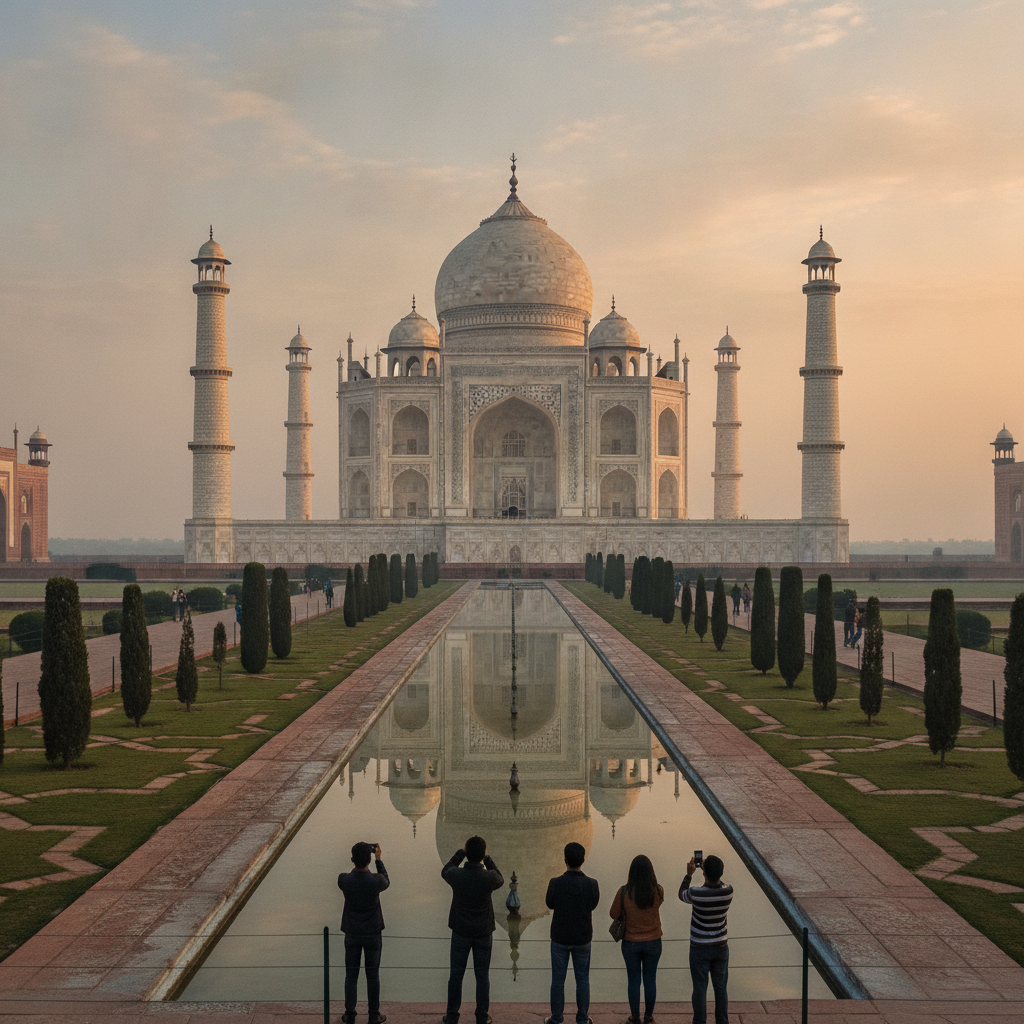
Taj Mahal at Sunrise — Marble That Changes Color
The Taj Mahal (Agra, 200km from Delhi, 2.5 hours by Gatimaan Express train) appears pink at dawn, white at noon, and golden at sunset due to the translucency of the Makrana white marble used in its construction (1631–1648) — Mughal Emperor Shah Jahan built it as a mausoleum for his wife Mumtaz Mahal, who died in childbirth; the construction employed 20,000 workers over 22 years.
- 2
Agra Fort — The Red Sandstone Rival to the Taj
Agra Fort (1573, UNESCO, 4km from the Taj) is where Shah Jahan was imprisoned by his son Aurangzeb for the last 8 years of his life — the cell from which the Emperor could see the Taj Mahal across the Yamuna River is preserved; the fort's Diwan-i-Khas (Hall of Private Audience) has a 'Throne of Peacocks' platform with a river view.
- 3
Itmad-ud-Daulah — The 'Baby Taj'
The Itmad-ud-Daulah mausoleum ('Baby Taj', 1628) predates the Taj Mahal by 3 years and introduced the technique of pietra dura (semi-precious stone inlay) that would define Mughal architecture — the Persian garden setting (four quadrants bisected by water channels) is more accessible and less crowded than the Taj; entry fees are ₹110 vs. ₹1,100 for the Taj.
- 4
Fatehpur Sikri — Akbar's Abandoned Capital
Fatehpur Sikri (40km from Agra) was Mughal Emperor Akbar's capital for 14 years (1571–1585) before being abandoned due to water scarcity — the UNESCO-listed complex includes the Buland Darwaza (54m gate, the largest ceremonial entrance in the world), the Panch Mahal (5-storey tower), and Jodha Bai's palace combining Hindu and Islamic architectural elements.
- 5
Petha & Agra Street Food — Crystallised Pumpkin Candy
Agra's signature sweet, petha (crystallized ash gourd/white pumpkin candy) has been made in the city since Mughal times — the Nutan Pan Mandir shop (Kinari Bazar) produces 40 flavours including kesar (saffron), angoori (grape shape), and chocolate; a kilogram costs ₹100–200; Agra's chaat (Deviram, Sadar Bazar) and biryani (restaurants near the Taj East Gate) are essential accompaniments.
- 6
Mathura & Vrindavan — Krishna's Birthplace, 60km from Agra
Mathura (on the Agra-Delhi highway) is Lord Krishna's birthplace (3,500 BC according to Hindu tradition) — the Krishna Janmabhoomi temple complex stands on the site of his prison cell; Vrindavan (10km from Mathura) has 5,000+ temples and hosts the world's most exuberant Holi festival; both towns are accessible as an extension to the Agra day trip via hired car.