Street Food di Delhi — Paranthas, Chhole Bhature e il Patrimonio Culinario della Vecchia Delhi
Delhi's food culture is one of the richest and most diverse in India — shaped by the 350-year Mughal imperial culinary tradition, the North Indian Punjabi tradition of dairy-rich dairy and wheat-based food, the Hindu Brahmin vegetarian tradition, the Muslim biryani and kebab traditions of Shahjahanabad, and the Rajasthani, Bengali, and South Indian cuisines brought to Delhi by migrants from across India: the result is the most comprehensive single-city food culture in India, accessible from the street stalls of Chandni Chowk to the refined restaurants of Connaught Place.
- 1
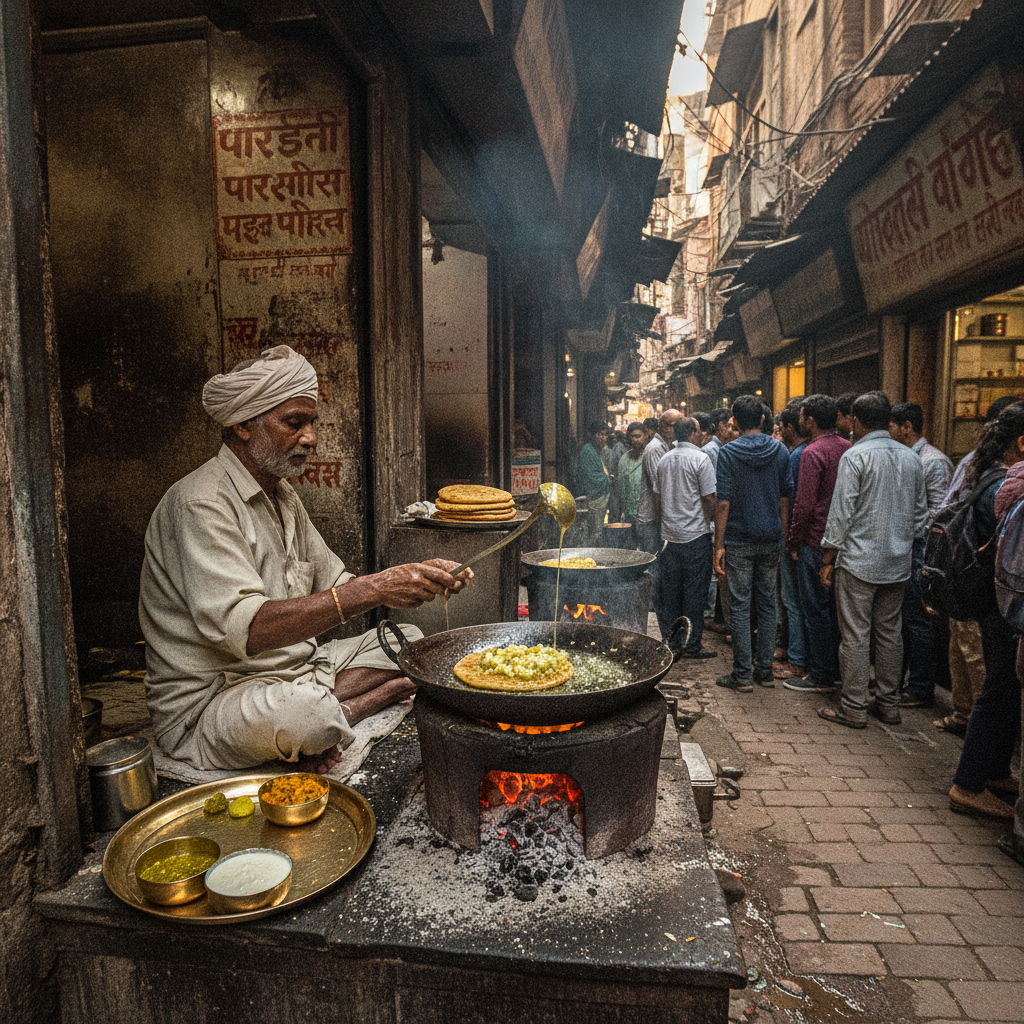
Paranthe Wali Gali — Stuffed Flatbreads Since 1875
Paranthe Wali Gali (Chandni Chowk) is a 150-metre lane of 20+ parantha shops, many operating since the 1875 era — paranthas (whole wheat flatbreads stuffed with 50 fillings including rabri/condensed milk, gobi/cauliflower, dry fruit, and keema/minced meat) are cooked on iron griddles with ghee (clarified butter) and served with achar (pickle) and curd; ₹50–80 per parantha.
- 2
Chhole Bhature at Sita Ram Diwan Chand — 75-Year Queue
Sita Ram Diwan Chand (Paharganj, est. 1947, opens 8am, closes when food runs out) serves only one dish — chhole bhature (spiced chickpea curry with deep-fried puffed bread) — the recipe unchanged since the founder migrated from Lahore during Partition; the shop serves 2,000+ portions daily with no seating, no menu, and a queue that forms before opening.
- 3
Dilli 6 — The Food Culture of Chandni Chowk
Chandni Chowk (Old Delhi, built by Shah Jahan in 1650 as the bazaar adjacent to the Red Fort) remains Delhi's most intense street food destination — the Jain sweet shops of Dariba Kalan (kachori with aloo sabzi served from 5am), Karim's restaurant (1913, since Mughal court cooks), and the lassi shops of Kinari Bazaar are best experienced on foot before 10am.
- 4
Gol Gappa — Pani Puri Competitive Eating
Gol gappa (pani puri — a fried hollow puri filled with spiced chickpeas or potatoes, then dunked in tamarind or mint water and eaten in one bite) is Delhi's most competitive street food experience — vendors serve 5–6 pieces in rapid succession; the 'teen paani' version (three types of flavoured water: spicy, sweet-sour, and khatta) is Delhi's signature variation; ₹30–60 for a serving of 6.
- 5
Jama Masjid Biryani — Mughal-Descended Rice
The biryani of Old Delhi (mutton dum biryani cooked in a sealed pot for 4 hours with long-grain basmati rice, whole spices, and caramelized onion) descends from Mughal court recipes — Al Jawahar (1947, beside Jama Masjid, closed Tuesdays) and Haji Shabrati Nihari Wale (since 1919) are the Old Delhi institutions; nihari (slow-cooked beef shank stew eaten for breakfast) is the rarest authentic Mughal dish still prepared.
- 6
Connaught Place — Delhi's 1930s Commercial Heart
Connaught Place (built 1929–1933 in a circular plan with Georgian colonnades) is Delhi's central business district — the underground Palika Bazar (electronics, pirated software) contrasts with the street-level Indian Coffee House (1948, worker-cooperative, cheapest coffee in CP at ₹18 per cup) and the Wenger's Bakery (1926, unchanged menu of rum balls, honey cakes, and club sandwiches).