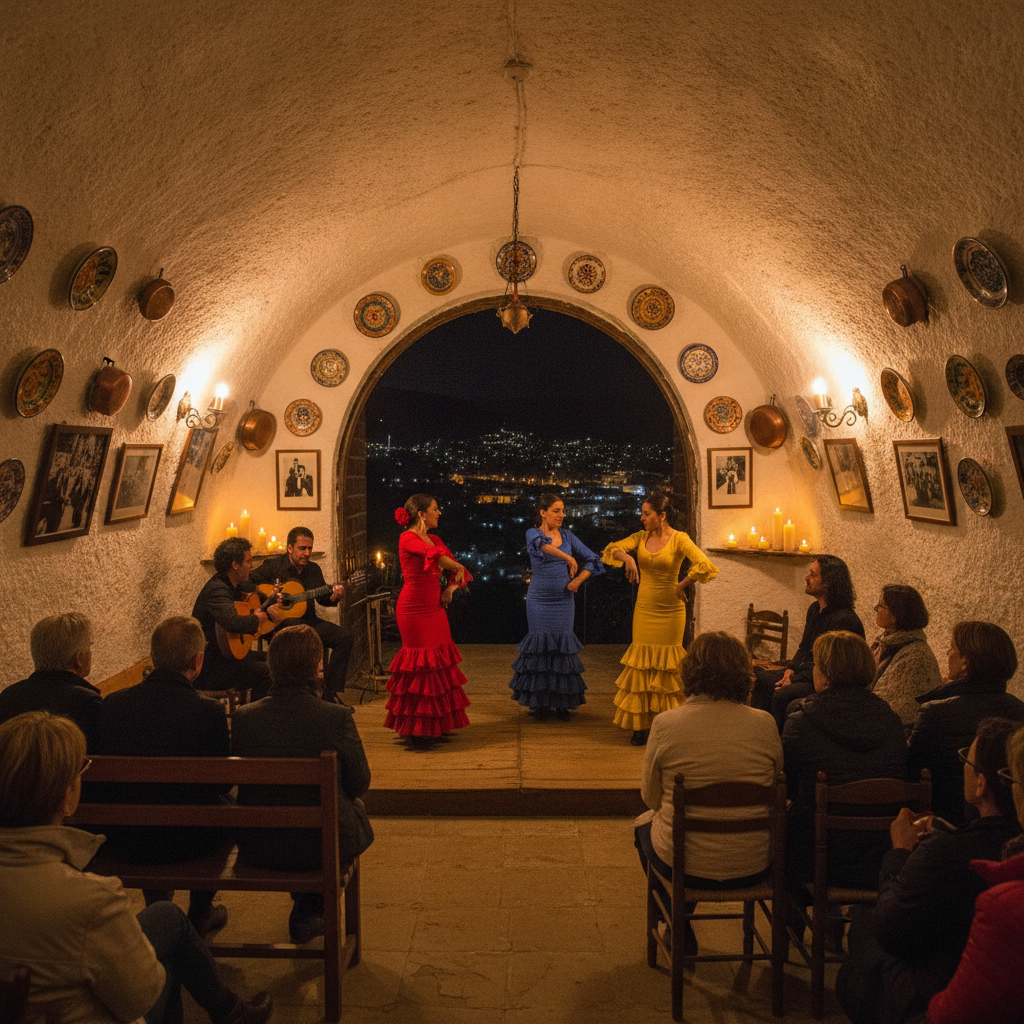
Zambra di Granada, Musica Gitana e le Grotte del Sacromonte
The 'zambra' (the Granada variant of flamenco — the dance form unique to the Sacromonte Gitano community of Granada that combines flamenco with elements of the pre-Islamic Moorish dance tradition) performed in the 'cuevas' (the cave venues of the Sacromonte) is the most distinctive and the most atmospheric live music experience in Granada and one of the most authentic flamenco experiences in Andalusia.
- 1
Zambra — Flamenco Born in the Sacromonte Caves
Zambra (Granada's indigenous Gitano dance form) developed in the cave-dwelling community of Sacromonte and differs from Sevilla-style flamenco in its circular hip movements (influenced by Moorish and belly dance traditions) and its cave setting — performances at Cueva de La Rocío, Cueva de La Faraona, and Cueva de Los Tarantos begin at 10pm nightly; tickets €25–35 include one drink.
- 2
Peña La Platería — Oldest Flamenco Peña in Spain (1949)
La Platería (Placeta de Toqueros, Albayzín, 1949) is a members-only flamenco club that opens to non-members for Saturday night performances — the intimate room (50 seats maximum) hosts working flamenco professionals performing for an audience that includes other professionals; the juerga (improvised flamenco session) can continue past 2am when the duende (the spirit, the indefinable quality of great flamenco) arrives.
- 3
Carmen de las Cuevas — Flamenco School in the Albayzín
Carmen de las Cuevas (Camino del Sacromonte) is a flamenco school and cultural centre operating in a traditional carmen house (walled villa) — offering weekly classes in palmas (hand-clapping), zapateado (footwork), and Gitano style for visitors; the school also runs 4-hour workshops combining language study and flamenco history (€60 including materials).
- 4
García Lorca and Flamenco — The Poet Who Theorized 'Duende'
Federico García Lorca's 1933 lecture 'Theory and Play of the Duende' defined the concept of duende (the spirit of death and passionate expression in flamenco) — Lorca organized the 1922 Cante Jondo competition in Granada with Manuel de Falla to preserve traditional flamenco against commercial corruption; his essay remains the canonical philosophical text on flamenco aesthetics.
- 5
Venta El Gallo — Dinner and Zambra Show
Venta El Gallo (Barranco de los Negros, Sacromonte) is the most established dinner-and-show venue in the Sacromonte cave circuit — the cave restaurant seats 120 inside whitewashed natural cave rooms; the zambra show (8 dancers, 2 guitarists, 2 singers) runs 75 minutes after dinner; the combined dinner-show package (€65–80) is the most complete Sacromonte experience available.
- 6
Grenadine Flamenco vs. Sevillana — Regional Distinctions
Granada's flamenco tradition differs fundamentally from Sevilla — granaina (Granada's indigenous palos/style) is more melancholic and complex harmonically; the accompaniment guitar uses distinctive Granada tuning (por granaína requires capo on 2nd fret, specific arpeggios); Paco de Lucía (the 20th century's greatest flamenco guitarist) was influenced by Granada's guitar tradition even though he was born in Algeciras.