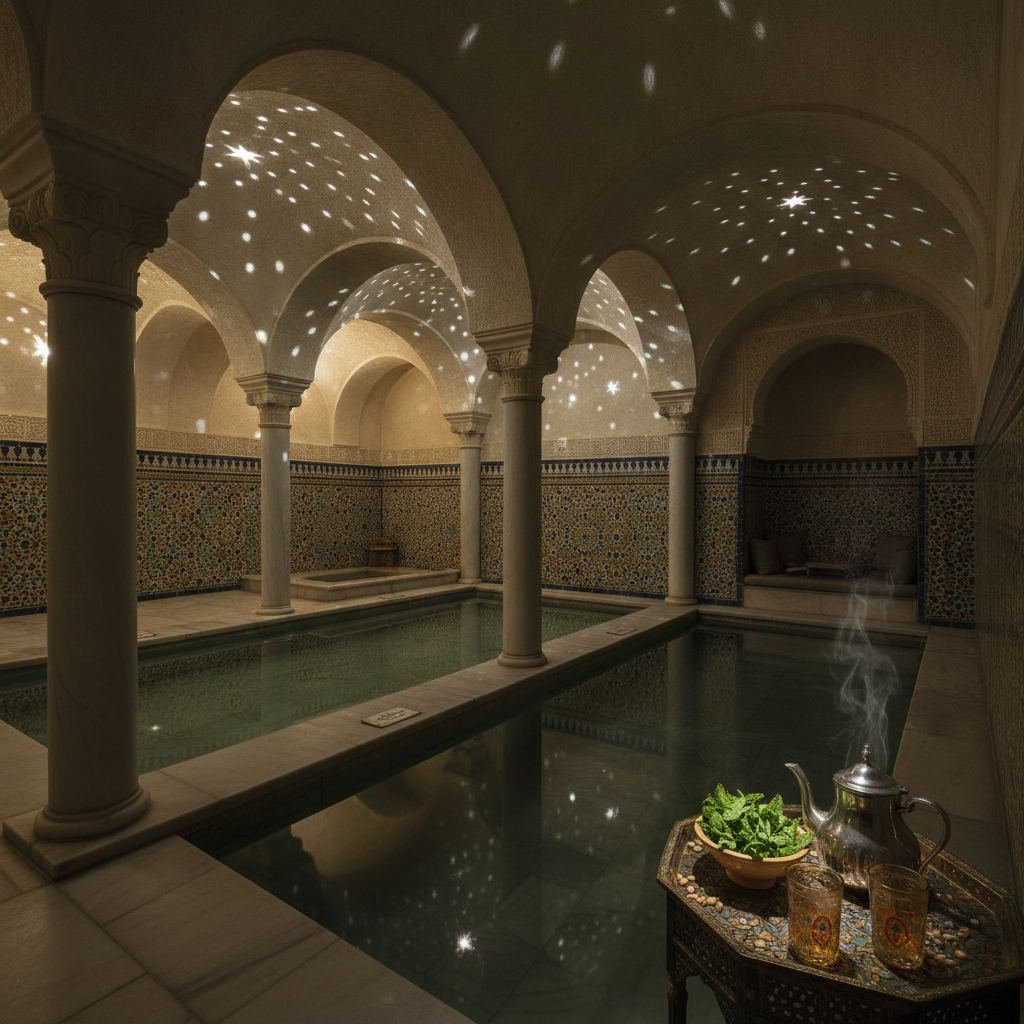
Hammam Al-Ándalus, Bagni Arabi e la Cultura Spa di Granada
The Hammam Al-Ándalus (the Arab baths complex in the Carrera del Darro — the modern recreation of the medieval Islamic hammam tradition in the historic Arab baths building adjacent to the Río Darro) and the 'Bañuelo' (the 11th-century Moorish bath on the Carrera del Darro, the best-preserved Arab bath in Spain) together revive and preserve the tradition of the hammam that was central to the daily life of Islamic Granada for 500 years.
- 1
Historical Nasrid Bath Culture — Al-Andalus Bathing Ritual
The Nasrid emirate maintained over 30 public bath houses (hammams) in Granada — bathing was obligatory before Friday prayers (according to Islamic tradition) and served as community social space for men (morning) and women (afternoon); the surviving El Bañuelo hammam (11th century, Carrera del Darro) is the best-preserved Arab bath in Spain, its star-shaped skylights still intact.
- 2
El Bañuelo — 11th-Century Working Bath, Free Entry
El Bañuelo (Carrera del Darro 31, free entry, open Tuesday–Sunday) is a working hammam from the Zirí period (1002–1090) that survived because it was incorporated into a Christian convent after 1492 — the three rooms (cold, tepid, hot) with their original tile floors and horseshoe-arch columns are accessible without an appointment; the star-shaped ceiling holes that filtered light are the defining image of Nasrid bath architecture.
- 3
Hammam Baños Árabes — Modern Hammam on Roman Foundations
Multiple modern hammams in Granada recreate the Arab bath experience in historically appropriate buildings — Hammam Baños Árabes (Postigo de la Cuna, Albayzín) is built over Roman thermal foundations discovered during construction; the 90-minute circuit (€30, includes tea) uses cedarwood steam cabinets, alternating-temperature pools, and traditional Moroccan soap (beldi) and kese gloves.
- 4
The Art of Kese — Traditional Exfoliation Technique
The kese (exfoliation glove worn by bath attendants) is the central tool of hammam treatment — the attendant uses the rough-textured glove in long strokes to remove dead skin, improving circulation and preparing the skin for soap and oil treatment; authentic kese gloves (made from recycled cotton in Turkey and Morocco) are sold in Granada's Arabic market shops for €8–15.
- 5
Moroccan Community in Granada — Living Connection to the Tradition
Granada's Moroccan community (est. 4,000 residents) maintains direct cultural links to the North African hammam tradition — community members use private hammams in the Albayzín's Moroccan association buildings that are not open to tourists; the weekly street market (zoco) on Calle Calderería Nueva reflects a living Moroccan-Andalusian cultural exchange that predates and postdates 1492.
- 6
Alhambra's Comares Bath — Royal Hammam Excavated and Displayed
The Comares Bath (Baños Reales, inside the Alhambra, adjacent to the Comares Palace) is the best-preserved royal hammam in the Islamic world — the eight-niche undressing room, the 12 column-supported bathing hall, and the boiler room visible from below are all original 14th-century Nasrid construction; included in the Alhambra ticket; access by timed tour slot.