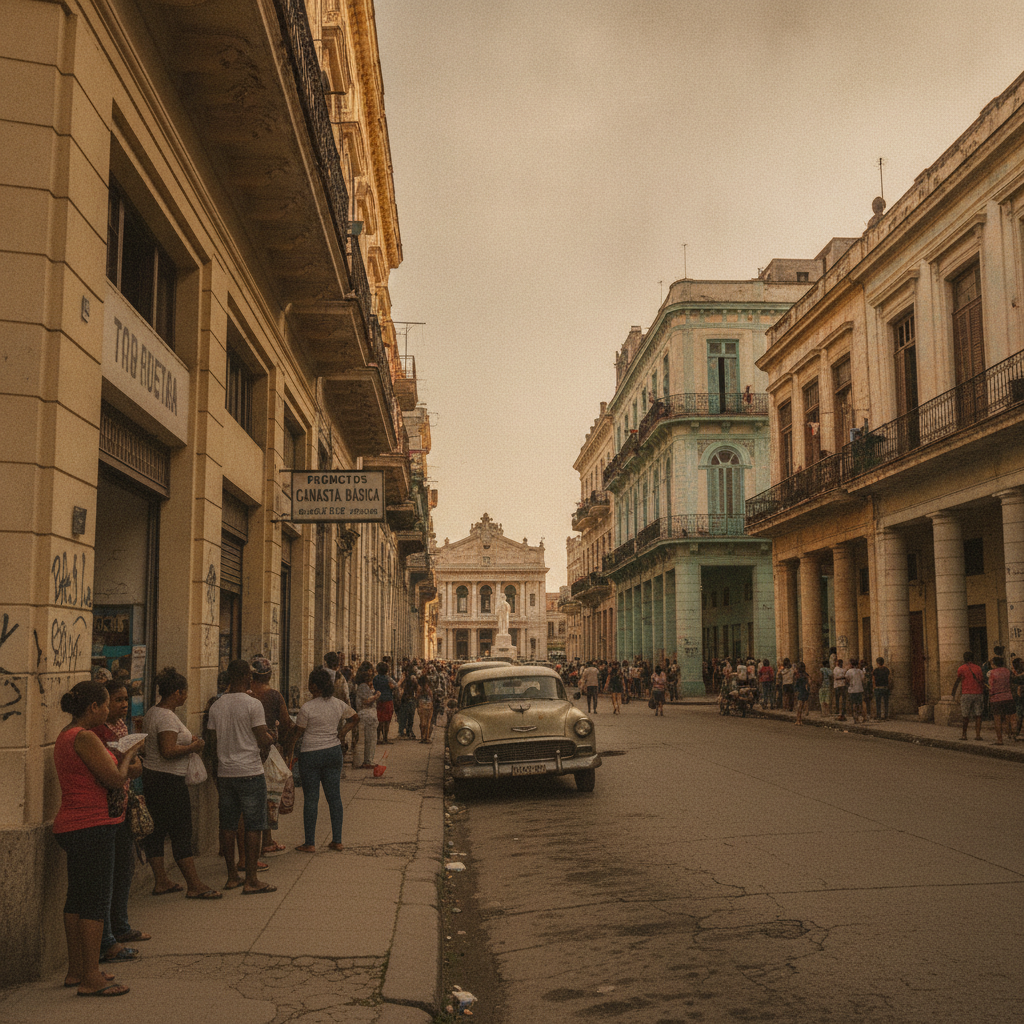
Centro Habana, Barrio Chino e la Vita Tra i Monumenti
Centro Habana (the central district of Havana between La Habana Vieja and Vedado — the most densely populated district of the city, the neighbourhood of the ordinary Havanans, with the Barrio Chino (the Chinatown — the largest Chinatown in Latin America in the mid-20th century, now reduced to a few Chinese restaurants and cultural institutions), the Callejón de Hamel (the Afro-Cuban cultural alley), and the Paseo del Prado (the tree-lined boulevard modelled on Las Ramblas in Barcelona)) is the most authentic and least touristy face of contemporary Havana.
- 1
Barrio Chino — The Largest Chinatown in Latin America (Once)
Havana's Barrio Chino (centered on Calle Cuchillo and Zanja, Centro Habana) was once the largest Chinese community in Latin America — 150,000 Chinese immigrants arrived between 1847–1874 as indentured labourers replacing newly freed enslaved Africans on sugar plantations; by the 1990s, the original community had largely emigrated; the remaining 'Chinatown' is a cultural reconstruction with very few ethnic Chinese residents.
- 2
Calle Obispo — Havana's Walking Street Since Colonial Times
Calle Obispo (6 blocks, Old Havana to the Parque Central) is Havana's most commercially active street — the Librería La Moderna Poesía (bookshop, original 1892 building), El Floridita bar (Hemingway's daiquiri bar, 'La Cuna del Daiquiri', 'the cradle of the daiquiri'), and the 1875 Hotel Florida line the street; the bronze bust of Hemingway inside El Floridita is a mandatory pilgrimage stop.
- 3
Malecón Sunset — 8km Seawall and Social Catharsis
The Malecón (8km of sea wall from Old Havana to Miramar, built 1901–1958) is Havana's most important public social space — at sunset, thousands of Cubans gather on the wall to socialize, drink rum, listen to music on mobile phones, and watch the sun set over the Straits of Florida; in hurricane season (August–October), waves crash 30m inland onto the Malecón boulevard.
- 4
Casa de la Música — Live Cuban Music Nightly
The Casa de la Música (Galiano, Centro Habana, and a branch in Miramar) is Havana's premier live music venue for Cuban popular music — the Galiano branch hosts salsa, timba, and Cuban jazz from 4–7pm (matinée, 5 CUC) and 10pm–3am (night show, 15 CUC); legendary Havana salsa orchestras (Los Van Van, Charanga Habanera, NG La Banda) perform year-round.
- 5
Fábrica de Tabaco Partagás — Hand-Rolling Since 1845
The Partagás Cigar Factory (Industry Street, Centro Habana, 1845) moved its manufacturing out of the original building in 2008 (now a showroom and shop) but still operates production facilities in Havana — the hand-rolling process (torcedores roll 100–120 cigars per day, each in 8 minutes) is demonstrated in the showroom; a box of 25 Cohibas (Cuba's flagship brand, created 1966 for Fidel Castro) costs CUC$450.
- 6
Sloppy Joe's Bar — Reopened After 50-Year Hiatus
Sloppy Joe's Bar (Agramonte, Old Havana, originally opened 1919, closed 1965, reopened 2013) is a Prohibition-era American celebrity bar where Gary Cooper, Spencer Tracy, and Errol Flynn drank during the 1930s–1950s Havana tourist boom — the mahogany bar (the longest bar counter in Havana) and the ceiling fans are original; the Sloppy Joe special (rum, pineapple, port wine, and grenadine) costs CUC$6.