Pagoda dell'Imperatore di Giada e la Cultura dei Templi di Saigon
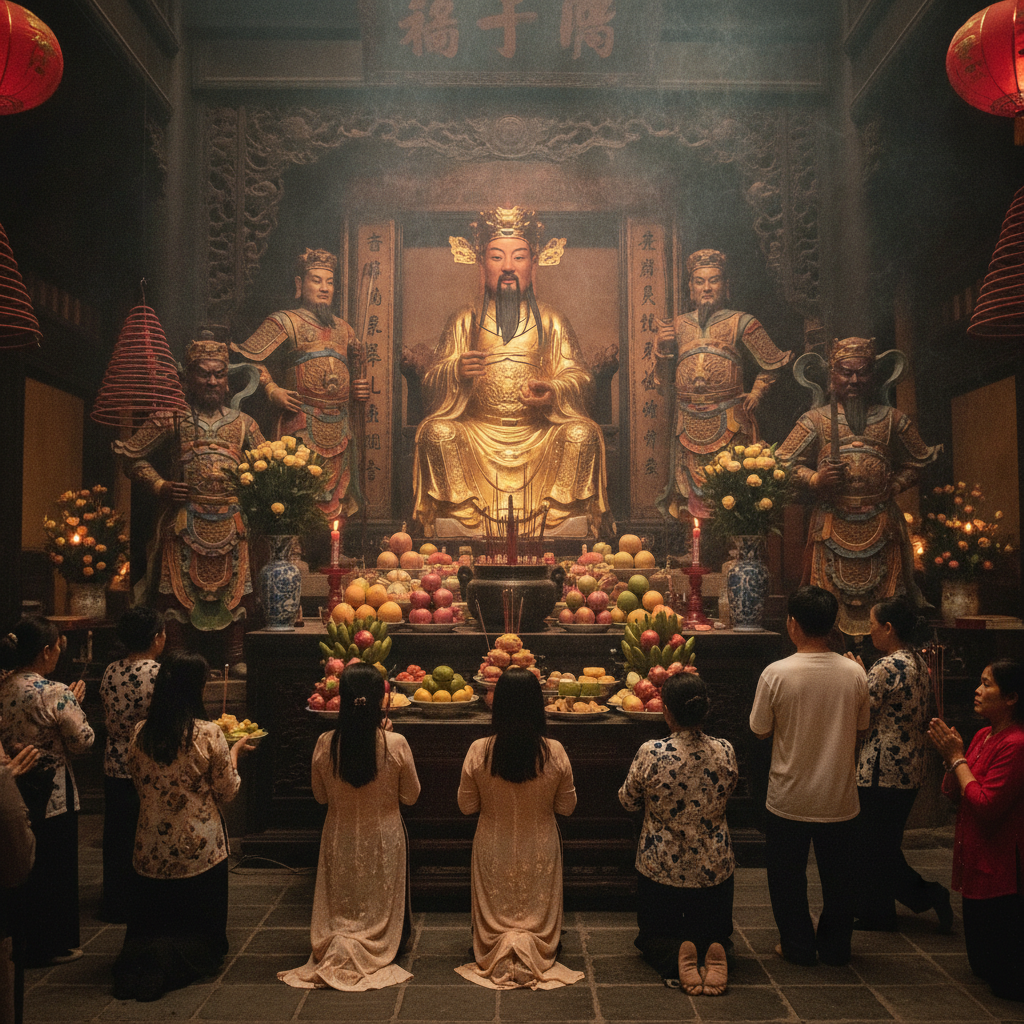
Jade Emperor Pagoda (Chùa Phước Hải — 'Phước Hải Temple', also known as Chùa Ngọc Hoàng — 'Jade Emperor Pagoda', at 73 Mai Thị Lựu Street in District 1 — the most atmospheric Taoist temple in Vietnam and the most visited temple in Ho Chi Minh City): the pagoda (built in 1909 by the Cantonese immigrant community in Saigon, dedicated to the Jade Emperor (Ngọc Hoàng — the highest deity in the Taoist pantheon)) became famous internationally after US President Barack Obama visited during his May 2016 trip to Vietnam.
- 1
Jade Emperor Pagoda — Taoist Temple of the Heavenly King
The Jade Emperor Pagoda (73 Mai Thị Lựu, Bình Thạnh, 1909) is the most atmospheric religious site in Ho Chi Minh City — the Taoist temple is thick with incense smoke, crammed with elaborate paper-mâché statues of Taoist deities, and visited by 10,000+ worshippers daily; the Hall of Ten Hells (bas-relief panels depicting punishment for specific sins) is the most visually arresting section; free entry, small donation expected.
- 2
Mariamman Hindu Temple — Tamil Community Shrine in Saigon
The Mariamman Temple (45 Trương Định, District 1, est. 1800s) is a working Hindu temple maintained by Saigon's Tamil community — the gopuram (tower) is covered in brightly painted deities; the temple is active with Tamil Hindu worship but is also visited daily by Vietnamese Buddhists who incorporate the temple into their spiritual circuit; the temple's sacred spring feeds the temple elephant statue that 'blesses' visitors.
- 3
Emperor of Jade Taoist Cosmology — Understanding the Pantheon
The Jade Emperor Pagoda's cosmology maps the entire Taoist bureaucratic heaven — the Jade Emperor (Ngọc Hoàng) presides over a celestial administration staffed by gods, generals, and functionaries responsible for weather, fortune, childbirth, and each hour of the day; the four Life-Sized Generals of the North, South, East, and West flank the main altar; worshippers approach specific deities for specific requests.
- 4
War Remnants Museum — American War Documentation
The War Remnants Museum (28 Võ Văn Tần, District 3) is the most visited museum in Vietnam (300,000+ visitors/year) — the collection documents the American War (1955–1975) through captured US military equipment, photographs of civilian casualties, and documentation of chemical warfare (Agent Orange's long-term effects on Vietnamese civilians and veterans, still producing birth defects 50 years later); international response on entry is uniformly visceral.
- 5
Xá Lợi Pagoda — Self-Immolation Site of 1963
Xá Lợi Pagoda (89 Bà Huyện Thanh Quan, District 3) is the Buddhist temple from which Thích Quảng Đức departed on June 11, 1963 to perform his self-immolation at the Cambodian Embassy intersection — the photograph (by Malcolm Browne) won the Pulitzer Prize and is one of the most influential photographs in history; the pagoda also holds Thích Quảng Đức's preserved heart (in an urn in the main hall), which allegedly did not burn.
- 6
Giac Lam Pagoda — Oldest Temple in Ho Chi Minh City (1744)
Giac Lam Pagoda (118 Lạc Long Quân, Tân Bình, 1744) is the oldest surviving temple in Ho Chi Minh City — the main hall's 113 gilded statues are arranged in a tiered pantheon; the banyan tree in the courtyard (planted at the temple's founding) is over 275 years old; the cremation tower (7 storeys, 1970s, used for Buddhist funerals) and the adjacent community cemetery reveal how the temple has served as a spiritual anchor for the surrounding neighbourhood for three centuries.