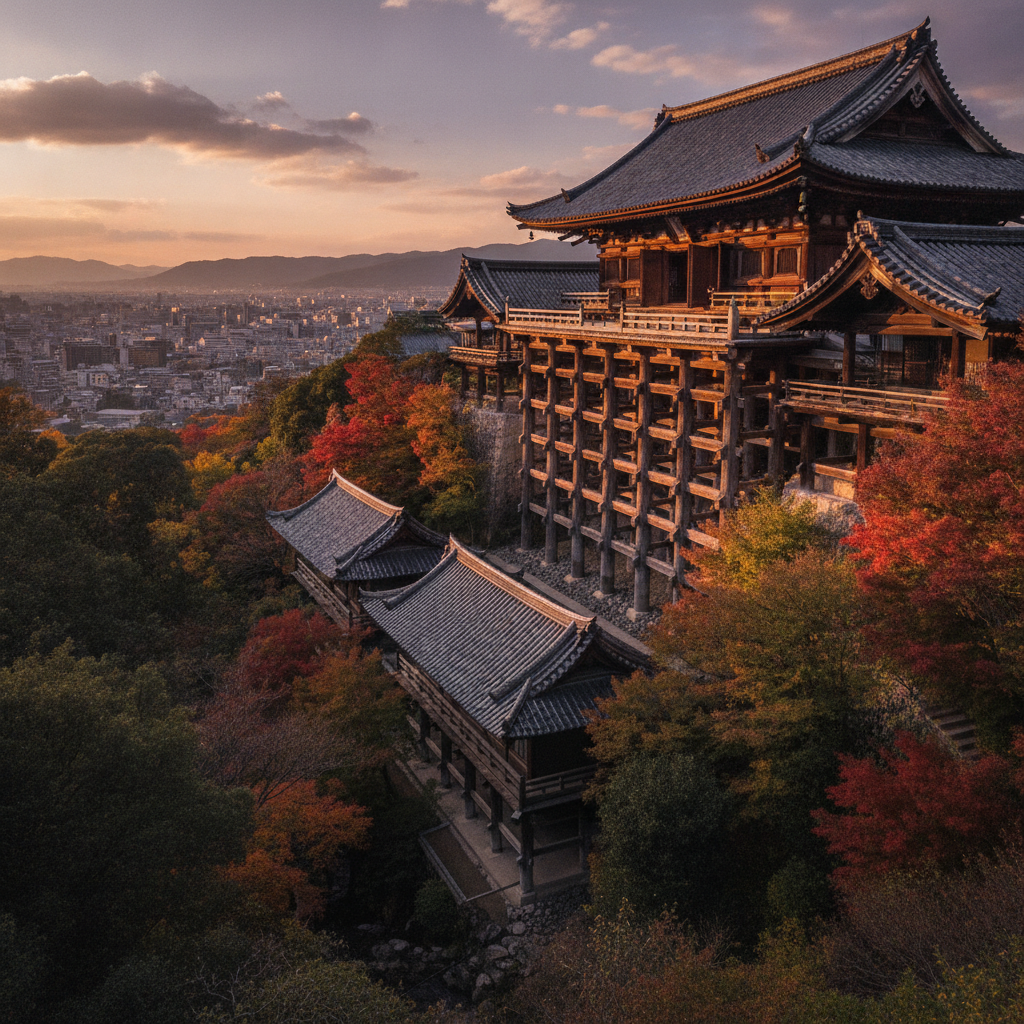
Higashiyama — Kiyomizudera e i Paesaggi Urbani Storici Preservati
Higashiyama (東山 — 'Eastern Mountain' — the district on the eastern hills of Kyoto, the most extensively preserved historic district in Japan): the Higashiyama sannai (the inner Higashiyama area, designated an Important Preservation District for Groups of Traditional Buildings) preserves the most complete streetscapes of Edo-period machiya townhouses and temple approaches in Kyoto, including the Sannenzaka (三年坂 — Three Year Slope) and Ninenzaka (二年坂 — Two Year Slope) stone-paved lanes flanked by traditional craft shops, tea houses, and restaurants.
- 1
Kiyomizudera — Stage Platform 13 Metres Above the Hillside
Kiyomizudera ('Pure Water Temple', Higashiyama, founded 780 AD, current buildings 1633) is built on the hillside of Mount Otowa without a single nail — the main stage (hinoki cypress wood, 13m above the ground) extends from the main hall over the valley; the phrase 'jumping off the Kiyomizudera stage' (meaning attempting something reckless) derives from the historical belief that surviving the jump guaranteed your wish.
- 2
Otowa Waterfall — Three Streams, Three Fortunes
Beneath Kiyomizudera, the Otowa waterfall divides into three separate streams — visitors drink from one (longevity), two (success in studies), or all three (love); drinking from all three is considered greedy; the queue for the ladles (wooden cups on long bamboo handles) can be 20 minutes long at peak season; the water comes from underground springs in the Higashiyama hills and is tested monthly for purity.
- 3
Sannenzaka & Ninenzaka — 300-Year-Old Preserved Streets
Sannenzaka (Sannen-zaka, 'Three-Year Slope') and Ninenzaka ('Two-Year Slope') are preserved Meiji-era merchant streets below Kiyomizudera — slipping on the stone steps traditionally means 2 or 3 years of bad luck; traditional shops sell matcha soft-serve (¥450), yatsuhashi confections (cinnamon-flavoured rice wafer, the most sold Kyoto souvenir), Kyoto ceramics, and hair accessories for kimono rental customers.
- 4
Yasaka Shrine — The Center of Kyoto's Gion Matsuri
Yasaka Shrine (Gion, 656 AD) is the heart of the Gion Matsuri festival — Japan's most famous festival (July, dating from 869 AD when prayers for protection against epidemic were offered) culminates in the Yamaboko Junko procession (17 July and 24 July) when massive float-shrines (yamaboko, up to 25m tall and weighing 12 tonnes) are pulled through central Kyoto streets by teams of 50+ men.
- 5
Chion-in — Largest Temple Gate in Japan
Chion-in (Higashiyama, 1234, headquarters of Jodo Buddhism, the most popular Buddhist sect in Japan) has Japan's largest sanmon (triple mountain gate, 1619, 24m tall, 50m wide) — the grounds contain 7 designated National Treasures including a bell (74 tonnes, cast 1636, one of Japan's three great bells); the shoro (bell tower) bell is rung by 17 monks at midnight each New Year using a horizontal log as a pendulum.
- 6
Maruyama Park — Kyoto's Most Famous Weeping Cherry Tree
Maruyama Park (adjacent to Yasaka Shrine, Gion) contains Kyoto's most famous single cherry tree — the 'gion no yozakura' (the night cherry of Gion), a weeping cherry estimated at 80+ years old that blooms over a small pond and is illuminated at night during sakura season; the park is lined with 680 cherry trees total; the nighttime illumination (yozakura) draws 500,000+ visitors in a week.