Ryoan-ji, Daitokuji e la Filosofia del Giardino Zen di Kyoto
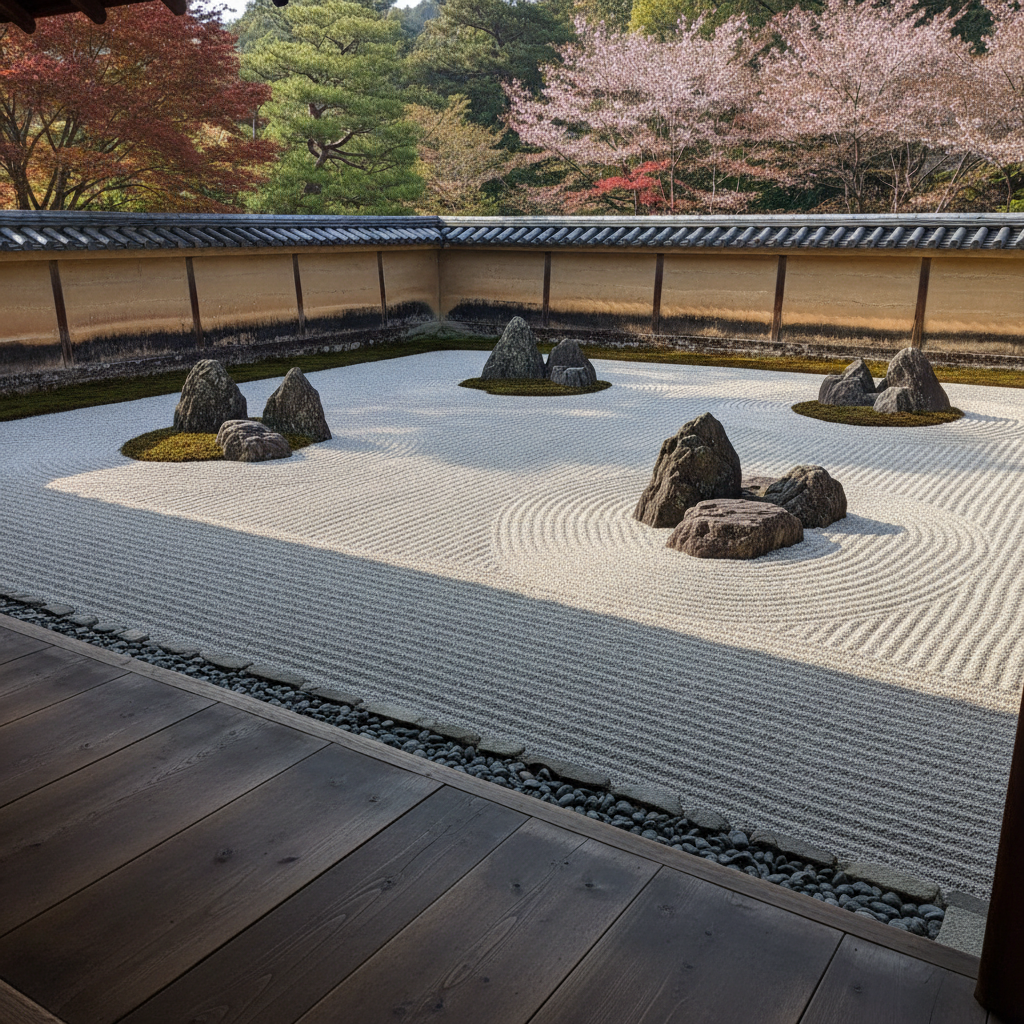
Ryoan-ji (龍安寺 — UNESCO World Heritage since 1994 — the Rinzai Zen temple famous for its kare-sansui (dry landscape) stone garden, created in the late 15th century): the Ryoan-ji stone garden (15 carefully placed rocks arranged in five groups on a rectangular bed of white raked gravel (approximately 25 metres × 10 metres)) is the most celebrated and most discussed karesansui garden in the world — its arrangement (from the viewing veranda, only 14 of the 15 stones are visible from any single viewpoint, with the 15th stone always hidden behind another) is the subject of extensive philosophical and aesthetic interpretation.
- 1
Daitokuji Temple Complex — 24 Sub-Temples, 7 Gardens Open
Daitokuji (Kita-ku, 1319, Rinzai Zen headquarters) is a walled complex of 24 sub-temples on 20 hectares — only 7 are open to the public, each with a distinct garden: Daisenin (1513, a linear dry garden 'painting' in stone), Zuiho-in (1535, an abstract garden with a cross-shaped arrangement of stones, created by a Christian daimyo), and Kōtō-in (famous for its maple trees and bamboo garden). Entry to each sub-temple ¥400–600.
- 2
Daisen-in — Three Metres Wide, Three Centuries Old
Daisen-in (Daitokuji, 1513) is Japan's finest small-scale dry garden — the north and east gardens (each 3m wide, totalling 2m × 30m) tell a visual narrative of a journey from mountain waterfall to open sea using precisely placed rocks and white gravel; the 'boat stone' (a rock that resembles a ship at sea) and the 'turtle island' are named features within this 3-metre-wide philosophical landscape.
- 3
Entoku-in — Secret Garden of the Tea Masters
Entoku-in (Kodaiji temple complex, Higashiyama, garden attributed to tea master Kobori Enshū, 1600s) is one of Kyoto's least-visited great gardens — a hill garden with a triangular arrangement of stones (said to form the Buddhist Sanskrit character 'A') and a 400-year-old camellia tree dominate the inner garden; the temple's painted fusuma (sliding screens) by Hasegawa Tōhaku (designated National Treasure) are only displayed in November.
- 4
Philosophical Walk — 2km Canal Lined with Cherry Trees
The Tetsugaku no Michi (Philosopher's Walk, Higashiyama, 2km from Ginkaku-ji to Nanzenji) is a stone path along the Biwa Lake Canal — the path is named for philosopher Nishida Kitaro (1870–1945) who reportedly walked it daily for meditation; 500+ cherry trees line the canal; in sakura season (late March–early April), the petals fall into the flowing water; the walk takes 30–40 minutes without stops.
- 5
Nanzenji — The Garden Aqueduct and Imperial Villa Gates
Nanzenji (Higashiyama, 1291, the highest-ranked Zen temple in Japan) is entered through a massive sanmon (3-story gate, 1628) — the brick aqueduct (1890, carrying water from Lake Biwa 9km away) runs through the temple grounds, creating a surprising industrial note in a Zen temple; the Nanzenji Suiro-kaku (aqueduct) and the affiliated imperial garden Nanzenin (a pond garden within the Nanzenji complex) are accessible for ¥400.
- 6
Urasenke — Living Tea Ceremony School
Urasenke (Ogawa, Kita-ku) is one of the three main schools of Japanese tea ceremony and the most internationally active — the school (founded by Sen Sōtan, 1576–1658, grandson of Sen no Rikyū who perfected the ceremony) occupies a 17th-century machiya complex; public tea ceremonies (¥1,500) are held weekly; the school has trained millions of practitioners across 50 countries; the garden and tea rooms can be visited by pre-arrangement.