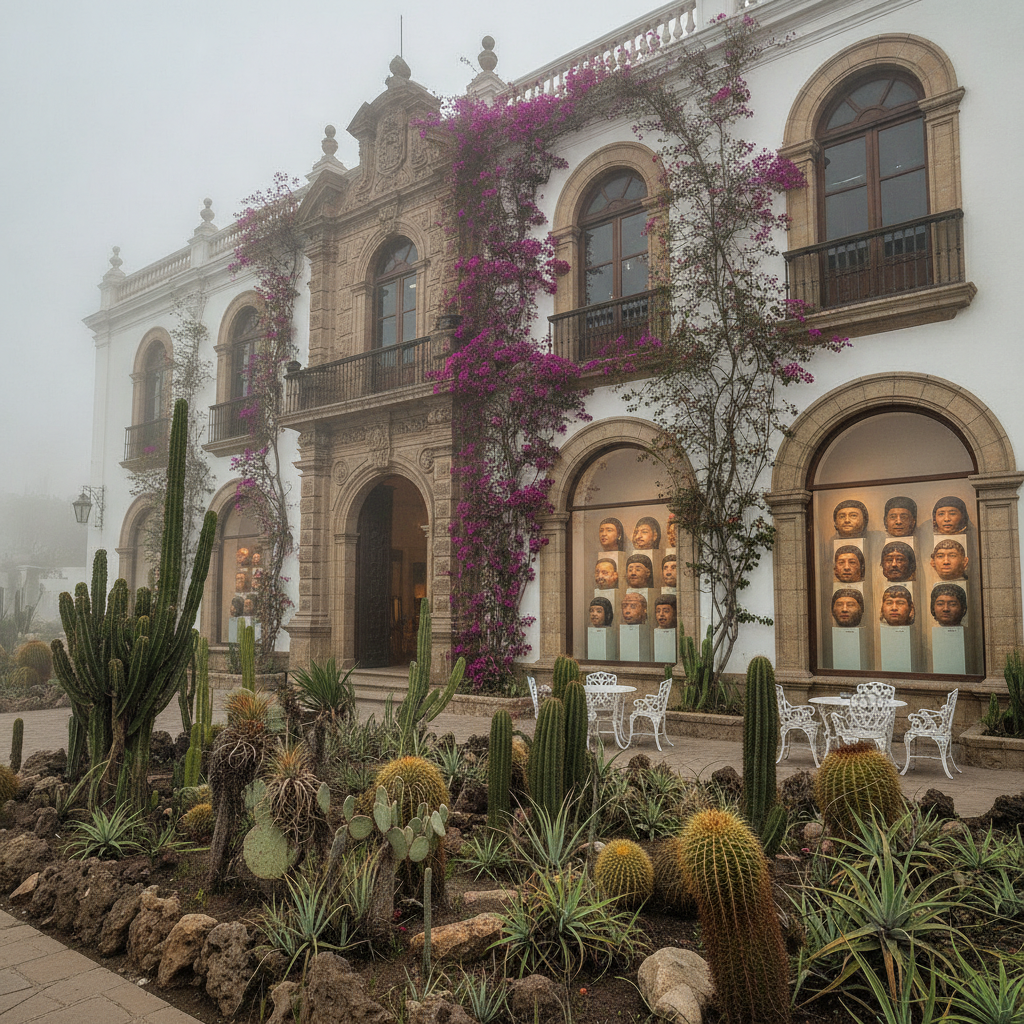
Museo Larco e le Collezioni d'Arte Precolombiana di Lima
The Museo Larco (the private museum of pre-Columbian art in the Pueblo Libre district of Lima — the finest pre-Columbian art museum in the world, with a collection of 45,000 objects spanning 4,000 years of Peruvian civilizations) is the essential museum for understanding the extraordinary artistic and cultural achievements of the ancient Andean civilizations that preceded the Incas — the Moche, the Chimú, the Wari, the Tiwanaku, and dozens of other cultures.
- 1
Larco Museum — 5,000 Years of Peruvian Civilization in a Viceregal Mansion
The Museo Larco (Bolívar, Pueblo Libre, 1926 collection, building 18th-century Viceregal mansion) houses 45,000 pre-Columbian artefacts in a privately founded collection — the Mochica portrait-head ceramics (200–800 AD, realistic individual faces modelled in clay, the finest portraiture in pre-Columbian Americas) and the 2,000-piece gold and silver gallery are the most significant collections; entry S/45; the museum garden café serves Peruvian food.
- 2
Erotic Pottery Gallery — The Storage Room That Became a Phenomenon
The Larco Museum's 'erotic pottery' storage room (a secure gallery displaying 2,000+ sexually explicit Mochica, Chimu, and Inca ceramics) was originally kept locked — when opened to the public in the 1990s, it became the museum's most visited section; the gallery illustrates that pre-Columbian Andean cultures depicted sexuality across their ceramic tradition without the concept of obscenity; the collection has been the subject of multiple academic studies.
- 3
Sipán — The Mochica Warrior Priest and His Gold
The 'Lord of Sipán' (Mochica culture, 100–300 AD, discovered 1987 at Huaca Rajada, Chiclayo) is represented in the Larco Museum's gold collection — the burial included a gold funerary mask, gold ear ornaments depicting a warrior figure, a sceptre tipped with a gold pyramid, and beaded pectorals of gold, silver, and turquoise; the discovery was called 'the most important archaeological find in the Western Hemisphere' by National Geographic.
- 4
Machu Picchu Context — Understanding the Inca State
The Larco Museum provides the context for understanding the Inca Empire (Tawantinsuyu, 1438–1533) before visiting Machu Picchu — the Inca administrative system (no writing; information recorded on quipu knotted cords), the road system (40,000 km of stone roads across the Andes), and the mit'a labour system (mandatory community service rather than taxation) are all documented in the museum's Andean pre-history section.
- 5
Pre-Columbian Timeline — 13,000 Years of Andean Culture
Peru's pre-Columbian cultural sequence (from Caral, the oldest civilization in the Americas, 3000 BC, to the Inca conquest in 1438) is displayed in a continuous timeline at the Larco Museum — the Chavín (900 BC), Paracas (800 BC), Nazca (100 BC–800 AD), Mochica, Chimú (900–1470), and Inca cultures are each represented with objects from their peak periods; the collection allows a complete 5,000-year survey of Andean artistic achievement.
- 6
Museum Café Restaurant — Peruvian Cuisine in a Rose Garden
The Larco Museum Café (Museo Larco Restaurant, Tuesday–Sunday, noon–4pm) is set in the Viceregal garden — the menu (designed by Rafael Piqueras) features traditional Peruvian dishes using ingredients sourced from small producers: ceviche clásico (S/58), causa rellena (layered potato cake with avocado and seafood, S/45), and leche de tigre (tiger's milk, the ceviche marinade drunk as a hangover cure, S/28) in a formal garden setting.