Artigianato Marocchino — Concerie di Cuoio, Ceramica e Artigiani
Moroccan traditional crafts (the body of skills and techniques that has been practiced in Moroccan artisan workshops (the medersas (ateliers)) for centuries, representing one of the richest and most intact craft traditions in the world): the most important Moroccan crafts are: leather (the Moroccan leather industry, centred on the tanneries of Fez (the most famous, though Marrakech also has traditional tanneries), producing babouche (the Moroccan leather slipper), bags, belts, and decorative items), pottery (the traditional Moroccan painted pottery, particularly the distinctive black-on-white geometric designs of Salé and the multi-coloured painted pottery of Safi), and the zellij (the cut ceramic tilework that covers floors, walls, and fountains in traditional Moroccan architecture).
- 1
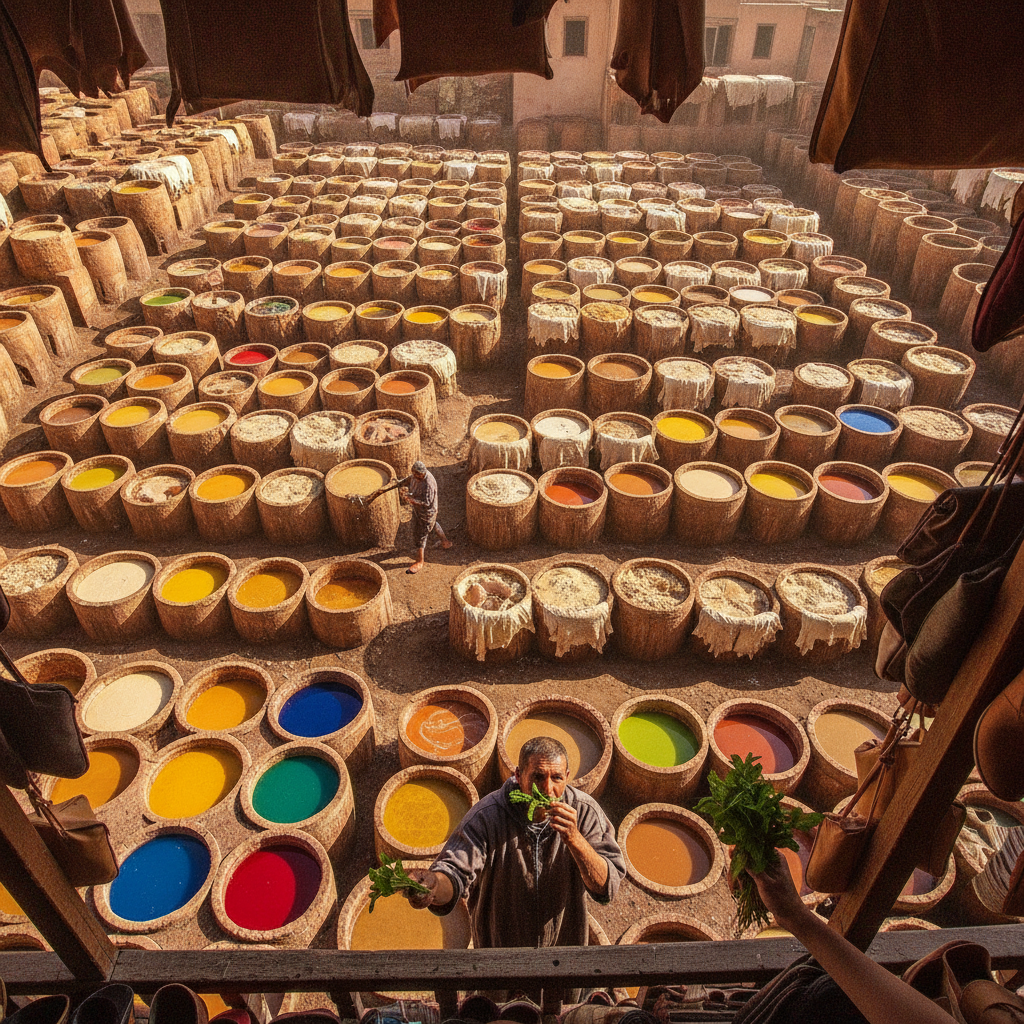
Chouara Tannery — Vats of Colour Since the 11th Century
The Chouara Tannery (Fez, 2 hours from Marrakech by CTM bus) and the smaller Marrakech tanneries (visible from leather shop rooftops near Bab Debbagh) operate using the same techniques since the 11th century — hides are soaked in limestone and pigeon dung (for pH control), then dyed in stone vats using natural dyes (saffron for yellow, poppy for red, mint for green, indigo for blue); the smell is extreme; mint sprigs are offered to visitors.
- 2
Marrakech Souks — 13 Specialized Craft Markets
The Marrakech medina's souks are organized by craft specialization — Souk Cherratine (leather goods), Souk Haddadine (blacksmiths), Souk Smarine (textiles), Souk Mouassine (luxury goods near the Mouassine Fountain), Souk des Babouches (leather slippers) — each represents a guild tradition unchanged since the medieval period; the souk labyrinth covers 8km of lanes; getting lost is part of the experience.
- 3
Zellige — Hand-Cut Tile Geometry at the Heart of Moroccan Art
Zellige (hand-cut glazed ceramic tiles) is the most labour-intensive Moroccan decorative art — each tile is individually cut from a large glazed slab using a mandil (iron chisel) and set face-down in plaster according to geometric patterns derived from Islamic mathematics (12-fold, 8-fold, and star geometries); a skilled zellige master (maâlem) cuts 300–400 pieces per day; the best artisans work in Fez; Marrakech's medina displays zellige in every mosque and palace.
- 4
Moucharabieh — Carved Cedarwood Lattice Screen
Moucharabieh (Arabic: mashrabiya) screens (carved cedarwood lattice panels that filter light, provide privacy, and ventilate rooms in Islamic architecture) are the most technically demanding Moroccan woodwork — the finest screens (the mashrabiya on the Medersa Ben Youssef in Marrakech, 1565) have individual turned wood pieces as small as a pencil diameter assembled without glue or nails; modern craftsmen in the Bab Doukkala area produce 1m² screens in 40+ working hours.
- 5
Henna Art — Fatiha's Ladies on Djemaa el-Fna
Henna application (temporary skin painting with natural henna paste, the dried leaf of the Lawsonia inermis plant) is a Moroccan tradition used for celebrations — professional henna artists (all female, traditional practice) at Djemaa el-Fna offer hand and foot designs in geometric Moroccan patterns, Indian Mughal patterns, or free-form floral designs; prices start at 30 DH for a small design; the colour deepens from orange to dark brown over 48 hours.
- 6
Artisan Training Schools — INDH and Traditional Craft Revival
The Moroccan government's INDH (National Initiative for Human Development) funds artisan training programs in traditional crafts at risk of disappearing — zellige, moucharabieh, and tadelakt apprenticeships (3–5 years, stipend-supported) are run from the École des Arts et Métiers in Casablanca and the Maison de l'Artisan network; the programs specifically recruit from rural Berber communities whose traditional craft knowledge was being lost to urban migration.