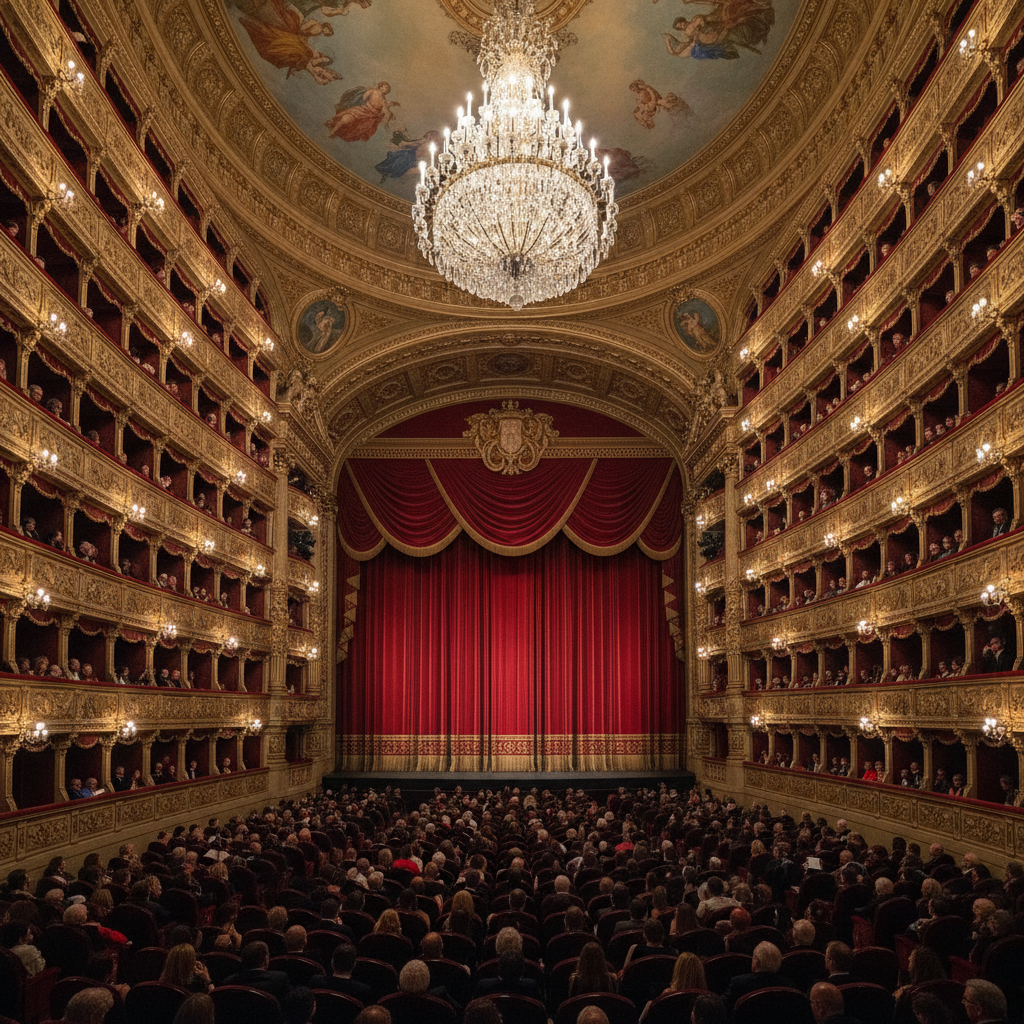
Teatro alla Scala — Il Più Grande Teatro d'Opera del Mondo
The Teatro alla Scala (La Scala, Piazza della Scala, the opera house built 1776-1778 by Giuseppe Piermarini for Maria Theresa of Austria and inaugurated in August 1778 with a performance of Antonio Salieri's 'Europa riconosciuta') is the most important and most celebrated opera house in the world — the institution where the careers of Verdi, Puccini, Toscanini, Callas, and virtually every major singer and conductor of the 19th and 20th centuries were made and defined.
- 1
La Scala — The World's Most Prestigious Opera House
Teatro alla Scala (Piazza della Scala, 1778, Giuseppe Piermarini architect, capacity 2,015) is consistently ranked the world's premier opera house — its acoustic properties (the horseshoe-shaped auditorium with six tiers of boxes) were designed without electrical amplification in mind; the opening night of a new Scala production (December 7, Sant'Ambrogio, Milan's patron saint feast day) is Italy's most anticipated cultural event; standing room (loggione, $12) is available for same-day purchase.
- 2
The Loggione — Opera's Fiercest Critics
The loggione (the top gallery, standing room, capacity 200) of La Scala houses 'loggionisti' — the most informed and most feared opera audience in the world; loggionisti have booed Luciano Pavarotti off stage (Trovatore, 1975) and whistled Roberto Alagna from the stage mid-performance (Aida, 2006); they have also given the longest standing ovations in the house's history; their judgments are considered more authoritative than any press critic.
- 3
Museo Teatrale alla Scala — 200 Years of Opera History
The Museo Teatrale alla Scala (Piazza della Scala, entrance via the theatre lobby) houses the definitive collection of Italian opera history — Verdi's writing desk, the conducting batons of Toscanini and Karajan, portraits of all major singers from the 18th century, costume designs by Fortuny and Prada, and the world's most complete collection of opera libretto first editions (6,000+ volumes); the museum is often included in the Scala guided tour (€9); the theatre itself is occasionally accessible for daytime tours.
- 4
Puccini's Milan — The Risorgimento Generation
Giacomo Puccini (1858–1924) composed La Bohème (1896), Tosca (1900), Madama Butterfly (1904), and Turandot (unfinished, 1926) — his relationship with La Scala was complicated; the initial premiere of Madama Butterfly at Scala was the most spectacular failure in opera history (the audience booed from the overture); the Ricordi music publishing house archive (Via Berchet, now the Museo Ricordi, free entry) documents the entire history of Puccini's relationship with the house that published all his works.
- 5
Aperitivo at Marchesi Alla Scala — 1824 Pasticceria
Marchesi 1824 (the historic Milanese pastry shop now with a location in the Galleria Vittorio Emanuele II, adjacent to La Scala) serves aperitivo in the pasticceria tradition — Campari Soda, Negroni Sbagliato (with Prosecco), and Aperol Spritz alongside the house's most famous confections (la torta di noci, the panettone alla Marchesi, and the cannoncini) in the most elegant aperitivo setting in central Milan; glass of prosecco + one cornetto = €12.
- 6
Galleria Vittorio Emanuele II — Milan's Cathedral of Commerce
The Galleria Vittorio Emanuele II (1867, Giuseppe Mengoni, iron-and-glass barrel vault covering a cruciform arcade) connects Piazza del Duomo and Piazza della Scala — the Galleria's four historic tenants (Prada flagship, Louis Vuitton, McDonald's serving saffron risotto, and Marchesi pasticceria) represent the entire spectrum of Milanese consumer culture; the octagonal central dome (47m high) has recently been restored to its original gilt finish; a tradition of spinning on the bull's testicles mosaic allegedly brings good luck.