Il Villaggio Gay di Montréal, il Festival Pride e la Cultura LGBTQ+
Montreal's Gay Village (Le Village — the stretch of Rue Sainte-Catherine between Rue Amherst and Rue Papineau in the Centre-Sud neighbourhood — the largest and most vibrant gay neighbourhood in Canada, and one of the most internationally celebrated LGBTQ+ cultural districts in the world) and the Fierté Montreal Pride Festival (the annual LGBTQ+ Pride festival held in late July and early August — the largest Pride festival in francophone North America and consistently ranked among the top 5 Pride festivals in the world) define Montreal's extraordinary LGBTQ+ culture.
- 1
The Village — Sainte-Catherine Street East's Rainbow Mile
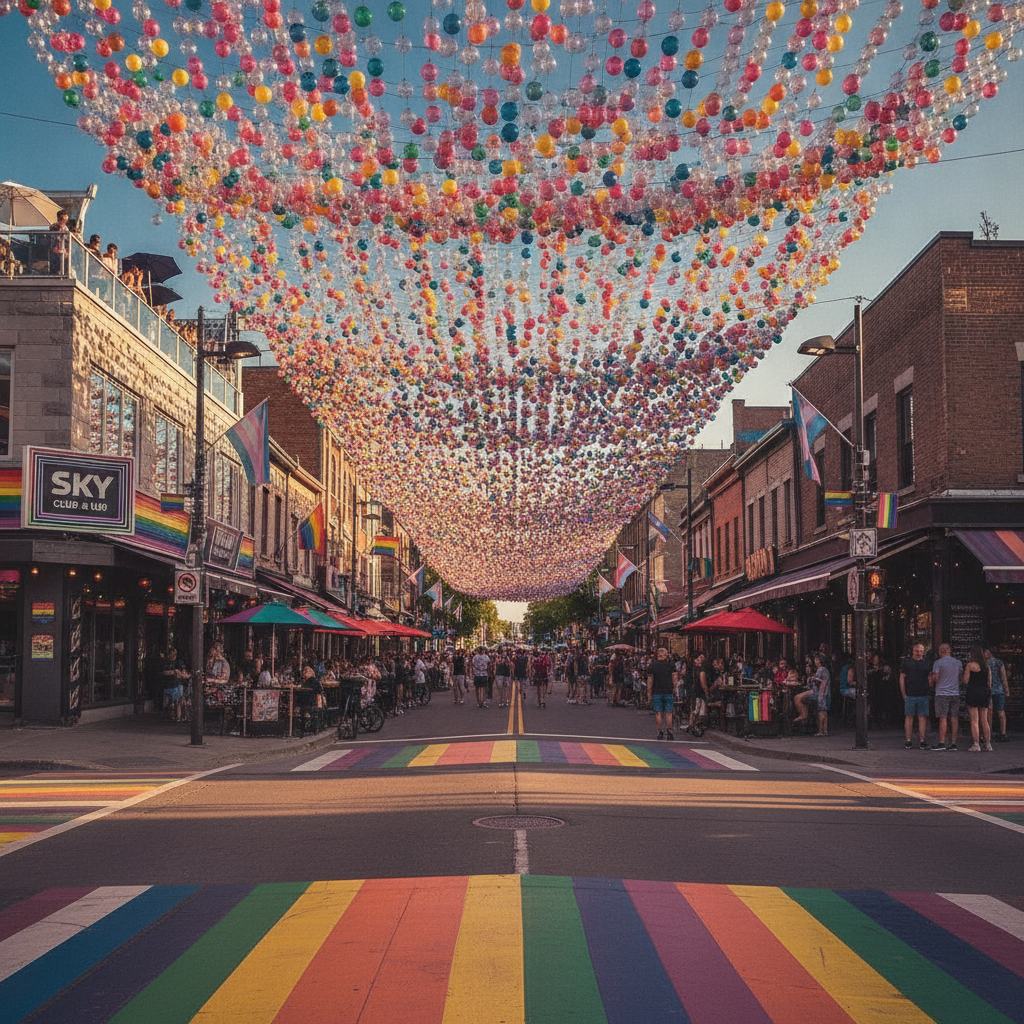
The Village (le Village, Sainte-Catherine Est between Saint-Hubert and Papineau, the largest gay village in the world by square footage) was established in the 1980s when real estate prices driven by gay bar clusters made the neighbourhood self-sustaining — the pedestrianized Sainte-Catherine Est (closed to cars May–September) is lined with 25+ bars, restaurants, and community organizations; the iconic ball sculptures by Claude Cormier (2011, 185,000 pink, red, and fuchsia balls overhead) are Montreal's most photographed public art installation.
- 2
Divers/Cité and Fierté Montréal Pride — 2 Million People
Fierté Montréal Pride (August, 11 days) is the largest Pride festival in the French-speaking world — the outdoor concert on the closing Sunday draws 250,000+ at the Place des Arts; the 2007 merger of the original Divers/Cité festival and Fierté Montréal created the largest community mobilization in Quebec history; the festival's multilingual character (English, French, Spanish, and 20+ community languages) reflects Montreal's status as the most cosmopolitan Francophone city in the Americas.
- 3
LGBTQ History in Montreal — The 1969 Decriminalization Turning Point
Montreal's LGBTQ history is inseparable from Pierre Trudeau's 1969 Criminal Law Amendment Act ('the state has no place in the bedrooms of the nation') decriminalizing homosexuality in Canada — within 5 years, the first gay bars on Sainte-Catherine Est had opened; the Village grew rapidly through the 1970s–80s AIDS crisis (which devastated the community but produced the strongest community health networks in Canada); the McCord Museum's permanent collection documents the community's political and cultural history.
- 4
Cabaret Mado — Drag Culture and Bilingual Performance
Cabaret Mado (1115 Sainte-Catherine Est, the longest-running drag venue in Canada, 1994) is the anchor entertainment institution of the Village — the house performer Mado Lamotte (a Montreal drag institution) performs French and English cabaret shows; the venue's bilingual shows reflect the Village's unusual position within a predominantly French city that maintains equal access for English-speakers; shows run Thursday–Sunday from 10pm; the patio on Sainte-Catherine is one of the liveliest in the Village.
- 5
Complexe Sky — The Largest Gay Venue in Canada
Complexe Sky (1474 Sainte-Catherine Est) is a multi-level entertainment complex covering an entire city block — the Cabaret (live performances), the rooftop terrace bar (the most popular summer outdoor space in the Village), the indoor dance floor (1,200 capacity), and the patio café (open year-round) serve different crowds simultaneously; the rooftop party (Sky Sundays, 3pm–late, dress code: swimwear or very little) is Montreal's signature summer gay event.
- 6
Queer Art in Montreal — MUTEK and DHC/ART
Montreal's LGBTQ cultural institutions extend beyond nightlife — DHC/ART Foundation for Contemporary Art (Vieux-Montréal) has historically prioritized queer artists; MUTEK (August, 50,000 attendees, international electronic music and digital art festival) has maintained prominent trans, nonbinary, and queer artist representation since its founding in 2000; the Centre des arts actuels Skol (collaborative gallery) regularly programs exhibitions addressing queer identity, race, and Montreal's specific multicultural history.