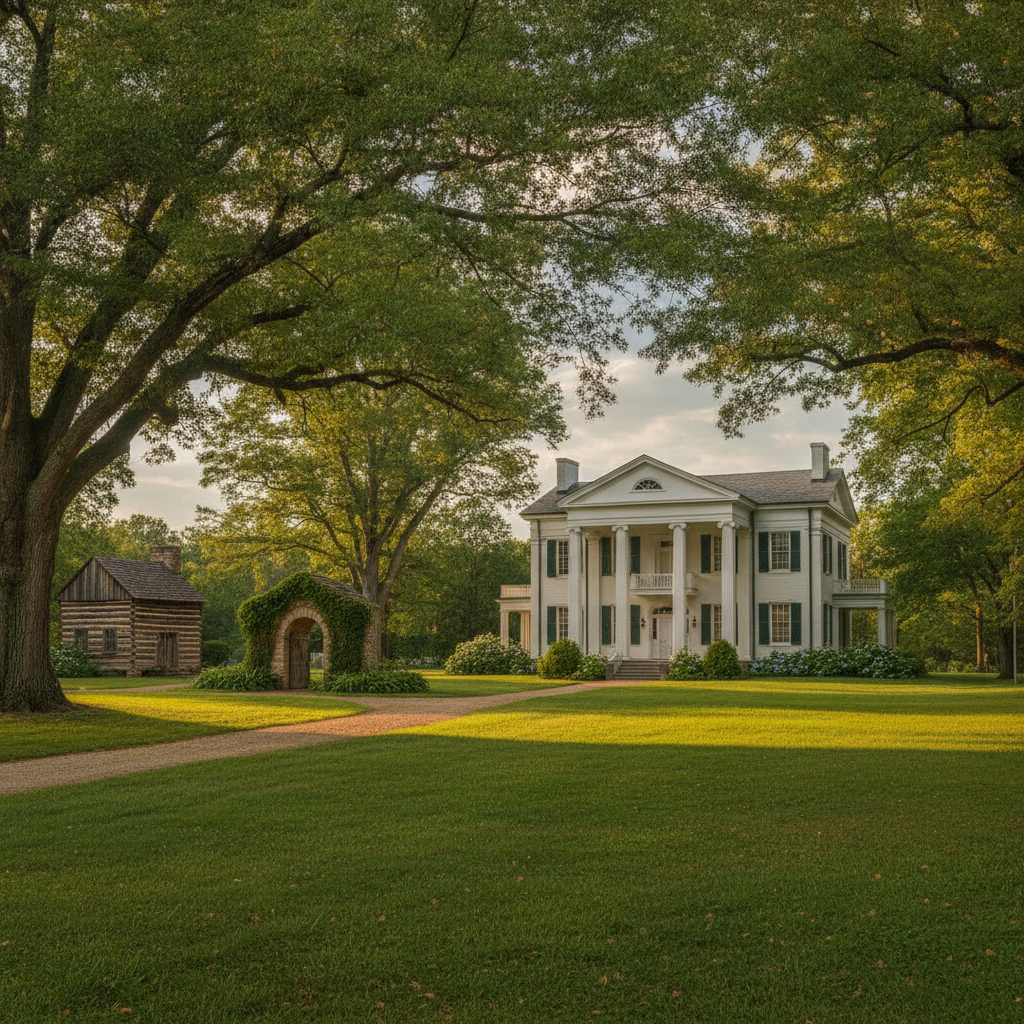
Piantagione Belle Meade, Storia della Guerra Civile e Patrimonio del Tennessee
Belle Meade Plantation (5025 Harding Pike, Nashville — the antebellum plantation established 1807 by John Harding, expanded into one of the most celebrated Thoroughbred horse breeding farms in the world by his son William Giles Harding (1808-1886) and his son-in-law William Hicks Jackson (1835-1903)) and Nashville's Civil War history define Tennessee's complex heritage.
- 1
Belle Meade Historic Site — The Thoroughbred Horse Farm
Belle Meade Plantation (5025 Harding Pike, established 1807, the mansion house 1853, now a museum and winery) was the most celebrated thoroughbred horse breeding farm in post-Civil War America — Bonnie Scotland (1853) and Enquirer (1867), both bred at Belle Meade, produced racing dynasties; the Iroquois (1876 Kentucky Derby winner, the first American-born horse to win the Epsom Derby) was bred here; the plantation's enslaved population (137 people at peak) is documented in the 'Lives Bound Together' exhibition.
- 2
Belle Meade Mansion — Greek Revival in Nashville's Wealthiest Suburb
The Belle Meade Plantation mansion (1853, William Strickland design attribution, 6-column portico) was one of the grandest private houses in the antebellum South — the mansion survived the Civil War (Union troops occupied it from 1862, General James Wilson used it as headquarters in 1864) because it was too large and well-situated to destroy; the current restoration includes the slave cabin (a rare surviving antebellum slave dwelling), the carriage house (26 horse-drawn vehicles), and the stone gatehouse; guided tours ($22, 2 hours) include the 'Reconstructing History' component.
- 3
Cheekwood vs Belle Meade — Two Models of Nashville's Elite Past
Nashville's elite residential history is concentrated in the Belle Meade neighbourhood (west of downtown, the suburb developed 1880–1930 for wealthy families) where Belle Meade Plantation and Cheekwood Estate represent two eras of wealth — plantation agriculture (pre-Civil War cotton and horses) vs industrial commerce (Maxwell House coffee, 1920s); the contrast between these two institutions and their different approaches to historical memory (slavery at Belle Meade, modernist curation at Cheekwood) is Nashville's most interesting cultural conversation.
- 4
Tennessee Agricultural Museum — The State's Farming Heritage
The Tennessee Agricultural Museum (Ellington Agricultural Center, Brentwood Road, free admission) is a non-commercial museum documenting Tennessee's farming history from Cherokee agricultural practices through 20th-century mechanization — the working farm demonstrations (heritage breed livestock, heirloom vegetable gardens, a working gristmill), the farm equipment collection (the largest collection of 19th-century horse-drawn implements in Tennessee), and the agricultural products exhibition make it the most authentic rural heritage site near Nashville.
- 5
Nashville's Civil Rights History — Jefferson Street Corridor
Jefferson Street (Nashville's historic African American commercial corridor, 1870s–1960s) was the centre of Black Nashville's economic and cultural life before urban renewal — Fisk University (17th Avenue North, founded 1866 by the American Missionary Association) and Tennessee State University (John Merritt Boulevard, HBCU, founded 1912) anchor the corridor; the Nashville Student Movement's 1960 lunch counter sit-ins (Woolworth's, 5th Avenue downtown) are the most significant civil rights actions in Tennessee history; the Civil Rights Room at the Nashville Public Library documents this history.
- 6
Percy Warner Park and the Nashville Hunt Country
Percy Warner Park (7311 Tennessee 100, Belle Meade adjacent, 3,162 acres, 1927, designed by Bryant Fleming) is the largest municipal park in Nashville — the bridle trails (30 miles), the steeplechase course (Iroquois Steeplechase, held annually since 1941, the oldest continuous sporting event in Nashville), and the stone gatehouse (a Public Works Administration structure) make it the most historically layered park in the city; the adjacent Edwin Warner Park (2,648 acres) extends the green corridor to Bellevue.