Jazz Fest di New Orleans, Blues e il Festival Musicale più Grande del Mondo
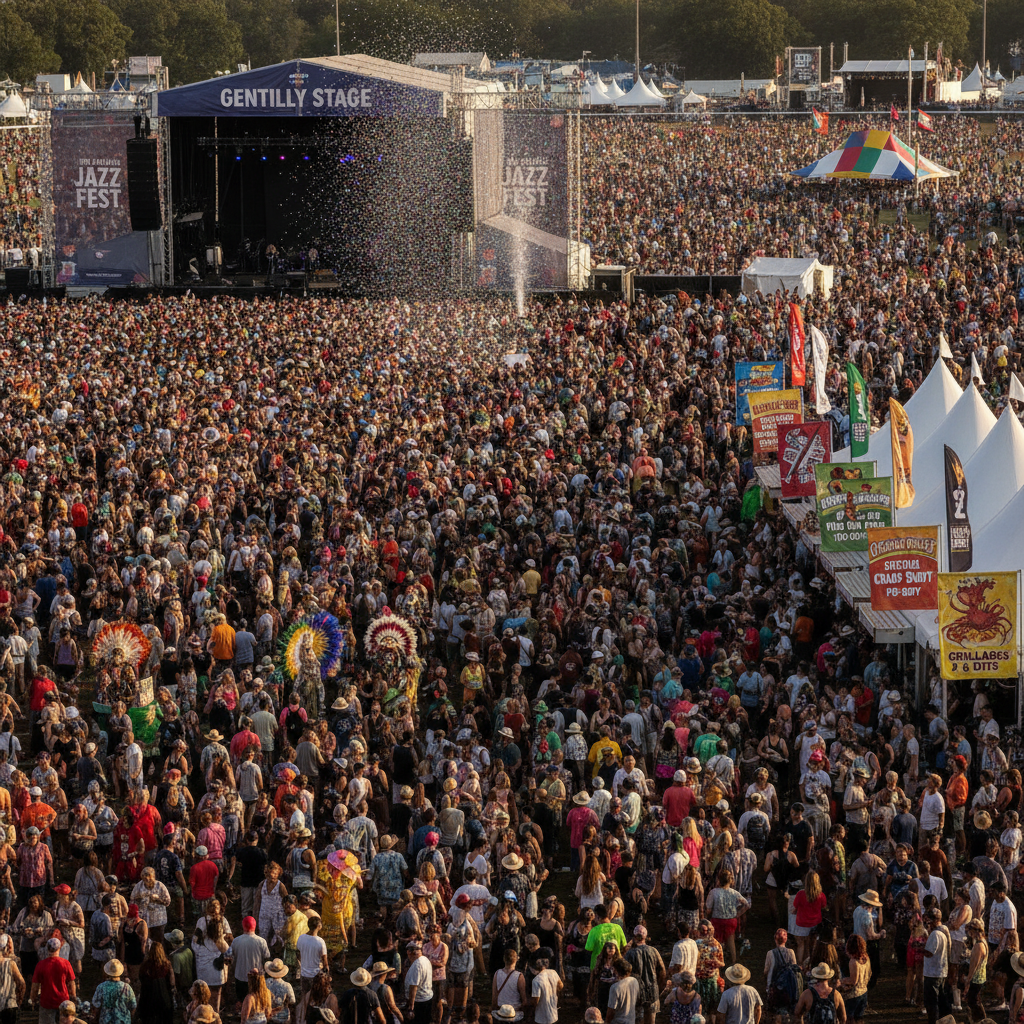
New Orleans Jazz & Heritage Festival (the annual festival held at the Fair Grounds Race Course in New Orleans during the last weekend of April and the first weekend of May — the most celebrated music festival in the United States after Coachella and the most musically diverse): the Jazz Fest (as it is universally known) has been held continuously since 1970 (when it was founded by George Wein, the jazz impresario who also founded the Newport Jazz Festival and the New Orleans Jazz National Historical Park) and has grown from a small local event to one of the most important music festivals in the world.
- 1
Frenchmen Street — Where New Orleans Actually Goes for Music
Frenchmen Street (Faubourg Marigny, 2 blocks downriver from the French Quarter, 3–4 blocks of music clubs) is the authentic New Orleans live music street — the clubs (Spotted Cat Music Club, Maison, d.b.a., the Snug Harbor jazz club) feature local musicians in multiple genres (traditional jazz, modern jazz, R&B, funk, brass band) from 8pm until 4am, 7 nights per week; the outdoor Frenchmen Art Market operates Thursday–Sunday; cover charges are $5–10 or tips-only; far less expensive and more authentic than Bourbon Street.
- 2
New Orleans Jazz & Heritage Festival — The Local's Festival
The New Orleans Jazz & Heritage Festival (Fair Grounds Race Course, last weekend of April and first weekend of May, two long weekends, 2023 attendance 475,000) is the most musically diverse festival in America — the 12 stages cover traditional jazz, contemporary jazz, gospel, Cajun, zydeco, blues, R&B, funk, rock, country, world music, and Afrobeat simultaneously; the local food area (100+ Louisiana food vendors) is as important as the music; 90% of performing artists are from Louisiana; single-day tickets $95–125.
- 3
Preservation Hall — Traditional Jazz Since 1961
Preservation Hall (726 St Peter Street, French Quarter, 1961) was founded specifically to support aging traditional New Orleans jazz musicians who had no regular performance venue — the hall (capacity 100, standing room, no air conditioning, no cocktails — 2 drink minimum beer and water) presents traditional jazz in the format it was performed in the 1930s–40s; the Preservation Hall Jazz Band (the house ensemble) has recorded 15 albums and tours internationally; shows at 8, 9, and 10pm ($20 general, $35 reserved, $50 Big Chief front row).
- 4
Tipitina's — New Orleans Rock and R&B Since 1977
Tipitina's (501 Napoleon Avenue, Uptown, 1977, named after Professor Longhair's song 'Tipitina') is the home venue of New Orleans funk and R&B — the Neville Brothers, Dr. John, the Meters, and the Radiators all played Tipitina's as their home base; the venue (capacity 800) books local and national acts 5 nights per week; the Tipitina's Foundation (non-profit arm) provides instruments and lessons to New Orleans school music programs; the 'Sunday Fête' (traditional brass band or jazz, Sunday evenings) is the most affordable and authentic show.
- 5
Zydeco and Cajun Music — The Southwest Louisiana Connection
Zydeco (accordion-driven dance music of the Black Creole community of southwest Louisiana, combining blues, R&B, and traditional French Louisiana music) and Cajun music (French Acadian descendant folk music) come from Lafayette, 2 hours west of New Orleans — the Rock 'N' Bowl (500 S Carrollton Avenue, New Orleans, bowling alley converted to music venue 1988) is the best place to hear both genres in New Orleans; the Maple Leaf Bar (Carrollton, Tuesday Rebirth Brass Band show, most famous weekly gig in New Orleans) is the most consistent live music booking in the city.
- 6
Second Line Parades — Every Sunday, All Year
Second-line parades (brass band processions through New Orleans neighbourhoods, organized by Social Aid and Pleasure Clubs — mutual aid societies founded after the Civil War) happen every Sunday afternoon from late September through late May in different neighbourhoods — the format is: the brass band leads the first line; the community follows as the second line, dancing with decorated umbrellas and handkerchiefs; the Treme Sidewalk Steppers, the Dumaine Street Gang, and the Big Nine are the most established clubs; parades are free and public; schedule at neworleanssociety.org.