Gita a Nara — Cervi Sacri, Todai-ji e i più Antichi Templi del Giappone
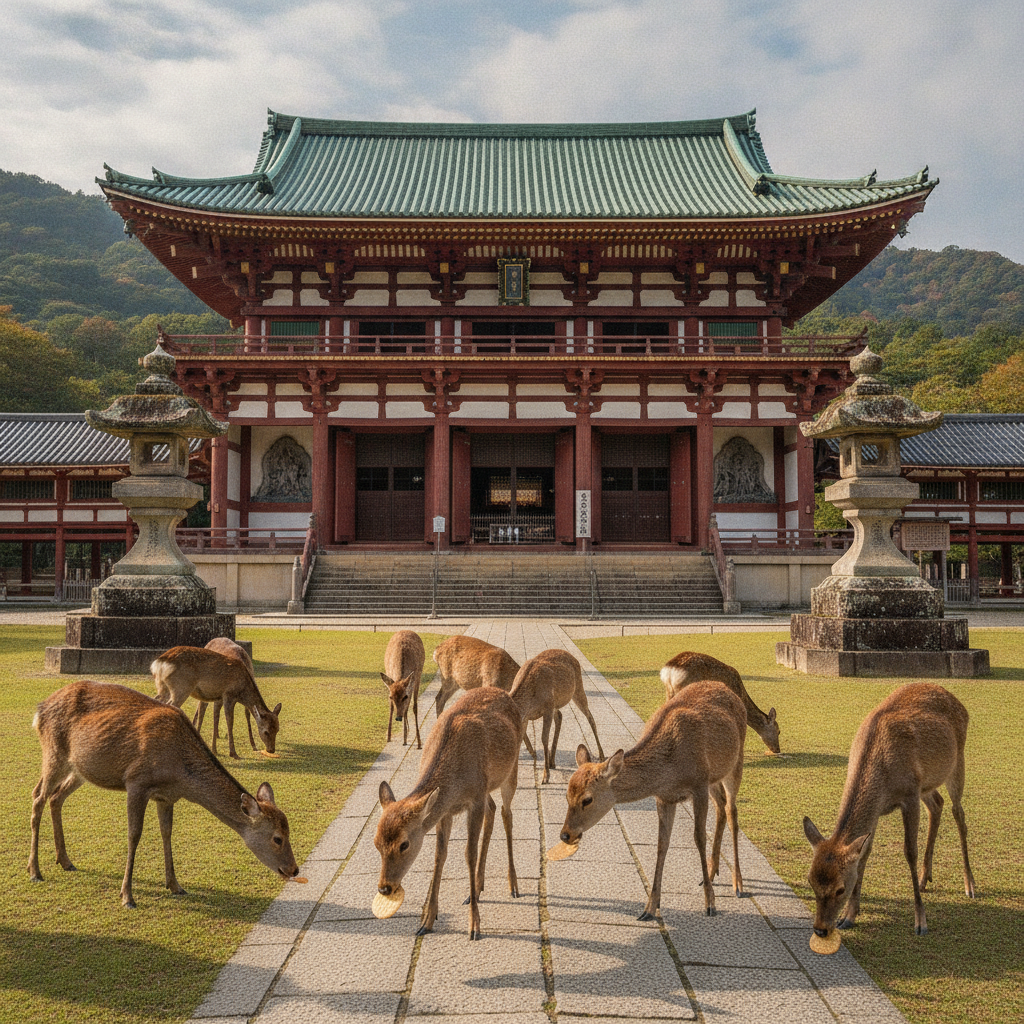
Nara (奈良 — the former capital of Japan (710-784), 45 minutes from Osaka by Kintetsu line or JR Yamatoji Line — the oldest imperial capital in Japan and one of the most important UNESCO World Heritage sites in the country (8 monuments designated in 1998)): Nara is famous for the free-roaming sika deer (Cervus nippon) of Nara Park (approximately 1,200 deer that wander freely through the park and approach visitors for the shika senbei (the deer crackers sold at park stalls) — the deer have been considered sacred messengers of the Kasuga Taisha shrine since the Nara period (710-784) and are designated a Natural Monument of Japan.
- 1
Nara Deer Park — 1,300 Free-Roaming Sacred Deer
Nara Park (360 hectares, adjacent to central Nara, 45 minutes from Osaka by Kintetsu Express, ¥680) is home to approximately 1,300 sika deer (shika) who roam freely through the park and surrounding streets — the deer (considered sacred messengers of the Shinto gods since the founding of Kasuga Taisha shrine) have habituated completely to humans and will aggressively seek the deer crackers (shika senbei, ¥200 for a bunch) sold by park vendors; the deer bow back when given crackers, a behavior they have developed independently.
- 2
Tōdai-ji Temple — The World's Largest Wooden Building
Tōdai-ji Temple (406-1 Zoshicho, Nara, founded 728 CE, UNESCO) houses the Daibutsuden (Great Buddha Hall, 57m wide × 50m deep × 48m high — the world's largest wooden building) which contains the Daibutsu (Great Buddha, 15m tall bronze Vairocana Buddha, 749 CE, 500 tonnes of bronze) — the current building (1709) is 30% smaller than the original structure destroyed in 1180 and 1567; the hole in the base of one of the interior pillars (the same size as the Daibutsu's nostril) is believed to grant wisdom when crawled through.
- 3
Kasuga Taisha — 3,000 Lanterns in the Forest
Kasuga Taisha (160 Kasugano-cho, Nara, founded 768 CE, UNESCO) is Nara's most important Shinto shrine — 3,000 bronze and stone lanterns donated by worshippers line the approach paths and fill the shrine corridors; the lanterns are lit twice a year (Setsubun, February 3; and Obon, August 14–15) for the Mantoro festival, when the forest lantern paths create an otherworldly atmosphere; the shrine's sacred deer (under the protection of the Fujiwara clan since the 8th century) are the ancestors of the park deer.
- 4
Hōryū-ji Temple — The World's Oldest Surviving Wooden Structure
Hōryū-ji Temple (Ikaruga, 11km southwest of Nara, JR train 25 minutes, UNESCO) contains the world's oldest surviving wooden buildings (the Western Precinct, 607 CE, the 5-storey pagoda and Kondo main hall) — the Kondo contains some of the finest 7th-century Buddhist sculpture in Japan (the Shaka Triad, 623 CE, by Tori Busshi, the first identified Japanese sculptor); the temple was founded by Prince Shotoku, the first Buddhist patron in Japan; the museum (¥300 additional) contains 48 gilt-bronze Buddhas in the treasure collection.
- 5
Yoshino Mountain — Japan's Most Famous Cherry Blossom Site
Yoshino Mountain (Yoshino-cho, Nara Prefecture, 2 hours from Osaka by Kintetsu Yoshino Line, UNESCO as part of the Sacred Sites and Pilgrimage Routes in the Kii Mountain Range) has 30,000 cherry trees planted on the mountain slopes since the 7th century — the blooming (early April) begins in the valley and progresses up the mountain over 2 weeks, giving the unique experience of cherry blossoms at different stages simultaneously; the mountain is the setting for numerous Japanese poems, plays, and historical events.
- 6
Nara Craft Tradition — Ink, Brushes, and Deer-Horn Carving
Nara is associated with three craft traditions: Nara Sumi (ink sticks, produced in Nara since the 7th century when the craft arrived from China, Kobaien shop on Sanjodori has operated since 1577), Nara Fude (calligraphy brushes, the most refined in Japan), and Akahada-yaki (unglazed pottery with characteristic reddish clay), and Shika-no-Tsuno Saiku (carving from shed deer antlers — combs, buttons, and decorative objects made by Nara craftsmen using the annually collected shed antlers from park deer).