Cucina Norvegese — Smørbrød, Aquavit e la Nuova Cucina di Oslo
Norwegian food culture in Oslo ranges from the traditional (smørbrød — the Norwegian open-face sandwich, gravlaks (cured salmon), klippfisk (dried salt cod), and the Christmas foods (pinnekjøtt, lutefisk)) to the cutting edge of New Nordic cuisine: Oslo has more Michelin-starred restaurants per capita than any other Scandinavian city, with Maaemo (the only three-Michelin-star restaurant in Norway, opened 2010 by chef Esben Holmboe Bang) consistently ranked among the 50 best restaurants in the world.
- 1
Smørbrød — Open-Face Sandwiches as High Art
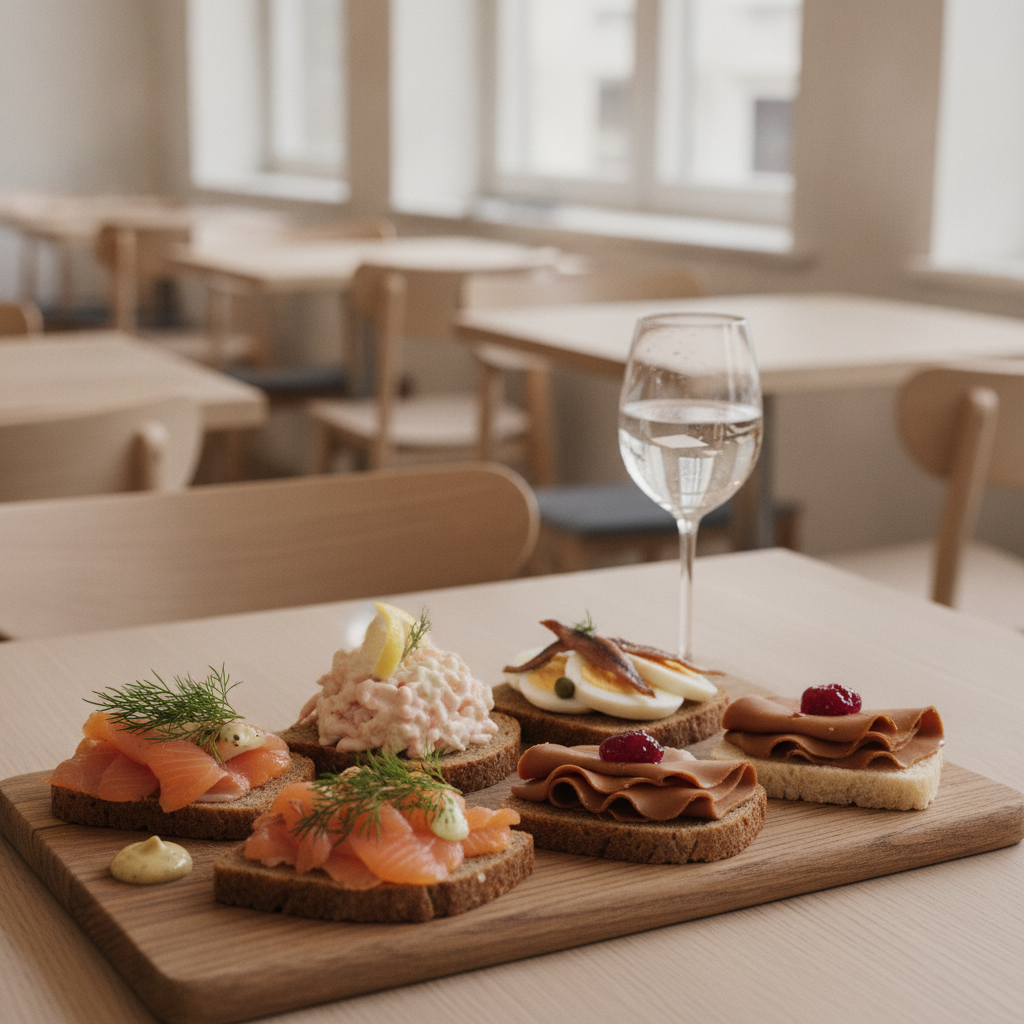
Smørbrød (Norwegian open-face sandwiches on rye bread — rúgbrauð — with toppings including gravlaks, rekesalat/prawn salad, egg and mayonnaise, cold roast beef, and the definitive brunost/Norwegian brown cheese) are the standard lunch format in Norway — the Theatercafeen (Stortingsgata 24-26, the Grand Hotel's brasserie, 1900, the most traditional European café in Oslo) serves the smørbrød tradition at its most refined; the Salmon Shop (Mathallen Oslo) does the finest gravlaks in the city.
- 2
Aquavit — Norway's National Spirit
Aquavit (akevitt, caraway-flavoured spirit, 38–45% alcohol, the national drink of Scandinavia) has a distinct Norwegian tradition (barrel-aging, often in ex-sherry casks, producing a smoother, sweeter product than Danish or Swedish styles) — Lysholm Linie Aquavit (unique product: the aquavit is loaded onto a ship and sails around the world — the equatorial heat and rolling motion are claimed to mature the spirit in ways impossible on land; the ship's journey is printed on each label); Gilde (the most common brand), Aalborg (the Danish brand most common in Norway), served chilled as a shot with beer.
- 3
Fisketorget Bergen — The Fish Market of Norway's Coastal Culture
The Fish Market (Fisketorget, Zachariasbryggen, Bergen harbour, the oldest fish market in Norway, daily 7am–11pm May–September) is the primary showcase of Norwegian seafood — fresh king crab (kongekrabbe, from the Barents Sea, sold live and cooked, NOK 350–500 for a claw), Norwegian salmon (farmed and wild), shrimp (Grønlandsreke, the cold-water shrimp, served with lemon and brown bread), and the Bergen fishermen's specialty (fishballs in white sauce, the comfort food of western Norway) are all available; tourist prices but authentic product.
- 4
Rakfisk and Other Norwegian Fermented Foods
Rakfisk (fermented rainbow trout or arctic char, traditionally prepared by salting and storing fish in barrels for 2–3 months, eaten raw on flatbread with sour cream and raw onion) is Norway's most notorious fermented food — the Valdres Rakfiskfestival (Fagernes, November) is the annual gathering where 40,000+ Norwegians eat rakfisk, drink aquavit, and celebrate a food that divides the country; the Norwegian equivalent of France's cheese culture, rakfisk requires an acquired taste that Norwegians are proud to cultivate.
- 5
Maaemo — Norway's Three Michelin Star Restaurant
Maaemo (Schweigaardsgate 15, Oslo, 3 Michelin stars since 2016, the only 3-star restaurant in Scandinavia outside Denmark, NOK 4,500 for the 20-course tasting menu) is the culmination of Norway's New Nordic cuisine movement — the menu changes weekly based on seasonal Norwegian ingredients (lichen, seaweed, fjord seafood, Sami reindeer products) and the cooking technique developed by chef Esben Holmboe Bang combines traditional Norwegian preservation methods (smoking, pickling, fermentation) with modern precision; reservations open 3 months ahead.
- 6
Frogner Neighborhood — Oslo's Food and Restaurant District
Frogner (Oslo's most affluent residential neighbourhood, west of the city centre, Vigeland Park-adjacent) has the highest concentration of quality restaurants in Oslo — the Bygdøy Allé corridor contains restaurants ranging from Galt (modern Norwegian tasting menu) to Arakataka (the Bergen chef's Oslo outpost, Norwegian coastal cooking) and the Colonnade wine bar; the neighbourhood's Saturday food market (Frogner Park gates, summer months) features local organic produce; the Aker Brygge waterfront restaurant row is the summer alternative.