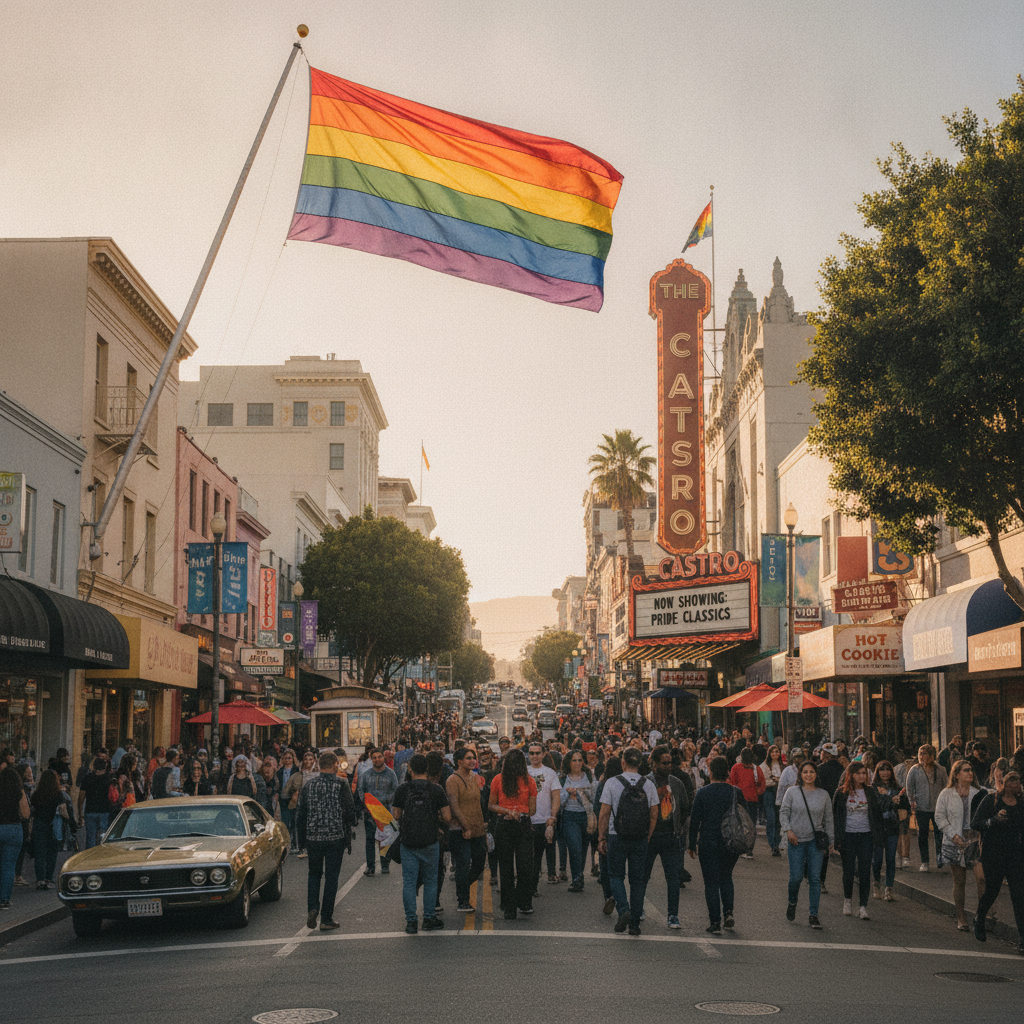
The Castro, Twin Peaks e la Storia LGBTQ+ di San Francisco
The Castro — the neighbourhood in west-central San Francisco that became, from the late 1960s onwards, the most famous and historically significant LGBTQ+ neighbourhood in the world — is the site where the modern American gay rights movement took political form, where Harvey Milk became the first openly gay person elected to public office in California (as San Francisco city supervisor in 1977), and where the AIDS epidemic of the 1980s-90s devastated a generation of the neighbourhood's residents.
- 1
The Castro — The Most Important Gay Neighbourhood in American History
The Castro (the neighbourhood centered on Castro Street between Market and 19th Streets) is the geographic origin of American LGBTQ+ political power — Harvey Milk (1930–1978, 575 Castro Street Camera Shop, elected to San Francisco Board of Supervisors 1977, the first openly gay person elected to public office in California) was assassinated at City Hall along with Mayor George Moscone by Dan White (November 27, 1978); the Harvey Milk Civil Rights Academy (the elementary school named in his honor) and the GLBT Historical Society Museum (4127 18th Street, $5 suggested) are the principal memorial sites.
- 2
Twin Peaks Bar — The First Gay Bar with Plate Glass Windows
Twin Peaks Tavern (401 Castro Street, 1935, refurbished 1972 — the first gay bar in the US to have large plate glass windows allowing the interior to be visible from the street) was a deliberate political statement — before 1972, gay bars were uniformly opaque to the street, emphasizing the need for concealment; making the bar visible was an assertion of presence and normalcy; the bar is a historic landmark and is still operating; the adjacent Castro Theatre (1922, the finest surviving movie palace in San Francisco, the organ still plays before select screenings) is the neighbourhood's cultural anchor.
- 3
Twin Peaks Viewpoint — The 360° San Francisco Panorama
Twin Peaks (the two 282m hills at the geographic centre of San Francisco, accessible by Muni bus 37 from the Castro) are the finest elevated viewpoint in the city — the 360° view covers the entire Bay Area from Mount Tamalpais (north) through the Golden Gate and Bay Bridges to Mount Diablo (east) and the San Mateo Peninsula (south); the viewpoint is accessible by vehicle (Christmas Tree Point parking, free) and on foot (steep path from the bus stop); most dramatic at sunset and during summer fog when the city emerges from below a fog layer.
- 4
Noe Valley — The Family-Friendly Extension of the Castro
Noe Valley (south of the Castro, 24th Street commercial strip) is the neighbourhood where Castro-area residents move when they have children — the 24th Street corridor (Noe Valley's bookshops, cafes, bakeries, and toy stores) is the least-photographed and most genuinely livable commercial street in San Francisco; the Sanchez Community Garden (Sanchez and 26th, free) is the urban agriculture center; the Noe Valley Farmers Market (Saturday mornings, Noe Valley Town Square) is the most community-oriented market in the city; the neighbourhood's real estate (the most expensive per square foot in San Francisco) reflects its desirability.
- 5
Dolores Heights — The Victorian Showcase Above the Mission
Dolores Heights (the elevated residential area above Dolores Park, Sanchez Street between 20th and 24th) contains some of the finest intact Victorian residential architecture in San Francisco — the 1890s Italianate and Queen Anne houses on the Sanchez Street hill command views of the Bay and have never been divided into flats; the neighbourhood is less photographed than the Painted Ladies but architecturally superior; the staircase streets (Sanchez Street steps, the Liberty Street steps) are the most elegant pedestrian pathways in the city.
- 6
Harvey Milk Plaza — The Largest Rainbow Flag
Harvey Milk Plaza (Castro Street and Market Street, named 2009) marks the end of the Castro Metro station and the beginning of the Castro neighbourhood — the 50-foot rainbow flag pole (installed 1997, the largest permanent rainbow flag in the world) was dedicated on the 19th anniversary of Milk's assassination; the annual Castro Halloween Parade (October 31, up to 300,000 attendees, the largest free outdoor event in California) fills the streets of the Castro and Harvey Milk Plaza; the NAMES Project AIDS Memorial Quilt (stored at storage facility in Atlanta, displayed on the National Mall in Washington DC) originated in the Castro in 1987.