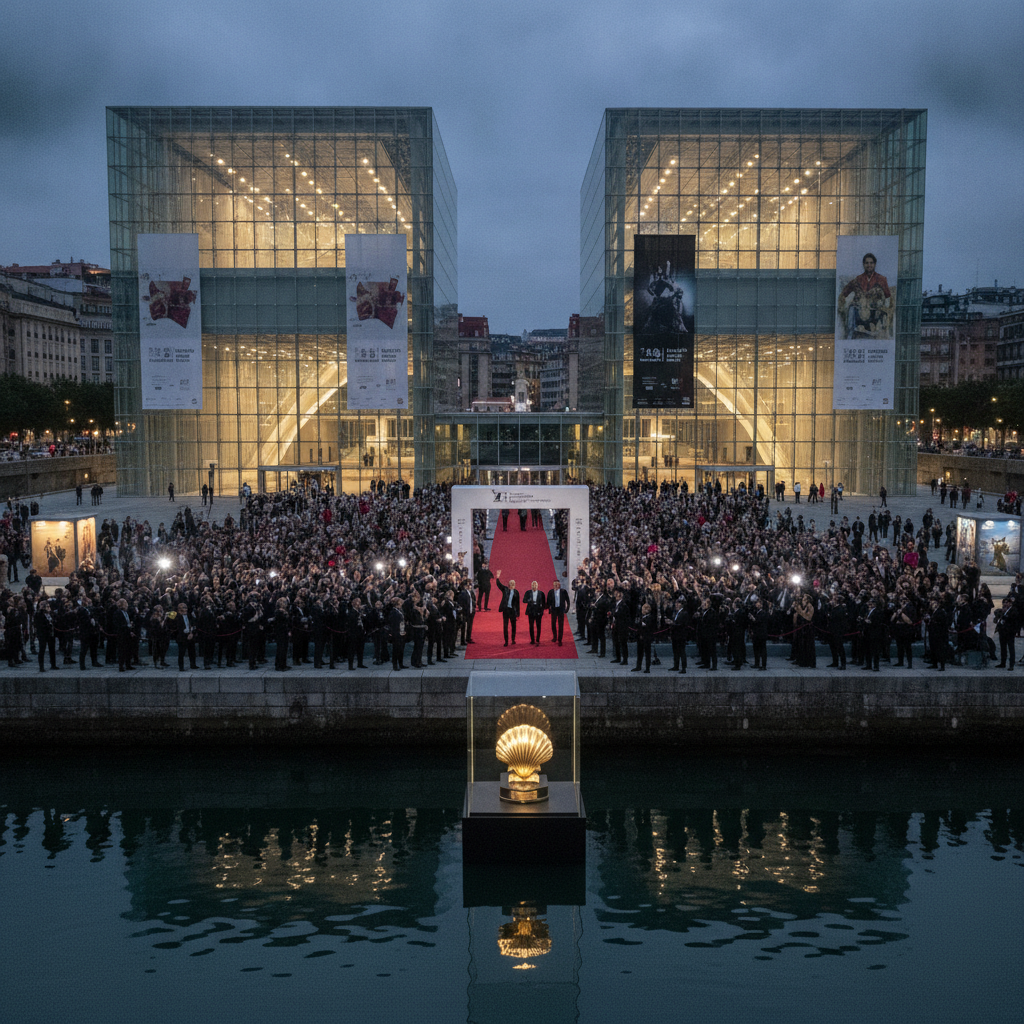
Festival del Cinema di San Sebastián, Arte e Vita Culturale
The San Sebastián International Film Festival (the 'Zinemaldia' — one of the 14 'A-category' film festivals in the world, held annually in the third week of September since 1953) and the broader arts and cultural life of San Sebastián (the Victoria Eugenia Theatre, the Tabakalera Contemporary Culture Centre, the San Sebastián Museum, and the Basque Contemporary Art Scene) make San Sebastián one of the most culturally rich cities of its size in Europe.
- 1
Donostia Award History — The Film Festival's Cultural Impact
The San Sebastián International Film Festival (Zinemaldia, September, 9 days, 1953) has shaped European cinema as much as Cannes or Venice for Spanish-language film — the Golden Shell (Concha de Oro, the main prize) has been awarded to Woody Allen (Interiors, 1978), Bernardo Bertolucci (Before the Revolution, 1964), and more recently Roberto Bolaño adaptations and South American cinema that European festivals overlook; the festival was established during the Franco dictatorship as a cultural propaganda tool and gradually became genuinely independent.
- 2
Museoa San Telmo — The Basque History and Art Museum
Museu San Telmo (Plaza Zuloaga 1, Old Town, in the 16th-century Dominican convent, expanded by a Rafael Moneo-designed modern wing 2011, €6 adults, free Sunday afternoon) is the Basque Country's most comprehensive history museum — the convent church (José María Sert murals, 1929–1930, the cycle of paintings on Basque mythology and history is one of the finest European muralist works of the 20th century) and the collection (Basque prehistoric artifacts, Spanish masters, contemporary Basque art) occupy different sections; the entry plaza has the most dramatic view of Monte Urgull.
- 3
Chillida Leku — Open-Air Sculpture in a Basque Farmhouse
Chillida Leku ('Chillida's place', Jauregui Baserria, Zabalaga estate, Hernani, 11km from San Sebastián, open Wednesday–Sunday, €12, no public transport — taxi or car needed) is the outdoor sculpture museum that Eduardo Chillida established in 2000 on an 11-hectare property around a renovated 16th-century Basque farmhouse — 40 large-scale steel, granite, and alabaster sculptures are distributed through the meadow and beech forest; the museum closed 2011–2019 during a family legal dispute and reopened; the farmhouse interior contains Chillida's drawings and small-scale works.
- 4
Oteiza Foundation — The Other Giant of Basque Sculpture
Fundación Museo Jorge Oteiza (Calle de la Rua 3, Alzuza, Navarra, 40 minutes from San Sebastián by car, Tuesday–Saturday 10am–3pm, €4) is the foundation created by Jorge Oteiza (1908–2003, Chillida's rival and contemporary, the other defining Basque sculptor) in his former home and studio — Oteiza's abstract work (he claimed to have 'deoccupied' sculpture by removing mass and retaining only the spatial tension where mass had been) and his theoretical writings (Quosque Tandem, 1963, his manifesto) are both accessible; the Oteiza-Chillida dialogue is the defining conversation in 20th-century Basque culture.
- 5
San Sebastián Jazz Festival — The Bay of Biscay's Night Concerts
Jazzaldia San Sebastián (the San Sebastián Jazz Festival, July, 5 days, outdoor concerts at the Zurriola beach stage free, indoor concerts at the Victoria Eugenia Theatre, founded 1966 as one of the first European jazz festivals) brings 50,000+ attendees per year for headliner concerts — the outdoor Zurriola stage (capacity 15,000, free, Saturday night headliner) is the festival's democratic centrepiece; past headliners include Miles Davis (multiple visits), Herbie Hancock, Sonny Rollins, and Keith Jarrett; the combination of July weather, beach setting, and music quality makes it the most enjoyable jazz festival in Spain.
- 6
Aste Nagusia — The Great Week of San Sebastián
Aste Nagusia (the Great Week, the 9-day festival of San Sebastián, the second week of August, the largest popular festival in the Basque Country) begins with the Tamborrada (August 31 midnight, the feast of San Ignatius, 90+ drum bands simultaneously filling the Old Town's Konstituzio Plaza for 24 hours) — the Aste Nagusia program includes bullfights in the La Churruca bullring (controversial, the last major annual corrida de toros in the Basque Country), open-air concerts, and the Fireworks Competition (5 nights, international teams, from the bay, with La Concha as the viewing platform).